Early benchmarks for Intel’s upcoming Core Ultra X9 388H processor, codenamed ‘Panther Lake,’ have surfaced, revealing impressive performance figures. The leaked data suggests that this new mobile CPU could significantly challenge AMD’s current top-tier offerings, particularly in single-core performance.
Key Takeaways
- The Intel Core Ultra X9 388H has appeared in Geekbench, showcasing strong performance.
- It demonstrates competitive single-core speeds, potentially exceeding AMD’s Ryzen AI Max+ 395.
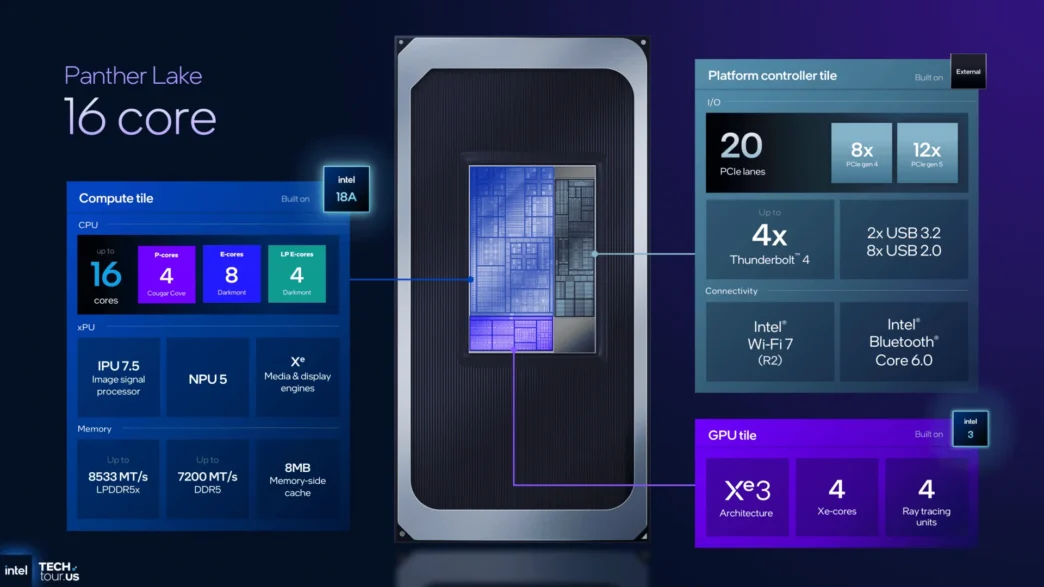
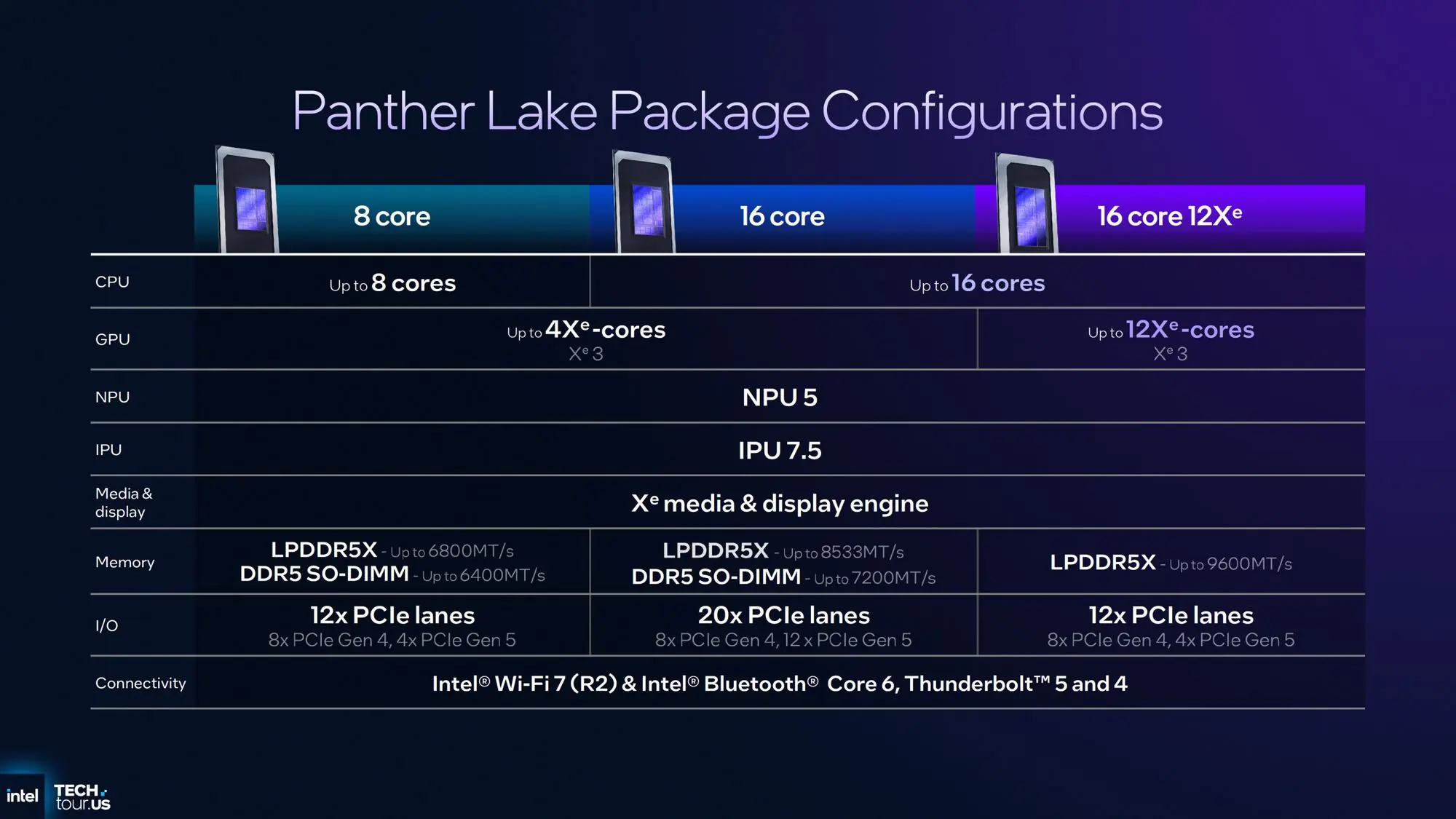
- The processor features a 16-core configuration (4P + 8E + 4 LP-E) and a new Arc B390 integrated GPU.
- Expected to launch in early 2026, it aims to compete directly with AMD’s high-end mobile chips.
Performance Benchmarks Emerge
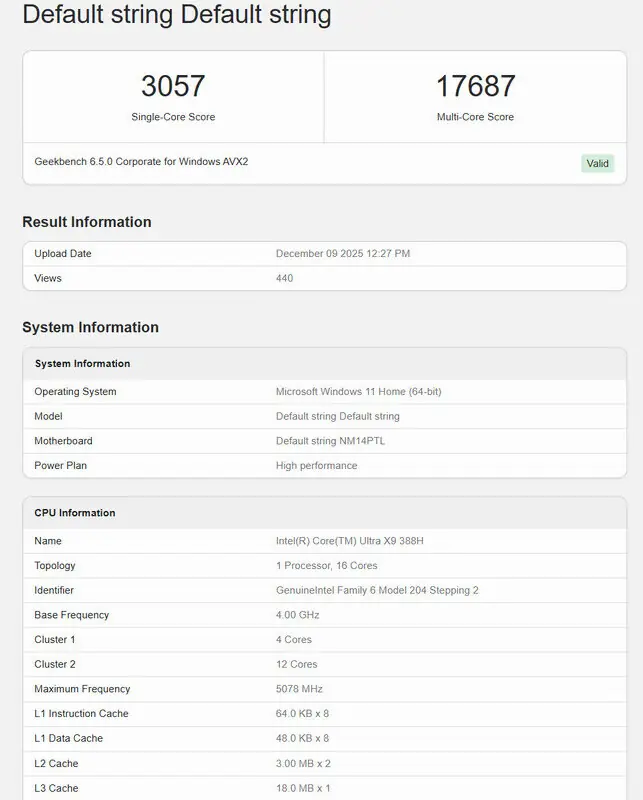
The Intel Core Ultra X9 388H has been spotted on Geekbench, revealing scores of 3,057 in single-core and 17,687 in multi-core tests. These results place it ahead of Intel’s previous generation Core Ultra 9 285H by a considerable margin, estimated at 15-19%. Notably, the single-core performance is reported to be up to 8.7% faster than AMD’s current flagship mobile chip, the Ryzen AI Max+ 395.
Core Configuration and Features
The ‘Panther Lake’ flagship, the Core Ultra X9 388H, is configured with 16 cores, utilizing a hybrid architecture of 4 Performance-cores, 8 Efficiency-cores, and 4 Low Power Efficiency-cores. It also boasts a new integrated GPU, the Arc B390, featuring 12 Xe3 cores. The CPU has been observed boosting up to 5.1 GHz. This configuration is designed to fit within a 45W default TDP, potentially offering better efficiency compared to some competitors.
Competitive Landscape
These early benchmarks suggest that Intel’s ‘Panther Lake’ series is poised to be a strong contender in the mobile CPU market. The Core Ultra X9 388H appears to trade blows with AMD’s Ryzen AI Max+ 395, particularly in single-core tasks, while maintaining a competitive multi-core score. This positions Intel to offer compelling performance for laptops and other mobile devices expected to launch in early 2026.
Future Outlook
While these Geekbench scores are promising, it’s important to note that they represent early engineering samples. Real-world performance in various applications and gaming scenarios will provide a more complete picture. However, the initial data indicates a significant step forward for Intel’s mobile processor technology, setting the stage for an exciting competitive landscape in the coming year.
Via Geekbench