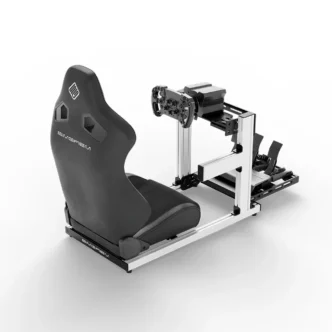
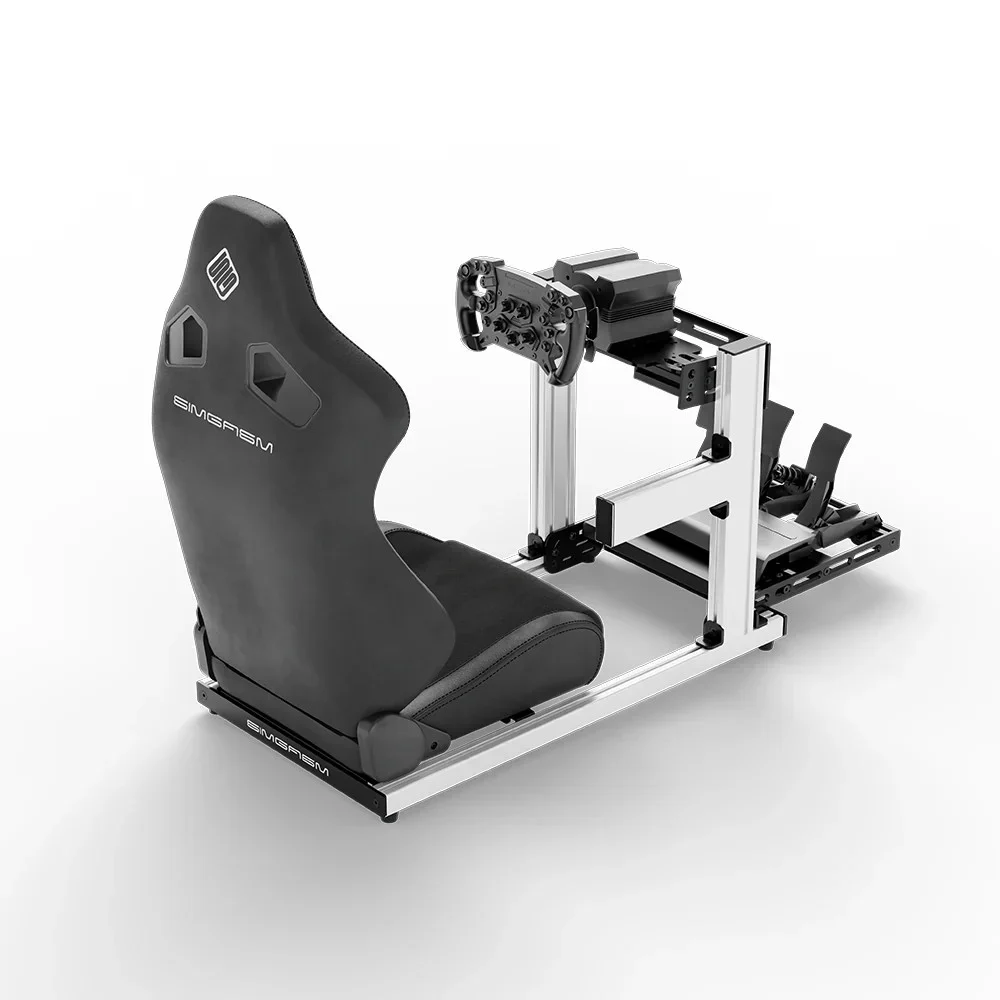
Yes, a sim racing cockpit is worth it as soon as your wheel starts to move while you race. A proper cockpit holds the wheel, the pedals and the seat in one fixed position. That gives you the same braking point and the same steering feel, lap after lap.
If you run a direct drive wheelbase, a rigid cockpit isn’t really optional anymore. Without one, you never get the full benefit of the hardware you paid for. That said, a lot depends on your wheel, your room and your budget. Below we look at what a cockpit actually fixes, which specs are worth checking and where your money goes.
Embed YouTube video: SIMGASM Hobby Sim Racing Cockpit Assembly Guide
<iframe width=”560″ height=”315″ src=”https://www.youtube.com/embed/AOluyei8Cks” title=”SIMGASM Hobby Sim Racing Cockpit Assembly Guide” frameborder=”0″ allowfullscreen></iframe>
What does a sim racing cockpit actually fix?
A desk clamp works fine for a light gear driven wheel. Move up to something stronger and things get messy. The desk shakes, the monitor wobbles and the pedals slide away under hard braking. Your office chair rolls back exactly when you need full pressure on the brake.
With a cockpit, those problems are gone. The wheel, the pedals and the seat sit on one frame, so the distance between them never changes. It sounds like a small thing, but it isn’t. Your muscle memory needs a fixed reference point, and you only get consistent lap times from consistent inputs.
Comfort plays a part too. A low seat with your legs stretched forward feels much closer to a real car. Long stints in iRacing, Assetto Corsa Competizione or Le Mans Ultimate feel less tiring in a proper seat than on a kitchen chair.
Wheel stand or full cockpit: which one makes sense?
A wheel stand costs less and folds away. That makes it a fair start for a Logitech G29 or a Thrustmaster T300 in a small room. However, most stands use thin steel tube, and steel tube bends under load. With a strong direct drive base, you feel that flex in every corner. The force feedback also loses detail, because part of the energy disappears into the frame.
A full cockpit made of aluminium profile solves this. Profile rigs use T slots, so you slide the wheel deck, the pedal plate and the seat to the exact spot you want. Later you add a shifter, a handbrake, a monitor stand or even a motion system. This is why plenty of racers skip the stand altogether. Buying a stand first and a cockpit later almost always ends up more expensive.
Which specs matter when you compare cockpits?
On product photos most cockpits look pretty similar. The differences that count show up in three specs.
Profile size and flex
The main profile carries the wheelbase, so its size decides how much flex you feel. More material means a stiffer frame. The common sizes are 40 × 40 mm, 40 × 80 mm, 40 × 120 mm and 40 × 160 mm. SIMGASM, for example, rates its 40 × 40 mm Hobby for wheelbases up to 16 Nm. Many direct drive users pick 40 × 80 mm as a solid middle ground. The 120 mm and 160 mm profiles target strong bases, load cell pedals and motion builds.
Pedal deck strength
Load cell pedals measure force instead of travel. That means you press hard, often far more than you expect at full braking. If the pedal plate bends, your brake feel changes from lap to lap. So check the rated braking load at the pedal deck. SIMGASM, for example, rates its entry cockpit at 150 kg and its heaviest models at 300 kg.
Mounting options and compatibility
Wheelbases attach in different ways: from below, from the front or from the side. Fanatec, Moza, Simagic, Simucube, Asetek and Logitech each use their own patterns. A cockpit that offers several mount types keeps your options open when you switch brands later.
How much does a good sim racing cockpit cost?
Prices for aluminium cockpits vary a lot between brands, and the price does not always follow the amount of metal you get. So compare on profile size, pedal deck rating and what comes in the box.
SIMGASM, a Dutch maker from Wijk bij Duurstede, is a good example of what you get at each price point. Its Sim racing cockpits start at roughly €270 for the Hobby. That model uses a 40 × 40 mm profile, takes wheelbases up to 16 Nm and holds 150 kg at the pedal deck. The Club costs around €370 and steps up to a 40 × 80 mm main profile with a 200 kg rating.
For stronger builds, the Sport (around €600) moves to 40 × 120 mm, carries 300 kg and comes ready for cable routing and motion. The Pro (around €650) goes to 40 × 160 mm with steel reinforcement at the critical mounting points. The gap between Sport and Pro is only about €50, which isn’t much for a profile that is 40 mm deeper.
Every tier ships with the wheel mount you pick, the assembly tools and a side arm for a shifter or handbrake. You also get a two year warranty. The seat comes separately, so you choose one that fits your body instead of paying for a seat you replace later. Founder Johan Akkerman has raced sims since 2008, and the idea behind the range is simple: you only pay for the stiffness you need. The brand has more than 240 reviews, with an average close to five stars.
When is a sim racing cockpit not worth it yet?
If you race once a month on a basic gear driven wheel, a cockpit is probably too early. Spend that money on better pedals first, because pedals improve lap times more than any other upgrade. Space is the other limit. A cockpit needs roughly 1.3 m of length and 0.6 m of width, so measure your room before you order.
It’s a different story once you own a direct drive base, or plan to buy one. At that point the cockpit is what the rest of your setup is built on. It protects your investment in the wheel and pedals, and it makes sure you actually feel the detail in the force feedback. Match the profile size to your wheelbase, check the pedal rating, and you’ll have a frame that keeps up with years of upgrades.
Questions and answers
Is a sim racing cockpit worth it for beginners?
Yes, if you plan to race every week. A cockpit makes your inputs consistent from day one, and that speeds up learning. An entry aluminium cockpit with a 40 × 40 mm frame is a good place to start, and you can expand it later.
How much Nm does a 40 × 40 mm cockpit handle?
That depends on the brand. SIMGASM rates its 40 × 40 mm Hobby for wheelbases up to 16 Nm. For stronger bases, a 40 × 80 mm or bigger profile keeps the wheel deck stiffer and the force feedback cleaner.
Do I need a seat with my cockpit?
Yes, you need a seat, but it doesn’t have to come with the cockpit. Buying the seat separately lets you pick the right size and shape for your body. Many racers also add a seat slider for quick adjustment.
How long does it take to build an aluminium sim racing cockpit?
Reviews of the SIMGASM Hobby and Club mention build times from under an hour to about two hours with the supplied tools. After that, fine tuning the wheel height, pedal angle and seat position takes another session or two of driving.
Is aluminium profile better than steel tube?
For direct drive wheels, yes. Aluminium profile is stiff, fully adjustable and easy to expand with new parts. Steel tube rigs work for lighter wheels, but they offer fewer positions and more flex at high force.