


MSI R9 380 Gaming 4G Overview
MSI has really done a great job making all of their gaming series cards look the same. You know what a gaming series card looks like with its red and black design. This design will match MSI’s own gaming series motherboards as well as any motherboard that has a red or black design.
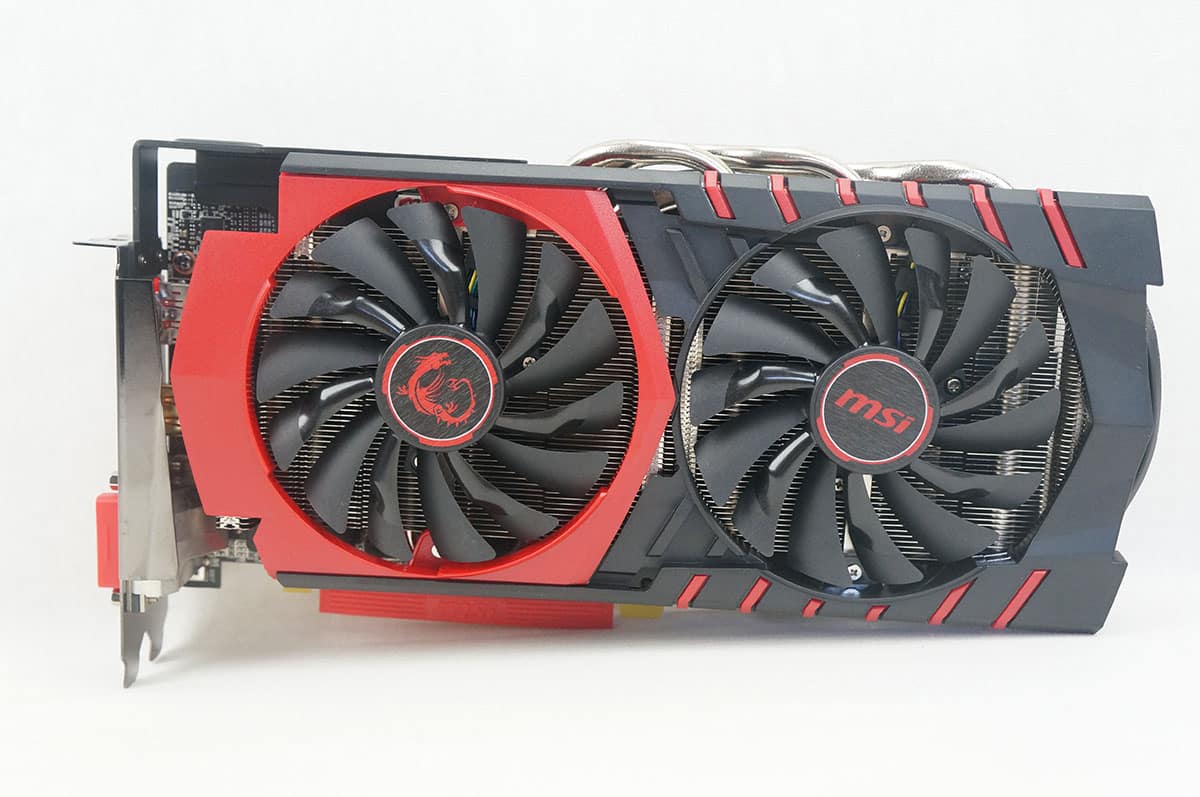
MSI is using their Twin Frozr V cooling solution on this card. This cooling solution is made up of two 100mm Torx fans, an aluminum heatsink stack, and a number of copper heatpipes. This card also features MSI’s Zero Frozr technology that will turn the fans off when they are not needed. This of course cuts down on noise and power consumption.
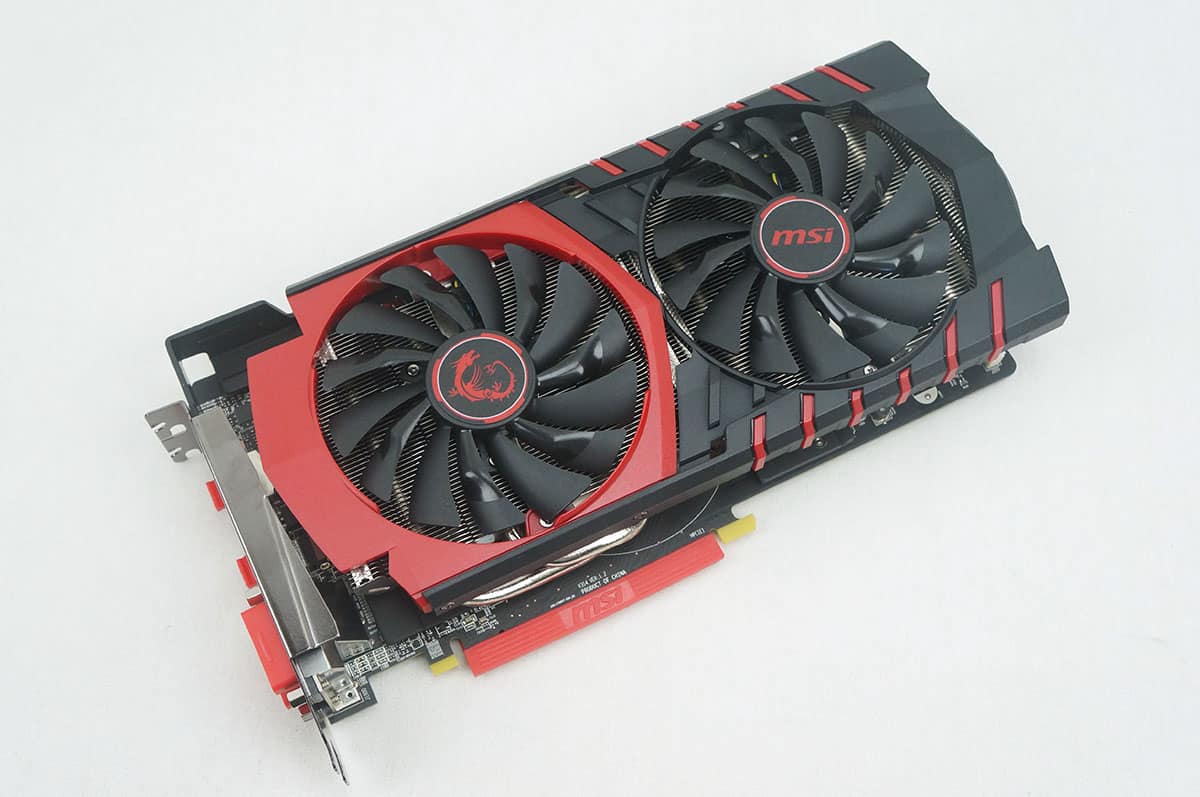
Taking a look at the card from the side we can see that it is a dual-slot card. The card gets power from two 6-pin PCI-Express power connections. There is also a MSI logo on the top edge of the card, which will face out and be seen if you have a case window. This logo will light up when your system is powered on.

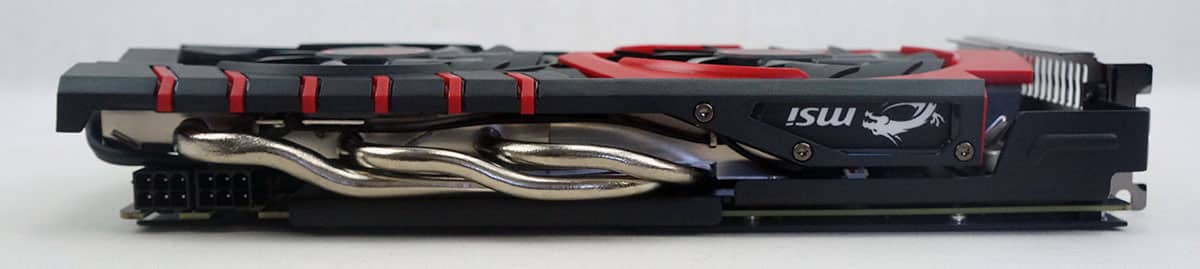
The back of the card has a very nice backplate on it with the MSI dragon logo. This backplate not only looks good, but helps cool the card a bit as it acts as a minor heatsink. You will also notice no CrossFire connectors on the card, since this card is based off Tonga no need for those as it uses XDMA CrossFire via its PCI-Express connection.
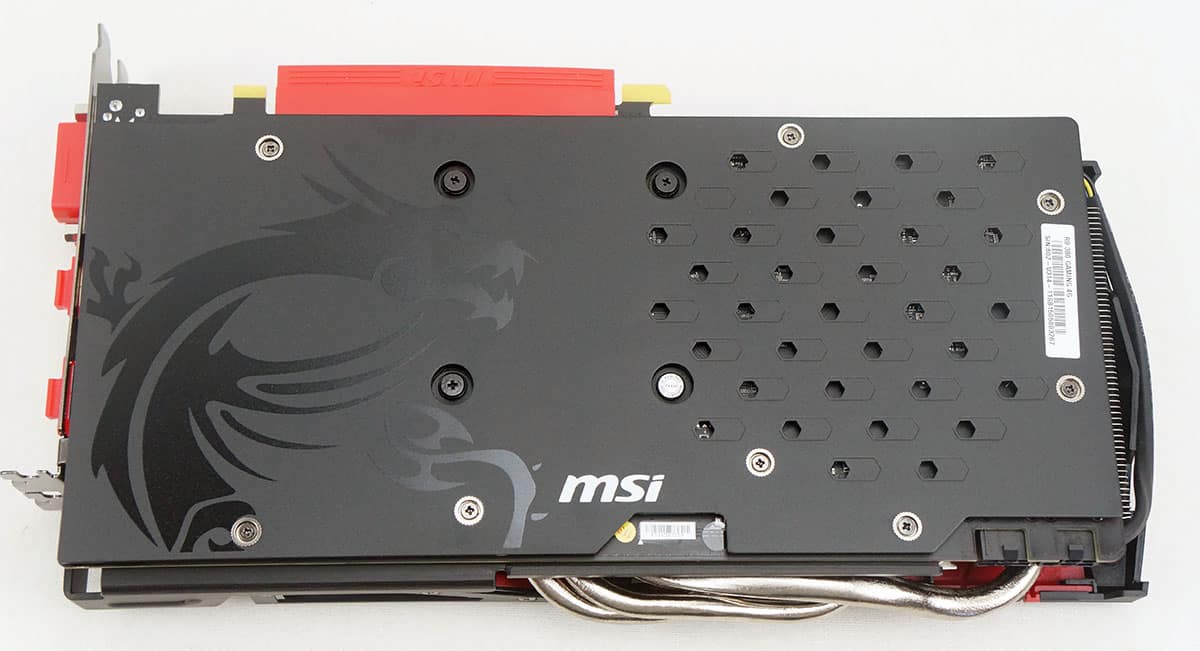
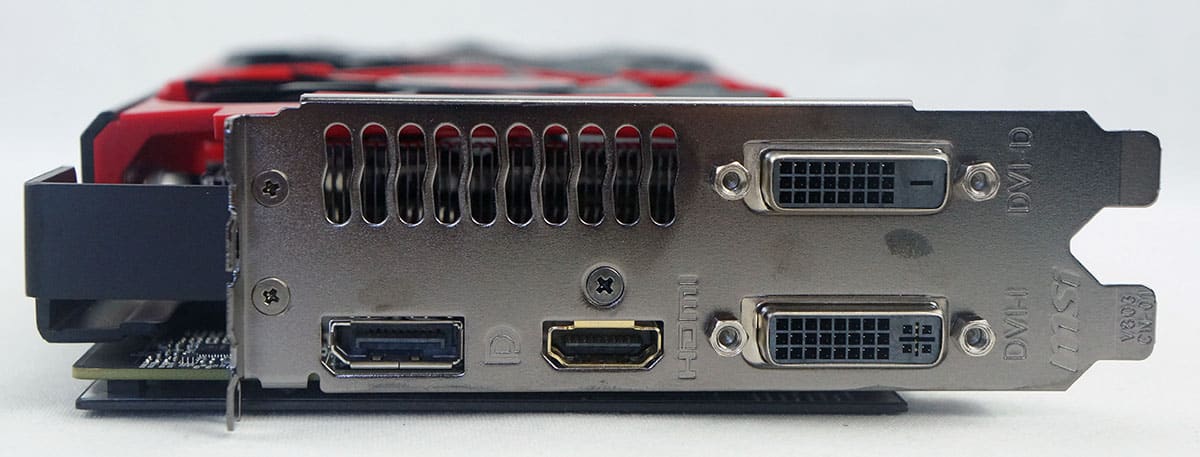
Looking at display connections this card has dual-link DVI, DVI, HDMI and DisplayPort.
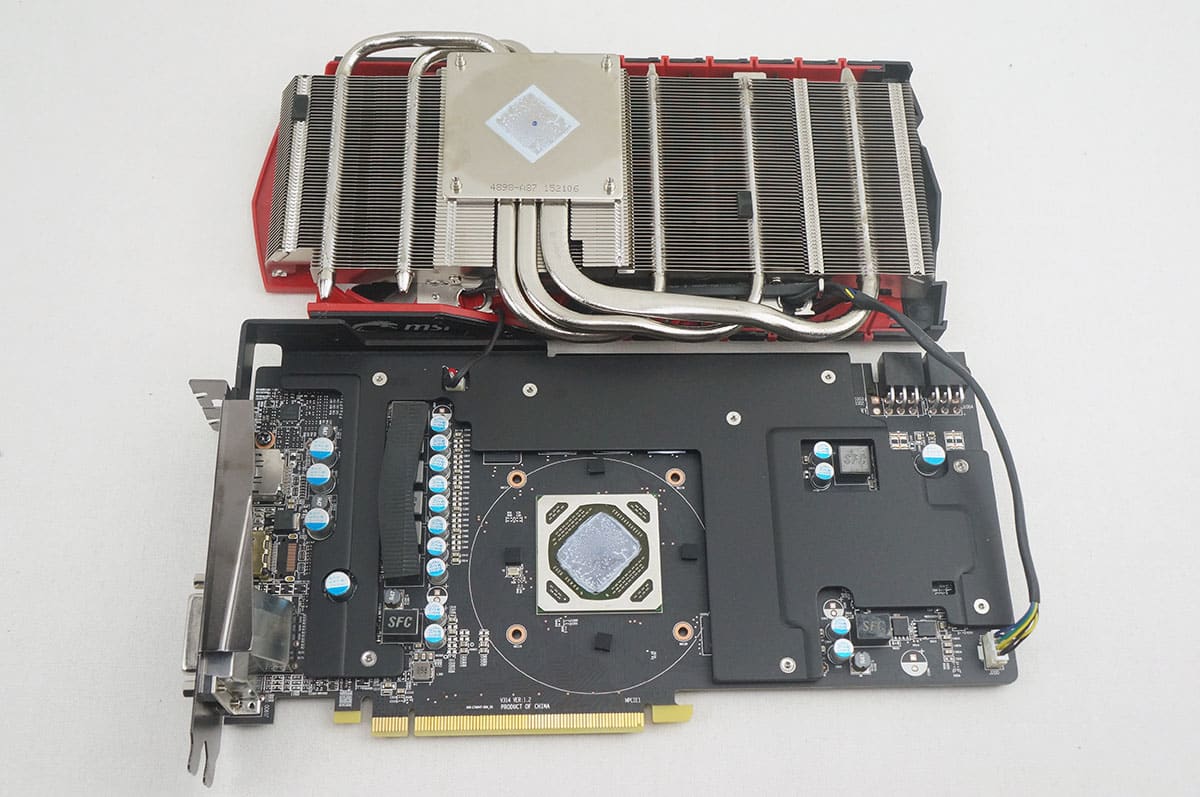
To remove the cooling solution all you have to do is remove four screws from the bottom of the card. Once removed we can see that MSI is using a metal plate to help cool the memory and other components on the card. This also gives the card better stability.
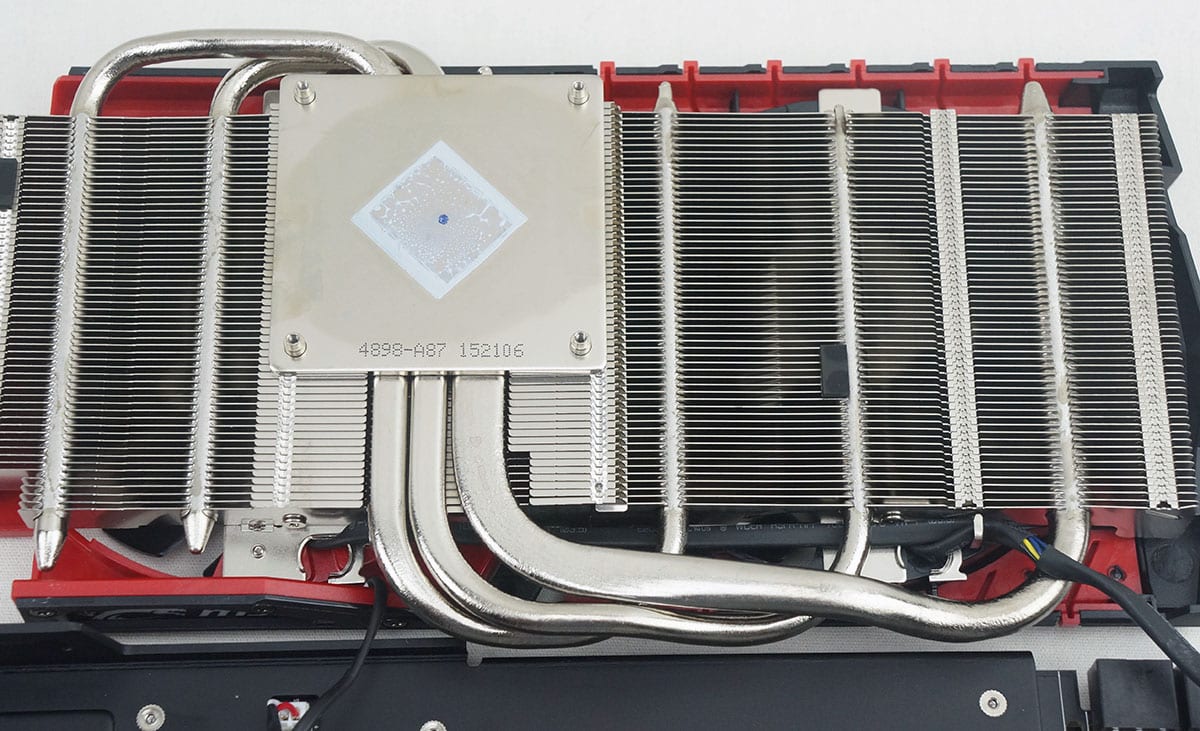
Taking a closer look at the heatsink we can see there is a very large heatsink base with three heatpipes that come out of the base and go into the heatsink.


Thanks for the review! I will say other than listed in test set-up you completely missed covering the Gaming Mode (980 MHz / 5700MHz) as tested “out-of-the-box”, while the MSI Gaming App software is used to enact the OC Mode (1000 MHz / 5800 MHz). I think that would be useful to readers
and those that watched the video to provide some detail on that. Interestingly you did provide a lot of “ink” on that subject back with the MSI GTX 770 Gaming review back Oct, 2013, even providing B-M in both Gaming and OC’d. I think that would’ve been to correct way to provide a consistent position for all your reviews.
You might want to say that the idle temperature is at 52°C as that because the ZeroFrozr technology which stops the
fans when they are not needed at that point basically a full-passive mode.
I’m really disappointed you neglected to include the results of you MSI GTX 960 Gaming review from February 10th. That is the more proper comparison as it’s the Nvidia product that is it closest competitor, while 770’s have be EoL for almost a year now. Looking at both the GTX 960 review and the MSI GTX 770 you’ve appear to have change your test rig, and the B-M titles used so those older reviews weren’t transferable. That said, I have a hard time saying a loop of Heaven B-M is characteristic of gaming loads, and from other reviews I’ve seen the inference that a MSI GTX 770 Gaming is like 4.5% better than a MSI 380 Gaming (@980MHz) at load is abnormal. I mean look at the Stix 970 and the 770 with the Maxwell only using 7% less. That MSI
770 Gaming you have is some golden sample right there!
Agreed, it does seem the review misses the main characteristics of the card–which is really amazing, when you think about it…;) That’s the quickest route to web-site obscurity, imo.