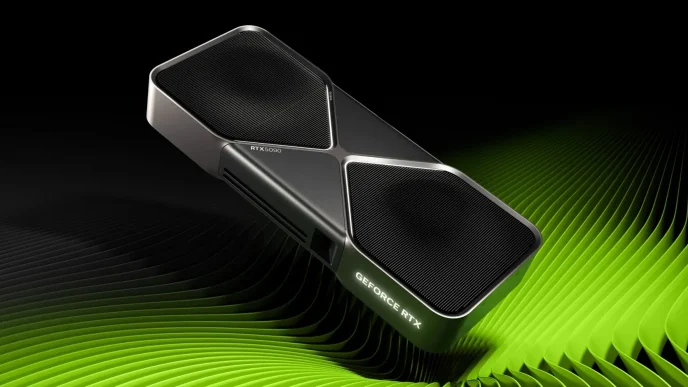
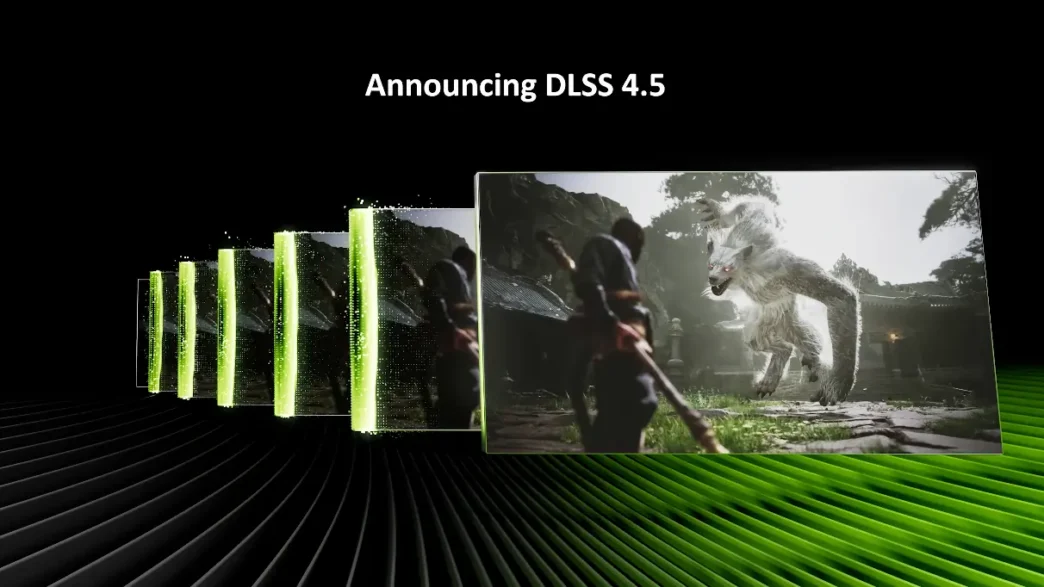
NVIDIA has confirmed that its latest advancements in DLSS technology, including Dynamic Multi-Frame Generation (MFG) and a high-performance 6x mode, are set to roll out in April. These new features promise to significantly enhance gaming performance and visual fluidity for users of NVIDIA’s GeForce RTX 50-Series GPUs.
Key Takeaways
- Dynamic Multi-Frame Generation and 6x MFG mode launching in April.
- Features exclusive to NVIDIA GeForce RTX 50-Series ‘Blackwell’ GPUs.
- Dynamic MFG intelligently adjusts frame generation multipliers based on game demands and display refresh rates.
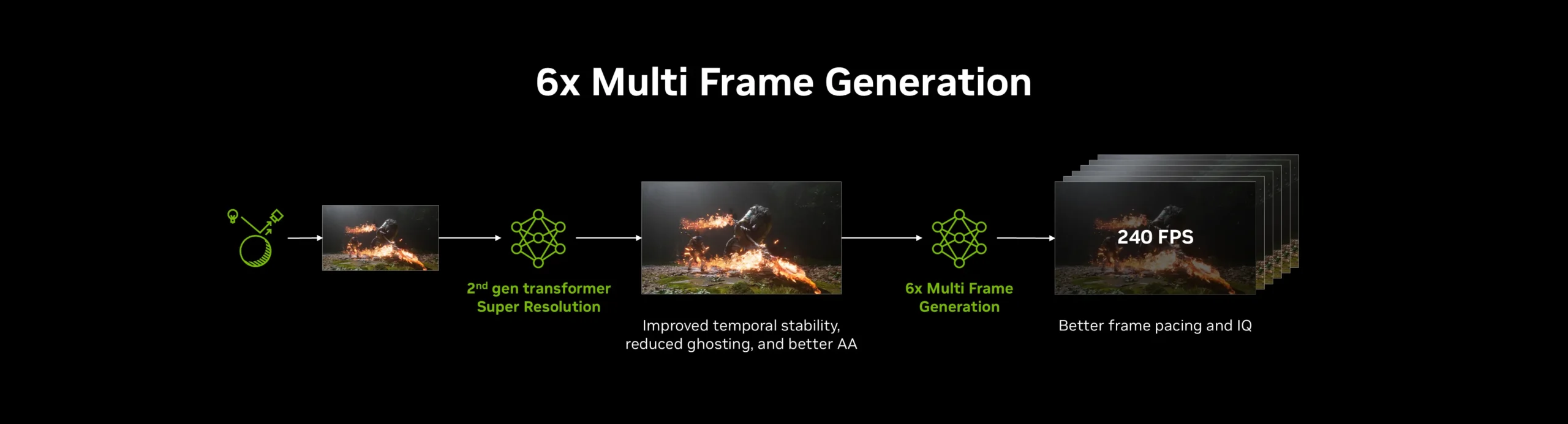
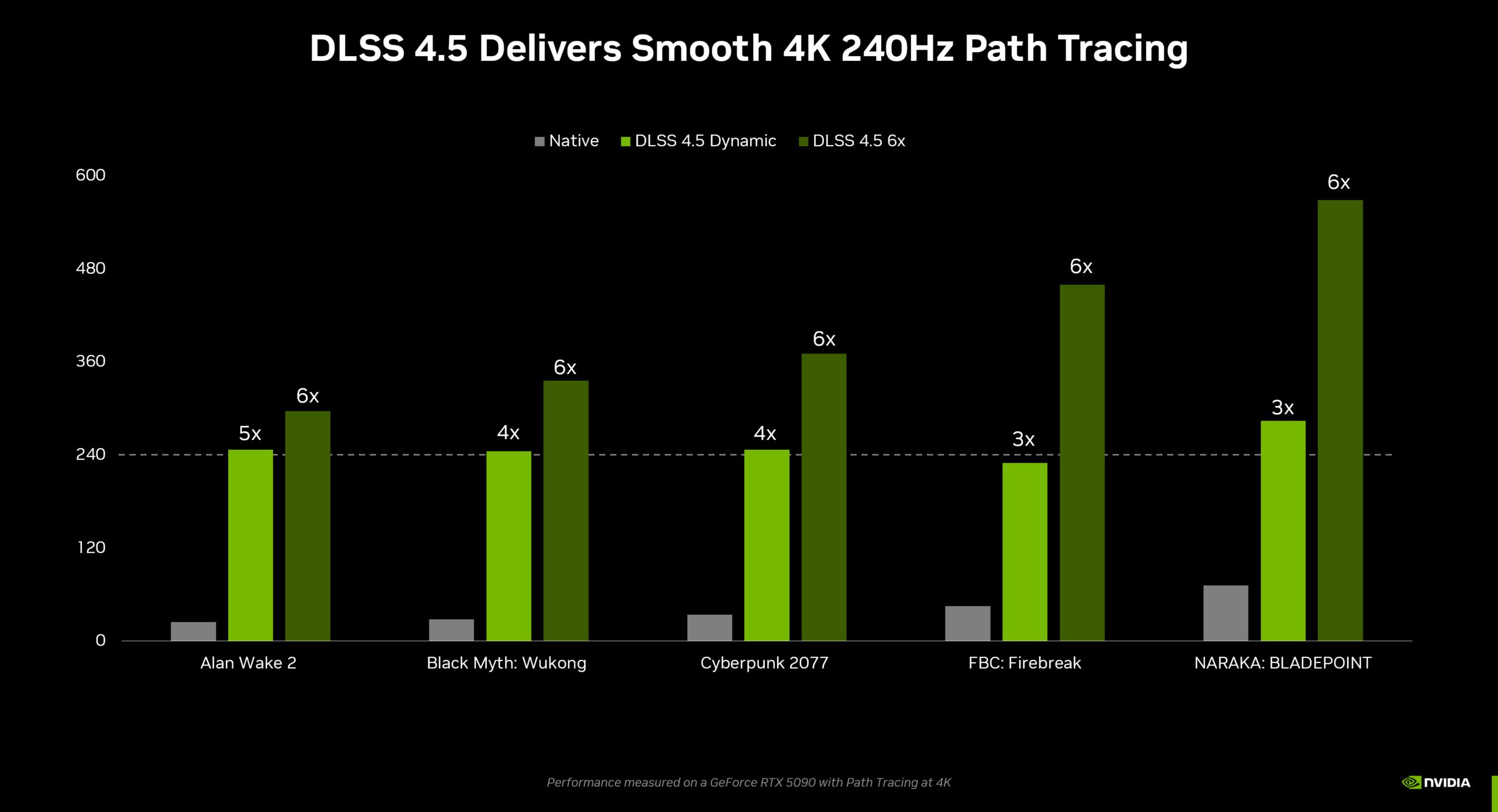
- 6x MFG mode aims for extreme performance uplifts, potentially reaching 360 FPS.
Dynamic Multi-Frame Generation Explained
Dynamic Multi-Frame Generation is designed to offer a more intelligent approach to frame interpolation. Instead of applying a fixed multiplier, this technology dynamically adjusts the number of AI-generated frames based on the game’s current rendering load and the target display refresh rate. NVIDIA likens this to an “automatic transmission” for frame generation, seamlessly switching multipliers (e.g., from 6x in demanding scenes to 2x in less intensive ones) to maintain optimal performance and visual quality without overshooting the display’s capabilities.
The Power of 6x Mode
The Multi-Frame Generation 6x mode represents a significant leap in potential performance. NVIDIA suggests this mode can result in a 6x performance uplift, enabling games that might run at 60 FPS to potentially reach up to 360 FPS. While this extreme multiplier may be overkill for many current display refresh rates, it caters to the high-end gaming market and future-proofing for ultra-high refresh rate monitors.
RTX 50-Series Exclusivity
Both Dynamic MFG and the 6x MFG mode will be exclusive to NVIDIA’s GeForce RTX 50-Series ‘Blackwell’ graphics cards. This exclusivity is due to the reliance on new hardware features, specifically hardware flip-metering, which is only available on this latest generation of GPUs. While the core DLSS 4.5 super-resolution technology is more widely available, these advanced frame generation capabilities are reserved for the newest hardware.
Competitive Landscape
NVIDIA’s advancements place it ahead of competitors in the frame generation space. While Intel’s XeSS 3 can generate up to three frames for every rendered frame (a 4x improvement), NVIDIA’s new modes offer higher multipliers. AMD currently lacks comparable multi-frame generation technology, focusing instead on single-frame generation.
Release Details and Caveats
Initially, reports suggested a firm April release date. However, NVIDIA later clarified that while the features are slated for “Spring 2026,” the specific April date was a misunderstanding. Nevertheless, gamers with RTX 50-Series GPUs can anticipate these enhancements arriving soon. The implementation will be available through DLSS Overrides via the NVIDIA App for all games that support DLSS Frame Generation.
Via Hardwareluxx