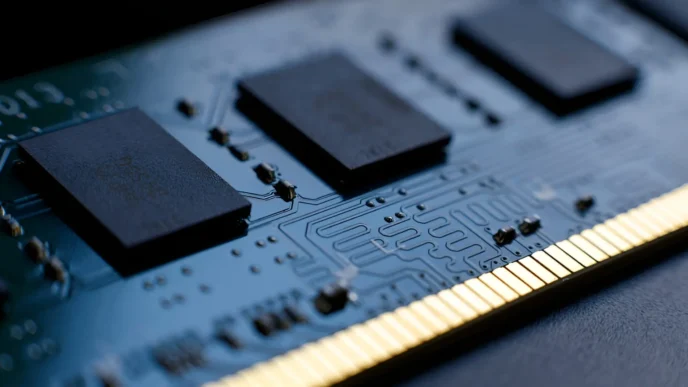
NVIDIA is reportedly facing significant production challenges for its upcoming gaming graphics processing units (GPUs) due to a widespread shortage of memory chips. This scarcity is forcing the tech giant to reallocate its limited memory supply towards its more profitable AI accelerator business, leading to potential delays in new gaming hardware releases.
Key Takeaways
- Nvidia is reportedly delaying the launch of its next-generation gaming GPUs.
- The delay is attributed to a global shortage of memory chips.
- Nvidia is prioritizing memory allocation for its high-margin AI chip business.
- This could mark the first time in nearly three decades that Nvidia has not released a new gaming GPU in a given year.
- Production of current-generation RTX 50 series GPUs may also be reduced.
Impact on Gaming Hardware
Sources indicate that Nvidia is pushing back the release of its planned incremental update to the RTX 50 series. The RTX 50 SUPER series of cards were initially expected to launch at CES 2026 in Janauary. Furthermore, the next-generation gaming GPUs, widely expected to be the RTX 60 series, are also facing delays, with mass production now potentially pushed back to late 2027 or beyond. This situation could extend the lifespan of the current RTX 50 series.

Strategic Shift Towards AI
The reported delay highlights Nvidia’s strategic pivot towards its Artificial Intelligence (AI) business. AI chips, part of the compute and networking segment, boast significantly higher operating margins (around 65%) compared to the gaming GPU business (around 40%). With the rapid growth of AI, Nvidia is prioritizing resources to meet the surging demand for its AI accelerators, especially as U.S. export controls impact access to its most advanced AI chips.
Broader Market Implications
The memory chip shortage is not isolated to Nvidia. The scarcity is impacting various sectors, including smartphones, consoles, and PCs, potentially leading to increased prices. Companies like Micron have shifted focus to AI pursuits, exacerbating the supply constraints. This broader market pressure could affect demand for chip firms such as Qualcomm and Arm Holdings.
Nvidia’s Response
While Nvidia has not officially confirmed the delays, a spokesperson stated that the company continues to ship all GeForce products and is working closely with suppliers to maximize memory availability. The company is also reportedly considering reviving older GPU models, such as the GeForce RTX 3060, to address the ongoing supply constraints and meet budget-conscious consumer demand.
Via The Information