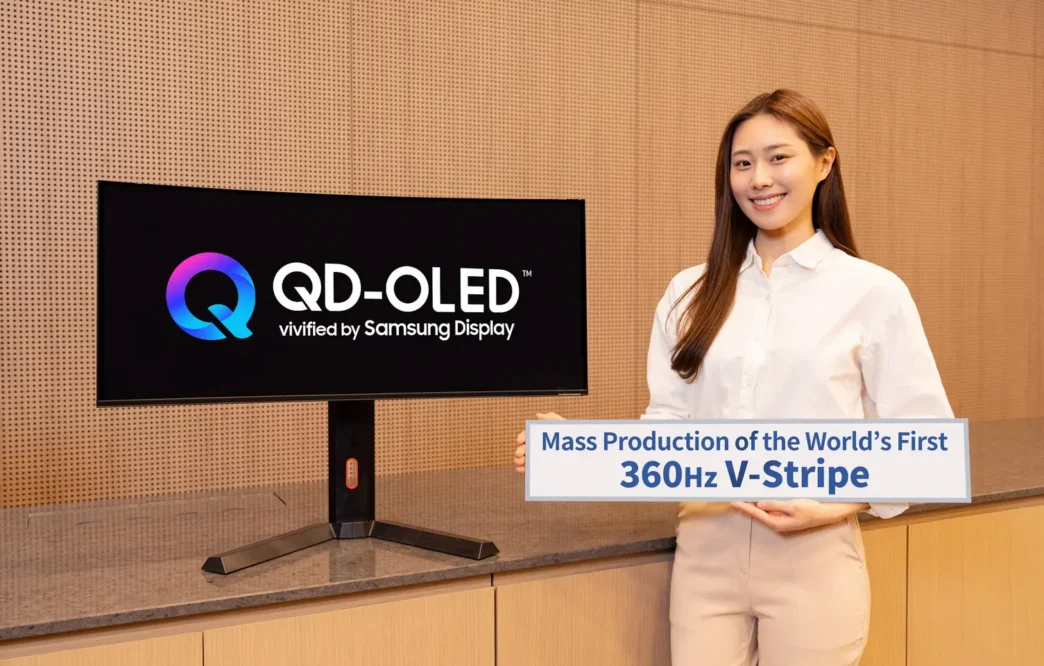
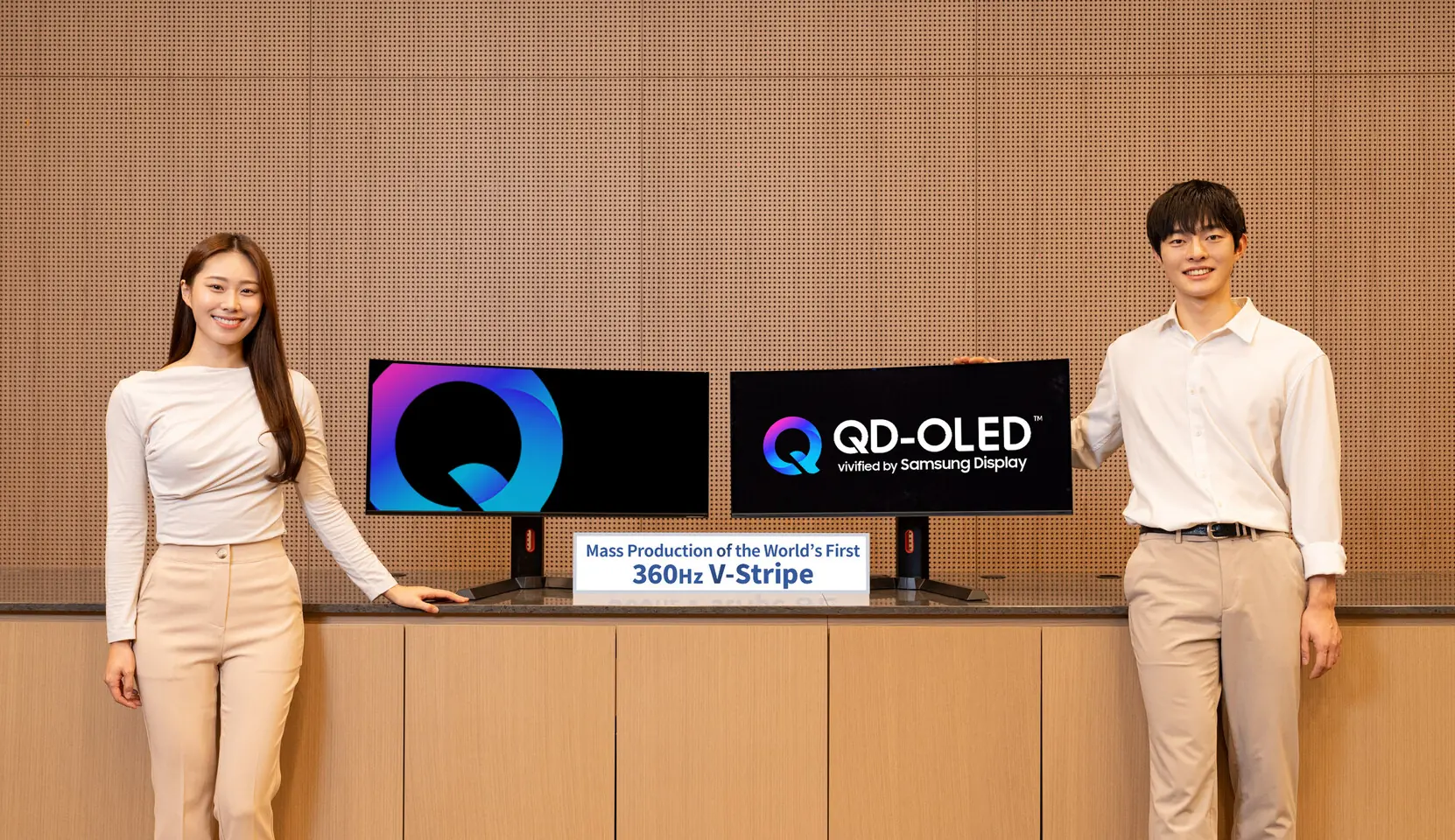
Samsung Display has officially commenced mass production and shipment of its revolutionary 34-inch QD-OLED panels, boasting an unprecedented 360Hz refresh rate and a novel “V-Stripe” sub-pixel structure. These cutting-edge panels are set to redefine the gaming monitor landscape, offering unparalleled visual fluidity and enhanced clarity for both gamers and professionals. The first wave of monitors featuring this advanced technology is expected to hit the market in 2026, with major manufacturers like ASUS, MSI, and Gigabyte already on board.
Key Takeaways
- Samsung Display has begun mass production of 34-inch, 360Hz QD-OLED panels.
- The new panels feature a “V-Stripe” sub-pixel structure for improved text clarity.
- These panels offer a 21:9 ultra-wide aspect ratio and a peak brightness of 1,300 nits.
- Monitors utilizing these panels are slated for release in 2026, with initial unveilings at CES 2026.
- Samsung Display anticipates a significant market share in the premium OLED monitor segment.
A Leap in Display Technology
The newly developed V-Stripe pixel structure marks a significant departure from the traditional triangular arrangement found in current QD-OLED technology. By aligning Red, Green, and Blue sub-pixels vertically, Samsung Display aims to dramatically improve the sharpness of text edges. This enhancement is particularly beneficial for users engaged in text-intensive activities such as coding, document editing, and content creation, addressing a long-standing concern with OLED displays.
Performance for Gamers and Professionals
Beyond the improved text clarity, these 34-inch panels are engineered for peak performance. The 21:9 ultra-wide aspect ratio provides an immersive viewing experience, ideal for fast-paced gaming genres like sports and racing titles. Coupled with a blistering 360Hz refresh rate, users can expect exceptionally smooth motion and rapid response times. Furthermore, a peak brightness of 1,300 nits ensures vibrant visuals and excellent contrast.
Overcoming Technical Hurdles
Achieving such high specifications, especially on an ultra-wide 21:9 display, presented considerable technical challenges. Samsung Display highlighted difficulties in maintaining uniform signal timing across the panel, managing heat generation, and ensuring the longevity of organic materials at high refresh rates. By leveraging QD-OLED’s top-emission structure, optimizing organic material efficiency, and refining panel design, Samsung Display has successfully integrated these four key features: the V-Stripe pixel structure, an ultra-wide aspect ratio, a high refresh rate, and enhanced brightness.
Market Impact and Future Outlook
Samsung Display has already begun supplying these advanced panels to seven global monitor manufacturers, including ASUS, MSI, and Gigabyte, with products expected to launch in 2026. The technology will be showcased at CES 2026 in Las Vegas. Market research firm Omdia projects a significant shift towards self-emissive panels in the premium monitor segment, with OLED technology expected to capture an increasing share. Samsung Display is poised to dominate this growing market, with projections indicating a substantial share of QD-OLED shipments in the coming years.
Via Samsung Display