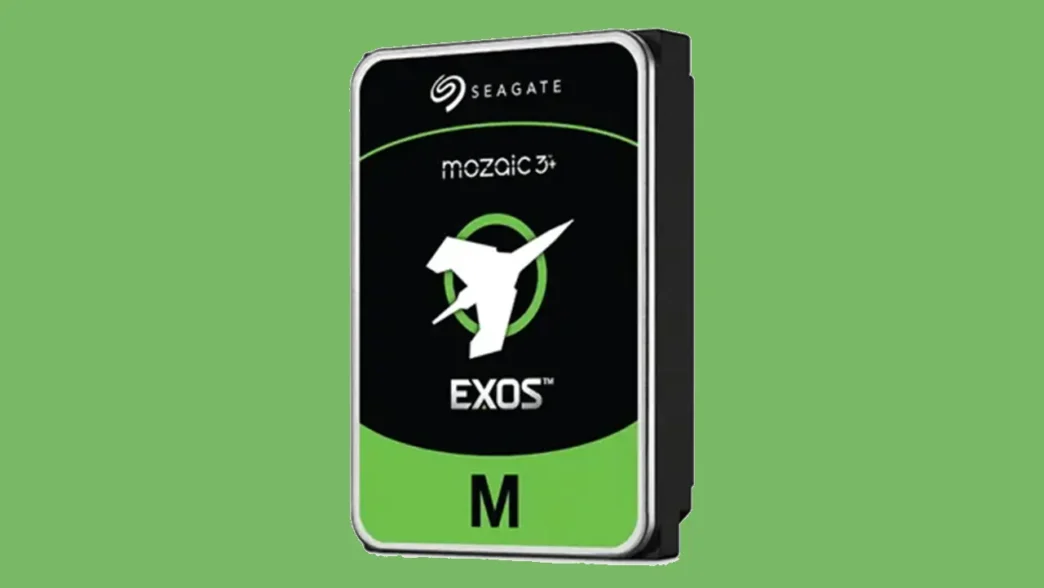
Seagate has achieved a significant milestone in storage technology, demonstrating a prototype hard drive platter capable of storing 6.9 terabytes (TB) of data. This breakthrough, utilizing Heat-Assisted Magnetic Recording (HAMR) technology, effectively doubles the data density of current commercially available drives and paves the way for future 55 TB hard disk drives (HDDs).
Key Takeaways
- Seagate’s HAMR prototype achieves 6.9 TB per platter, a significant increase in data density.
- This advancement enables the development of 55 TB HDDs, crucial for high-density storage needs.
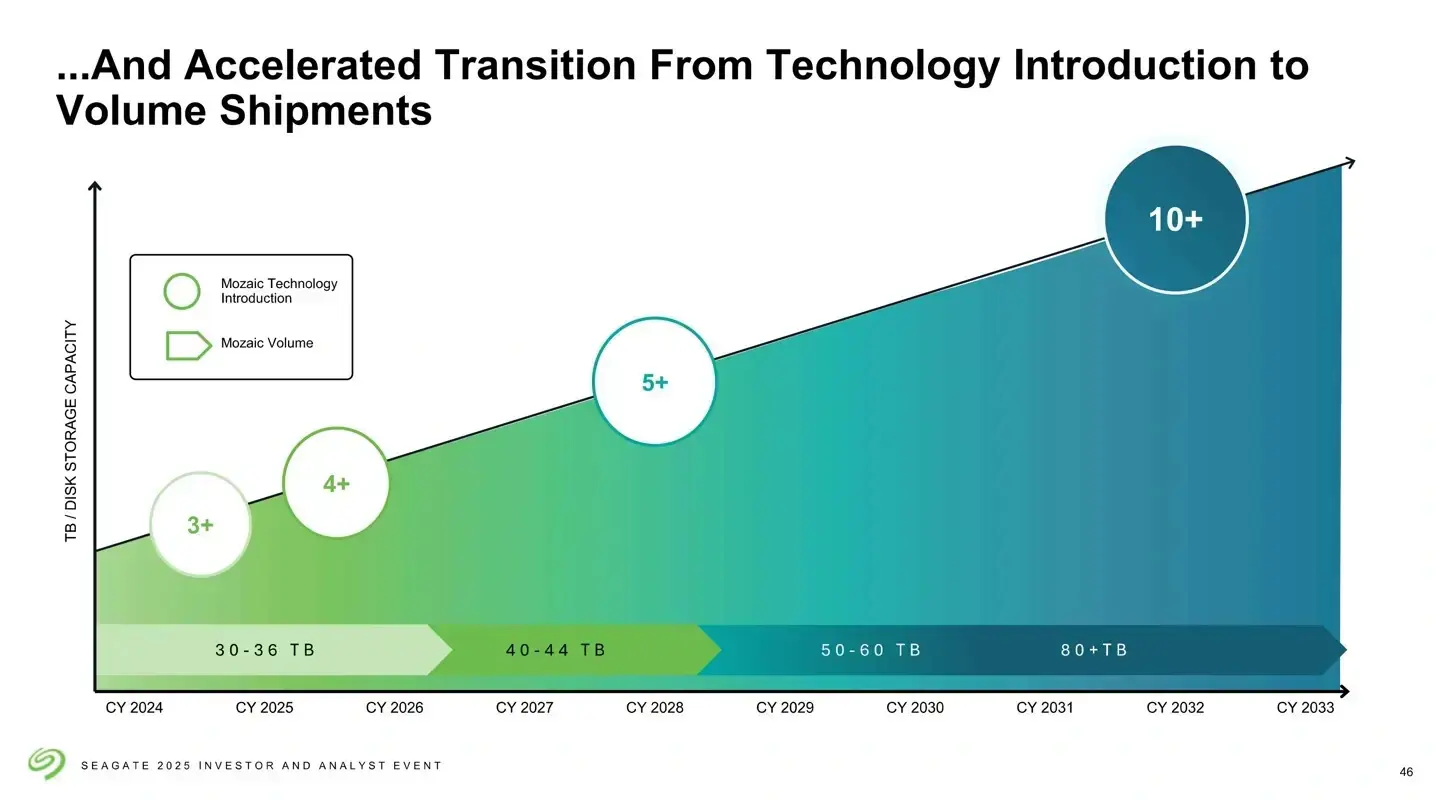
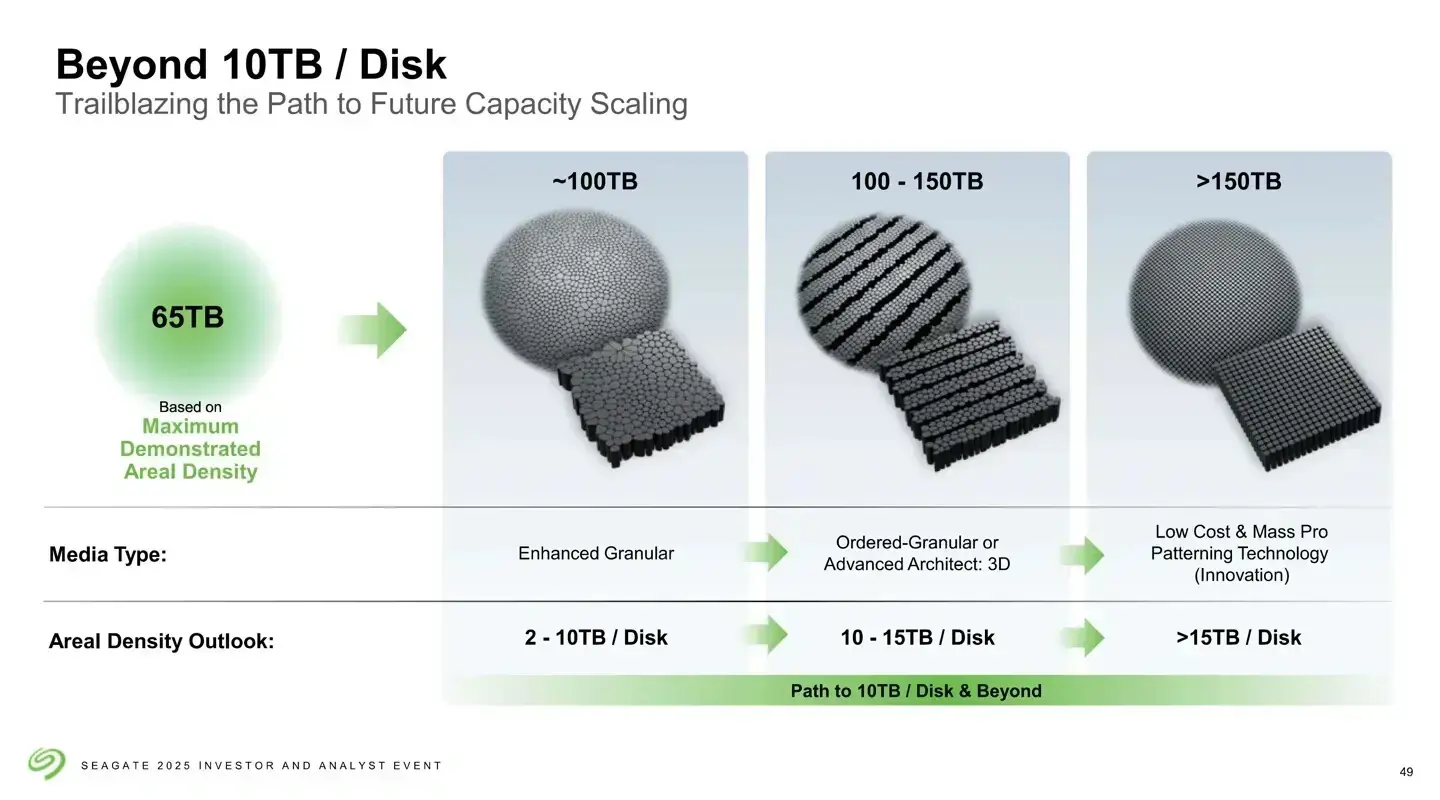
- Future projections include platters reaching 7 TB+ in the early 2030s, with a long-term vision of 15 TB per platter.
- While promising, challenges remain in manufacturing, reliability, and cost-effectiveness compared to SSDs.
Revolutionizing Storage Density
Seagate’s latest demonstration showcases a 6.9 TB platter, a substantial leap from existing technologies. This advancement is particularly impactful for applications where raw capacity and cost per terabyte are paramount. Data centers, backup servers, media archives, large NAS arrays, and video editing vaults stand to benefit immensely from drives that pack more storage into less physical space.
The implications of higher platter density are far-reaching. Fewer drives are needed to achieve the same total capacity, leading to simpler storage arrays, reduced power and cooling requirements, and a smaller rack footprint. This translates to a lower total cost of ownership for large-scale storage deployments, a critical factor as data generation continues to skyrocket due to AI workloads and modern content creation.
The Road to Commercialization
While the 6.9 TB per-platter prototype is a major achievement, Seagate acknowledges that substantial engineering and manufacturing hurdles must be overcome before these drives become commercially available. Key challenges include ensuring consistent production yields, guaranteeing media longevity over years of operation, maintaining stable thermal behavior during read/write cycles, and ensuring compatibility with existing drive controllers and ecosystems.
Seagate’s roadmap indicates that production-ready platters exceeding 7 TB are anticipated in the early 2030s. The company also has a long-term vision for densities reaching 15 TB per platter or more, potentially enabling multi-petabyte single-drive capacities in the future. This continued evolution of spinning media technology ensures that HDDs will remain a competitive option for bulk storage, especially where the cost per terabyte is a primary concern.
Future Outlook and Challenges
Despite the rapid advancements in solid-state drives (SSDs), HAMR technology is poised to keep HDDs relevant for high-capacity storage needs. The commercial success of HAMR hinges on its ability to deliver superior value in terms of dollars per terabyte. Seagate’s progress with the 6.9 TB platter prototype confirms that conventional spinning media still has significant room for innovation, promising dramatically larger single-drive capacities in the years to come.
Via Guru3D