Classic games are often discussed in terms of hardware or nostalgia, but the clearest way to understand them is to watch what they ask of the player from one second to the next. Moment-to-moment gameplay is where design stops being theory and becomes feeling in the way the game flow is translated. It is the spacing of a jump in Super Mario Bros. The rhythm of enemy tells in Mega Man 2. The way Tetris turns one falling piece into a fast judgment about space, pressure, and recovery. Those tiny decisions reveal why older games still feel so precise.
In game flow, that precision was rarely accidental. Classic games tended to build meaning through clear actions, quick feedback, and repeated situations that changed just enough to test whether the player was actually learning. Research on in-game tutorials helps explain why this works: players tend to learn more effectively when guidance is embedded in play, tied to practice, and reinforced with timely feedback. That principle runs throughout classic design. A first enemy is not just an obstacle. It is a lesson. A gap is not just empty space. It is a question about timing. When a game keeps asking readable questions, moment-to-moment play becomes the real teacher.
What Clean Gameplay Decision Loops Look Like
A modern comparison is bitcoin live casino blackjack, because it shows how a compact rule set can keep attention fixed on immediate decisions instead of burying the player under noise. The blackjack collection centers on one familiar format, so the player is reading card values, dealer state, and a small group of recurring choices, rather than juggling unrelated mechanics. That matters when you are looking at game feel from the inside out.
In strong classic games, the player is rarely confused about what matters right now. They are reading the screen, weighing a limited set of options, and acting inside a loop that stays legible even when pressure rises. Bitcoin live casino blackjack offers a contemporary example of that same design clarity. The structure repeats, the state changes are visible, and the decision quality comes from reading the moment well, not from memorizing layers of hidden complexity. That is the same reason old games could feel demanding without feeling messy. Their moment-to-moment play was narrow enough to understand and rich enough to reward attention. Blackjack has enjoyed long-term popularity for that exact same reason, and although innovations like crypto have injected fresh life into it, the core principles remain totally unchanged.
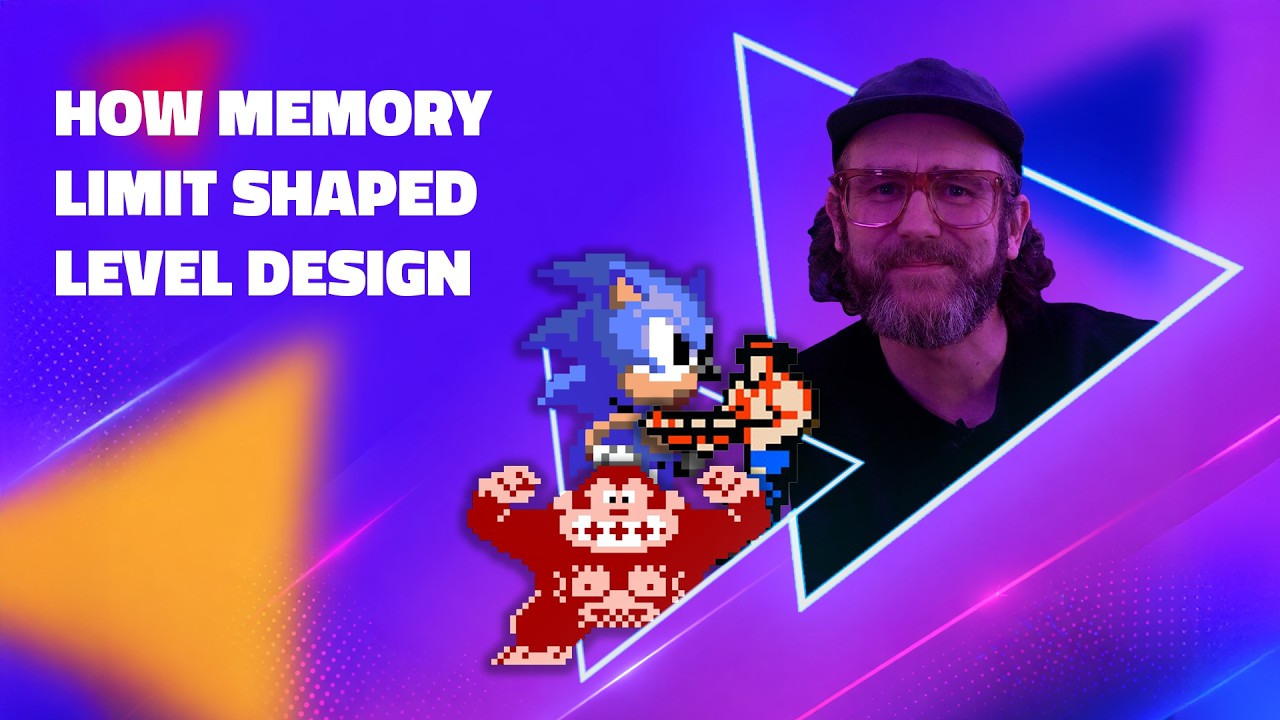
That is also why the short video below fits here so naturally. It shows how early hardware pushed developers toward reusable parts, readable layouts, and gradual teaching through repetition. More importantly, it explains why those limits mattered at the level players actually feel. When screens are built from familiar elements and the next challenge arrives as a variation, rather than a reset, the player spends less time decoding and more time responding. The result is not thinner play. It is more focused play overall.
Mario and Mega Man Make Their Intentions Visible
Super Mario Bros. remains one of the cleanest examples of moment-to-moment teaching because almost everything important is visible before it becomes punishing. A Goomba approaches slowly enough to make the player test jump timing. A question block suggests interaction without a speech bubble explaining it. Pipes, gaps, and stair-step geometry change the same movement rules in ways that feel new without ever becoming abstract. The game is not only well-paced. It is mechanically honest. It tells you what kind of attention it wants.
Mega Man 2 is different, but equally revealing. Its moment-to-moment play is less about movement discovery and more about rhythm under pressure. Enemy placement, projectile speed, and ladder transitions all shape how the player reads space. Boss fights push the same principle further. You are studying tells, committing to a pattern, and refining your timing. It still feels sharp. It turns reaction into understanding.
Tetris and Punch-Out!! Prove Simplicity Is Not Thin
Tetris may be the purest example of moment-to-moment clarity in games. Every few seconds, the player is asked a fresh version of the same question: where does this piece belong, and what future trouble does it create or prevent? The rules are tiny. The consequences are not. That balance is what makes the game feel endless without feeling bloated. Each placement is a local choice and a long-view commitment simultaneously.
Punch-Out!! works through a different kind of readability. It teaches through animation, tempo, and recognizable tells. The player learns to read shoulders, timing, and rhythm the way they would read movement in a well-designed action game. Again, the lesson is not that old games were simple. It is that their moment-to-moment play gave every action a clear meaning.
Why This Lens Still Matters
Looking at classic games through moment-to-moment play helps explain why so many of them still feel durable. Their strength was not only technical constraint or visual charm. It was the quality of the decisions they created from second to second. Super Mario Bros., Mega Man 2, Tetris, and Punch-Out!! all show that a game becomes memorable when its smallest interactions are readable, responsive, and worth repeating. That is why modern designers still borrow from them, and why games like blackjack have endured so impressively across time.