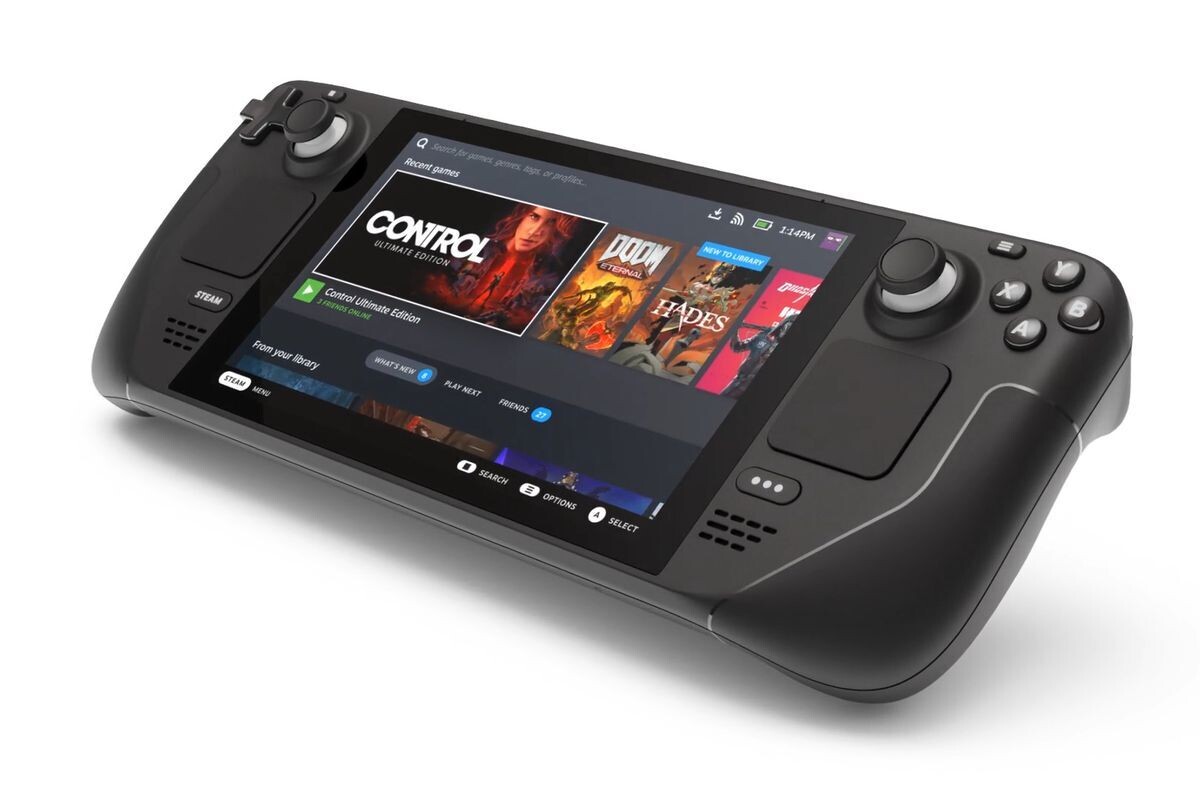
Valve has officially announced that the highly anticipated Steam Deck 2 will not follow a yearly release schedule. Instead, the company is waiting for a significant generational leap in computing power before launching the next iteration of its popular handheld gaming device. This decision reflects Valve’s commitment to delivering substantial improvements rather than incremental updates, ensuring that battery life remains a priority.
Key Takeaways
- Valve will not release a new Steam Deck every year.
- The company is waiting for a generational leap in compute performance.
- Battery life will not be sacrificed for increased power.
- The Steam Deck OLED is not considered a second-generation device.
Valve’s Approach To Releases
In a recent interview, Valve designers Lawrence Yang and Yazan Aldehayyat emphasized that the company is taking a more conservative approach compared to other handheld console makers. Unlike competitors who frequently update their products, Valve aims to provide a meaningful upgrade with the Steam Deck 2.
Yang stated, “We’re not going to do a bump every year. There’s no reason to do that. And, honestly, from our perspective, that’s kind of not really fair to your customers to come out with something so soon that’s only incrementally better.”
The Importance Of Generational Leap
Valve’s decision to hold off on the Steam Deck 2 until a significant leap in technology occurs is rooted in their desire to enhance the gaming experience. The current Steam Deck utilizes AMD’s RDNA 2 architecture, which, while powerful, is now a few years old. The company is looking for advancements in processing power and graphics capabilities that will allow for a more robust gaming experience without compromising battery life.

Yang explained, “So we really do want to wait for a generational leap in compute without sacrificing battery life before we ship the real second generation of Steam Deck.”
Current Developments
While the Steam Deck OLED was released recently, Valve clarified that this model should not be viewed as a second-generation device. Instead, it was designed to incorporate features that the company wished had been included in the original model. The OLED version offers improved display quality and battery performance but does not represent a complete overhaul of the device.
Future Expectations
As Valve continues to explore the potential for the Steam Deck 2, the gaming community remains eager for updates. The company has sold millions of units of the original Steam Deck, and with the rise of competitors like the ASUS ROG Ally and the PlayStation Portal, the pressure is on for Valve to deliver a next-generation handheld that meets consumer expectations.
In summary, Valve’s commitment to quality over quantity in the handheld gaming market is evident in their decision to delay the release of the Steam Deck 2 until a significant technological advancement occurs. This approach not only prioritizes customer satisfaction but also sets a high standard for future gaming devices.
Via Reviews.org