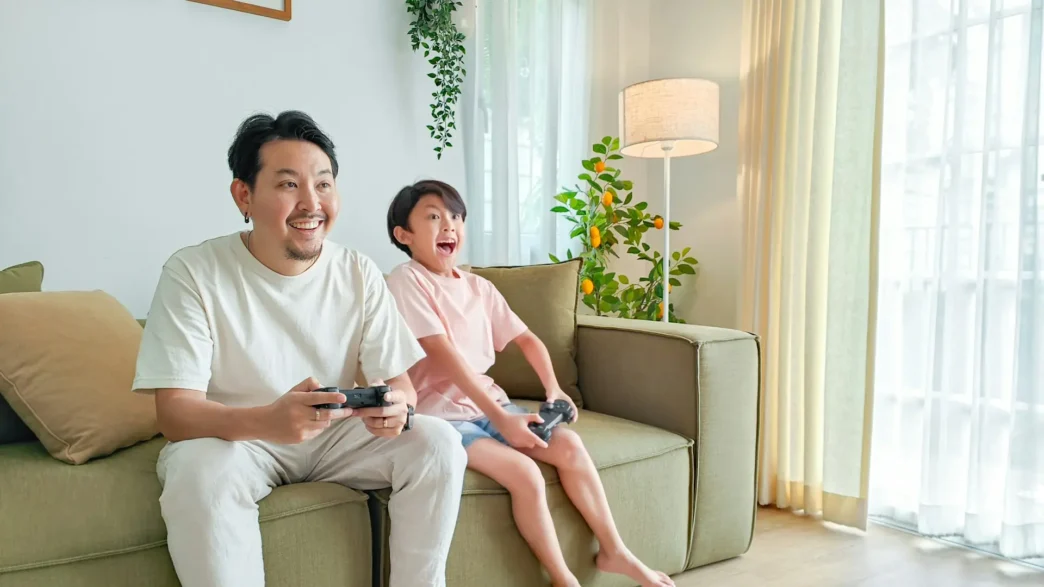
You sit down to play a game after a long day. You tell yourself it’s just a way to switch your brain off. No thinking. No effort. Just something to fill the time. But then halfway through, you realise your mind is actually buzzing.
That’s the funny thing about games. We often treat them like empty entertainment, something you do when you’re too tired to be creative. But more often than not, they’re quietly doing the opposite.

You’re already creating, even when you think you’re not
A lot of creativity in gaming happens without you even noticing it because you’re making choices, solving problems, and experimenting constantly with different game mechanics. You try something. It fails. You tweak it. It works. That loop is creative thinking, even if it doesn’t feel artistic at all.
Most of us tell ourselves to just play a game and forget about the more complicated stuff, but your brain doesn’t switch off that easily. It starts connecting ideas, testing outcomes, and imagining alternatives. That’s creativity in motion, whether you label it that way or not.
Choice-heavy games force you to think differently
Games that let you approach problems in multiple ways stretch your imagination. There are loads of creative video games that don’t tell you exactly what to do. They give you tools, rules, and space, then step back.
You’re left filling in the gaps. How do you solve this? What happens if you try something weird? That freedom pushes you to think beyond the obvious and trust your instincts a bit more.
Building worlds trains your imagination quietly
Some games don’t just ask you to play inside a world. They ask you to make one. Anyone who’s spent hours building a new Minecraft world knows how quickly time disappears.
You start with nothing. Then suddenly you’re planning layouts, experimenting with materials, and visualising ideas before they exist. That’s pure creative thinking, even if it looks like just blocks from the outside.
Games give you a safe place to experiment and fail
In real life, failing can feel expensive. Socially. Emotionally. Sometimes even financially. So we avoid risks, play it safe, and stick to what we know works.
Games flip that on its head. You can try something ridiculous, watch it fail, and laugh it off. Then you try again. That freedom to experiment without real consequences is a huge part of why creativity shows up so easily in games. You stop worrying about getting it right and start enjoying the process instead.
Even simple games scratch a creative itch
Not every creative spark comes from huge, complex projects. Sometimes it’s about mood and curiosity. For some people, the idea of online blackjack can be enticing for casual gamers because it mixes chance, rhythm, and decision-making in a way that feels mentally engaging without being heavy.
It’s still play. It’s still problem-solving. And it still gives your brain something interesting to chew on, even in short bursts.

Making things for games changes how you see them
There’s a big shift that happens when you stop just consuming games and start shaping them. Creating mods and custom content for video games turns players into designers.
Suddenly you’re thinking about balance, visuals, mechanics, and how others will experience what you’ve made. That perspective doesn’t just boost creativity in games–it can even spill over into how you approach other projects too.
Of course, it’s not just something everyone does, but when a game provides you with tools to make custom content, it can really help your creative juices flow.
Creativity shows up when there’s no pressure to perform
A lot of creativity disappears the moment it’s forced. When something has to be productive, impressive, or worth sharing, it suddenly feels heavy. Games don’t usually come with that pressure.
You’re not creating for an audience. You’re not chasing approval. You’re just doing something because it feels interesting in the moment. That lack of expectation is often what lets ideas flow more naturally, without you overthinking every move.
Science backs up what players already feel
This isn’t just wishful thinking from people who love games. Studies show that gaming could foster some sense of creativity, especially when games encourage exploration, experimentation, and choice.
That lines up with how many players feel after a good session. Energised. Inspired. Full of ideas. Not drained, like they’ve wasted time.
Creativity doesn’t always look productive
One of the reasons we downplay gaming is because creativity doesn’t always look useful. It doesn’t produce something tangible every time. It doesn’t fit neatly into a checklist.
But creativity is messy by nature. Games give you a low-pressure space to explore ideas without judgement. That’s often where the best thinking happens.
Games reconnect you with playful thinking
Somewhere along the way, most adults lose the habit of playful thinking. Everything has a purpose. Everything needs a reason. Fun becomes something you have to justify.
Games quietly bring that playfulness back. You explore just to see what happens. You test ideas out of curiosity. You enjoy the act of trying, not just the result. And once that mindset returns, it doesn’t always stay inside the game. It follows you into how you think, imagine, and create elsewhere too.
The realisation sneaks up on you
Most people don’t sit down intending to be creative when they game. They just want to relax. Then one day, they notice they’re thinking differently. Imagining more. Experimenting more.
This is usually when people start realising that gaming hasn’t been dulling their creativity at all. It’s been quietly exercising it the whole time.
So what’s really happening here?
Gaming isn’t stealing your creativity. It’s giving it somewhere to stretch out without pressure. When you stop treating games like a guilty habit and start seeing them as a space to explore, experiment, and play, everything shifts a bit.
This is usually when people realise that creativity doesn’t always come from sitting down to make something. Sometimes it shows up when you’re relaxed, curious, and enjoying yourself. And for a lot of us, that’s exactly what games have been doing all along.