


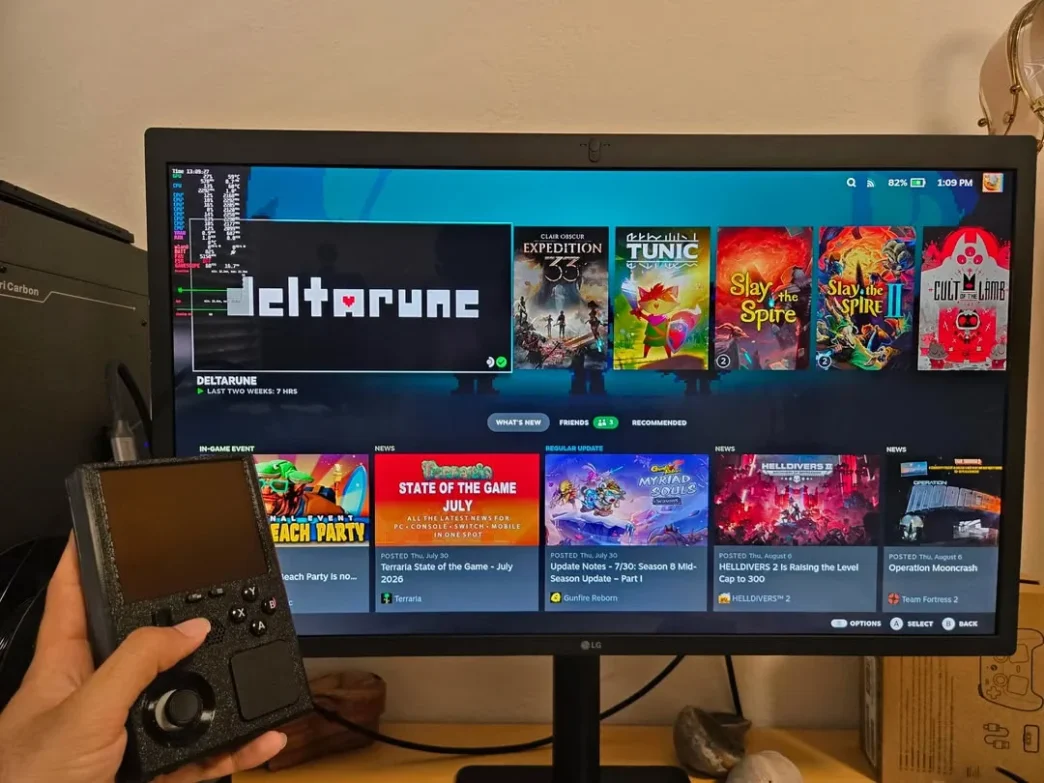
A hardware modder has squeezed major components from an LCD Steam Deck into a custom shell roughly matching the dimensions of the original Nintendo Game Boy. The resulting SteamBoy retains the Deck’s motherboard, battery, speakers, and controls, creating a compact but unfinished handheld PC that currently relies on an external display.
Key takeaways
- The SteamBoy uses genuine Steam Deck hardware in a shell measuring about 32 mm thick.
- Its custom 1200×1080, 90 Hz AMOLED display is not working yet.
- A smaller fan, custom heatsink mount, and 50 mV undervolt help manage temperatures.
- The system can boot and play games through a connected television.
- Shoulder triggers are not currently included, but the builder may add them later.
Steam Deck hardware in a Game Boy form factor
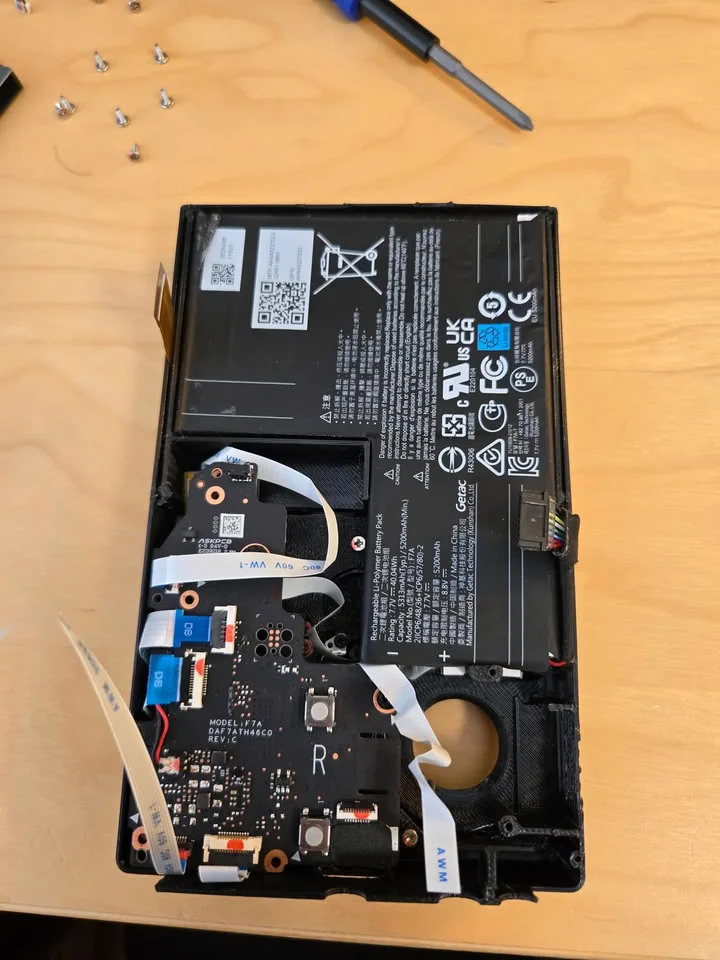
Reddit modder PhyFawkes reorganized the Steam Deck’s internal components into a vertical “sandwich” inside a custom 3D-printed enclosure. The build keeps the original motherboard, daughter boards, controller boards, battery, speakers, and face buttons rather than replacing the system with separate PC hardware.
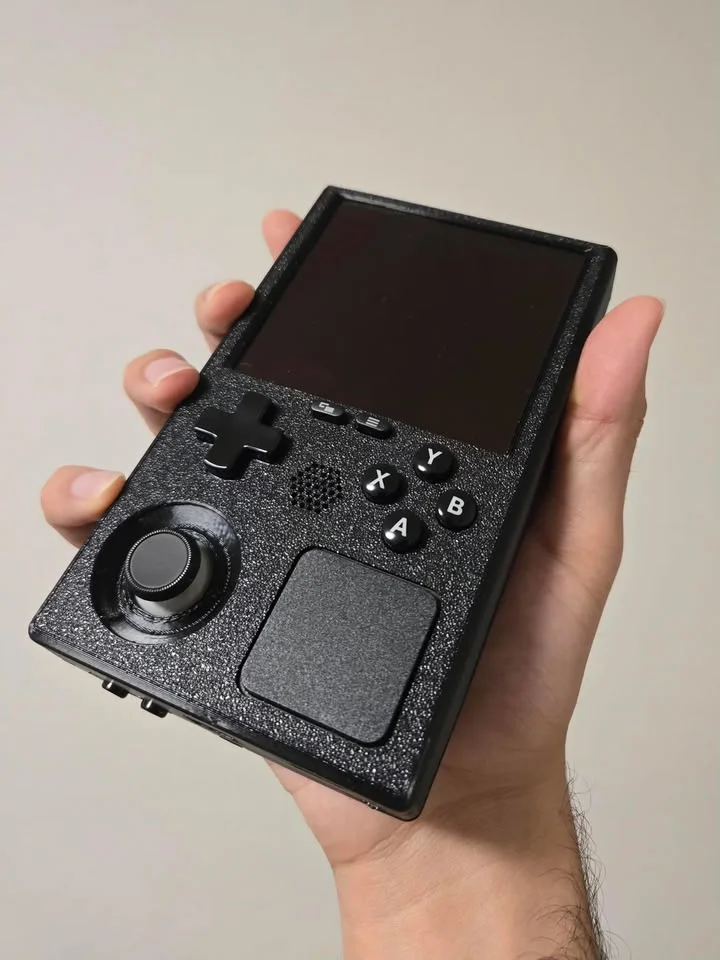
The SteamBoy includes a single thumbstick and one trackpad, preserving key parts of the Steam Deck control layout while adopting the tall proportions of Nintendo’s classic handheld. The original controller boards reportedly remain intact, and the project has so far avoided custom PCBs for the main system hardware.
A custom AMOLED screen is the main obstacle
The display remains the largest unfinished part of the project. PhyFawkes selected a 1200×1080 90 Hz AMOLED panel originally designed for virtual-reality hardware because it could fit the smaller enclosure. However, the panel does not communicate directly with the Steam Deck’s display interface.
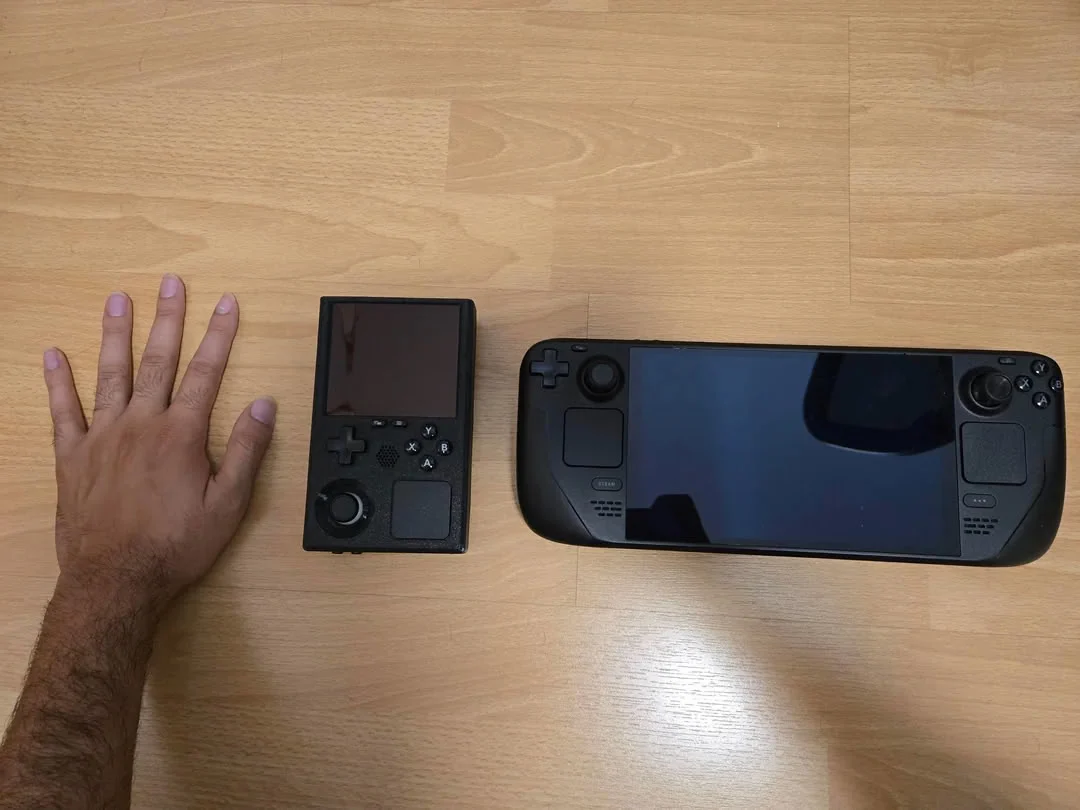
A custom adapter PCB and BIOS changes may be required to make the Deck recognize and drive the screen. Until that work is complete, the SteamBoy must output video to a television. That means the build is currently a working proof of concept rather than a finished portable console.
Cooling required major compromises
Shrinking the enclosure also meant abandoning the Steam Deck’s standard cooling solution. The SteamBoy uses a small 30×7 mm fan, a compact copper heatsink, and a custom 3D-printed mounting bracket.
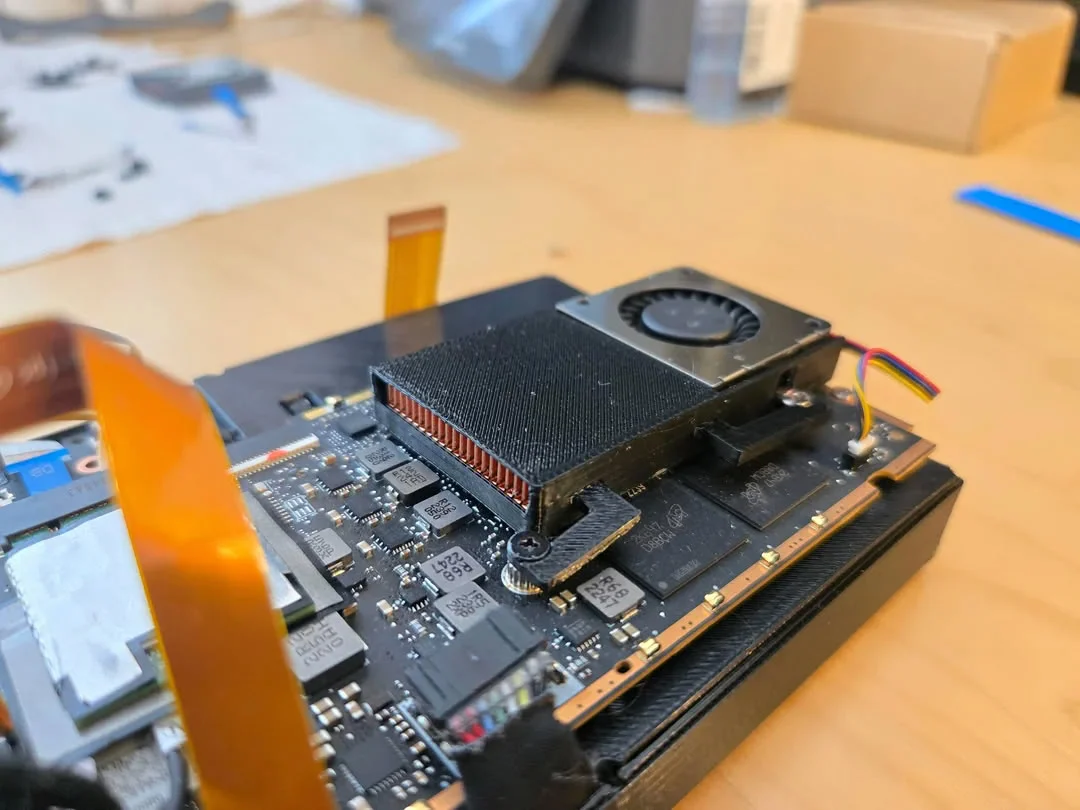
To keep temperatures under control, the processor and graphics hardware were reportedly undervolted by 50 mV. During testing, the system stayed around 70°C in Tunic and reached roughly 80°C in Clair Obscur: Expedition 33. Those results are encouraging for an enthusiast prototype, although sustained performance, noise, battery life, and demanding games will reveal whether the reduced cooling capacity is practical.
An impressive prototype, not a consumer-ready product
The SteamBoy demonstrates how far PC hardware modding can push the Steam Deck platform. Its compact shape could appeal to retro-focused players and modders who want full SteamOS capabilities in a more distinctive design, but the missing internal display and shoulder buttons limit its usefulness today.
For ThinkComputers readers, the project is less a product recommendation than an example of ambitious hardware engineering. Getting a complete Steam Deck motherboard, battery, and controls to function inside a Game Boy-sized shell is already a substantial achievement; completing the display interface and validating long-term thermals will determine how close the SteamBoy comes to being a genuinely usable handheld.