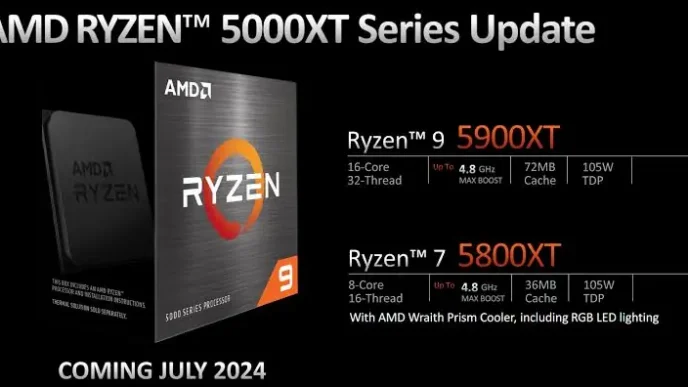
In an unexpected twist for PC enthusiasts, AMD has announced a delay in the launch of its eagerly awaited Ryzen 9000 series processors, primarily due to an unfortunate typo on the integrated heatspreader labels. Initially scheduled for July 31, 2024, the launch is now expected to occur later this summer as AMD prioritizes quality assurance.
Short Summary:
- Launch of Ryzen 9000 series delayed due to a labeling typo on CPU heatspreaders.
- Incorrect labels include Ryzen 9 printed instead of Ryzen 7 on key models.
- Affected processors are being recalled for re-screening and re-labeling.

The highly anticipated launch of AMD’s Ryzen 9000 desktop processors, codenamed “Granite Ridge”, has hit a snag as the company revealed that the unveiling originally slated for July 31, 2024, has been postponed. Sources indicate that the delay stems from a mislabeling issue pertaining to the processors’ integrated heatspreaders (IHS). Specifically, some processors were incorrectly labeled as “Ryzen 9 9700X” instead of their rightful designation as “Ryzen 7 9700X.” This mix-up has sparked widespread conversation in the tech community regarding quality assurance protocols at AMD.
AMD’s initial announcement highlighted concerns over the quality of the initial units shipped to partners, citing that they “did not meet our full quality expectations.” While the company has not officially confirmed the labeling errors as the sole cause of the delay, industry experts and reputable leakers have corroborated the mislabeling claims. Dr. Ian Cutress, a respected tech consultant and former CPU specialist at Anandtech, commented on social media that the setback was indeed due to a “typo on the packaging.”
“The real reason for this delay isn’t a serious issue; it’s a simple human error,” Dr. Cutress noted in response to a query about the legitimacy of the rumors surrounding the typo factor.
Images purportedly showing the mislabeled chips surfaced online, further substantiating these reports. A notable leaker known as HXL shared an image of a Ryzen 7 9700X with a heatspreader that read “Ryzen 9 9700X.” This prompted speculation about potentially widespread labeling errors affecting more than just one model. Reports have indicated that similar mistakes were found on Ryzen 5 9600X models, which were also erroneously marked.
The real reason for the Ryzen 9000 delay ….@IanCutress is right. pic.twitter.com/oM6ePWU6WC
— HXL (@9550pro) July 28, 2024
A heatspreader label is crucial not only for consumer recognition but also for regulatory compliance, as it usually contains critical information such as model numbers, production serials, and origin details. Therefore, a simple typo can lead to significant regulatory complexities, making it essential for AMD to address these errors before the products hit the market. Unlike simpler corrections that can be made on retail boxes with stickers, amending the mistakes on the IHS involves a more complex process of re-labeling.
The process of addressing this mistake is not as simple as many might assume. AMD is likely recalling the affected batch and performing a process known as silk screening or re-screening. This involves the use of laser etching or printing to correct the erroneous markings. Indeed, AMD’s official communication suggested that the decision to pull back units for a re-screening process stemmed from the company’s ambition to uphold the highest quality standards for all Ryzen users, indicating other technical issues may also be at play.
“We identified an issue with our packaged product testing process for Ryzen 9000 series processors that could result in a small number of parts reaching the market that do not meet our quality standards,” the company stated.
To add to the confusion, the timeline for the launch of the Ryzen 9000 series has also been staggered. The new release dates are now set for August 8, 2024, for the Ryzen 7 and Ryzen 5 models, followed by an August 15 launch for the higher-end Ryzen 9 models. While the shift in the schedule may raise eyebrows, it allows AMD the necessary time to ensure that the products meet their established quality standards.
Despite the chaos surrounding the recent mislabeling, some industry insiders have pointed out potential benefits of this delay. The prospect of a temporary lag might mean that AMD can ensure that the Ryzen 9000 chips launch without significant technical defects that could mar the product’s reputation. After all, a simple labeling mishap could have been far worse if it were indicative of deeper architectural flaws akin to those seen in Intel’s previous generation processors.
Looking towards the future, the controversy has amplified interest in the Ryzen 9000 series. With AMD’s claims suggesting performance improvements comparable to existing top contenders, gaming enthusiasts are eager to see how the Ryzen 7 9700X and others measure up to the Ryzen 7 5800X3D, which is currently considered a top-tier gaming CPU.
Meanwhile, speculation continues about the implications of this mishap on AMD’s image and the broader competitive landscape. Although tech enthusiasts often associate branding precision with overall quality, casual consumers might remain unaware of the subtlety behind these errors. This is evident in the humorous takes emerging from social media as users jest about the situation, describing the Ryzen 9 designation as a “collector’s item” due to its limited availability compared to its officially recognized counterparts.
“This issue is a classic example of how human error can lead to unexpected complexities in production scale,” noted a tech analyst over at Tom’s Hardware.
Despite the typographical hiccup, AMD has prepared to maintain momentum in its momentum-rich narrative surrounding the Ryzen 9000 series. Early reviews and previews are expected to offer insights on the overall experiences with these units once they are finally launched.
As the dust settles, many remain optimistic. Given the nature of the reported issues, if they are primarily a result of oversight rather than a fundamental defect, it allows AMD the chance to deftly manage public perception leading into the important back-to-school sales season.
For PC builders and gamers, now is a crucial time to stay updated. As we edge closer to the revised launch dates, interested parties should keep a close watch on AMD’s official channels and reputable tech sites. With significant developments anticipated, the question on everyone’s mind remains: will AMD be able to maintain the reputation they’ve built, or will this situation prove to be a blemish on their otherwise stellar track record?