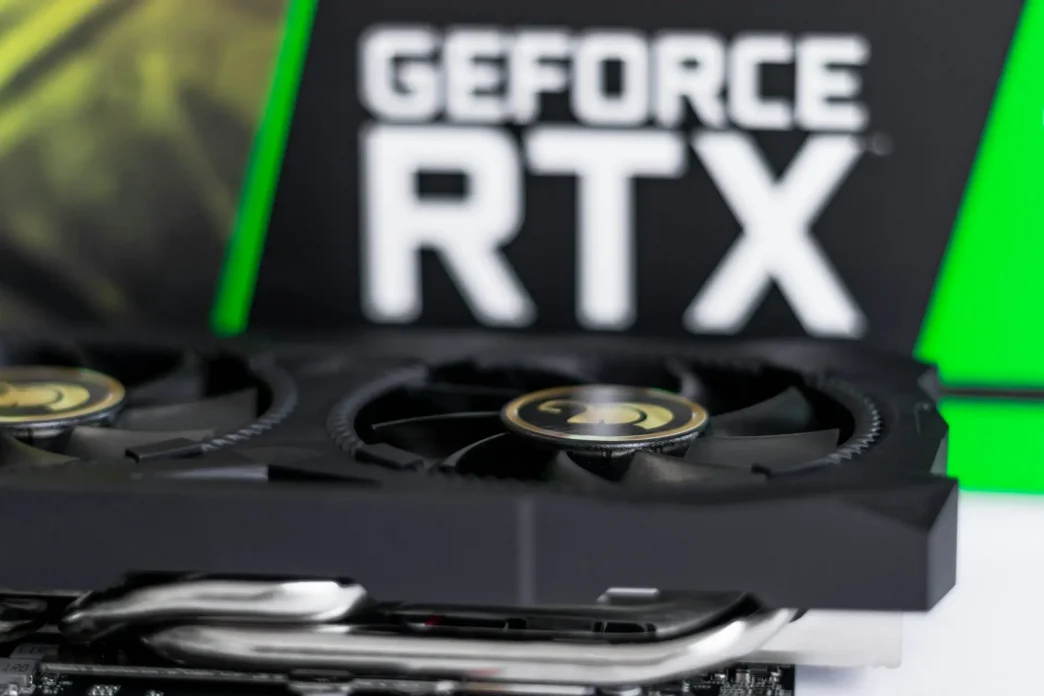
Choosing the best GPU for 1440p gaming can be tough. In 2025, 1440p remains a sweet spot for high-quality visuals and smooth gameplay. This guide will help you pick the right graphics card for your needs and budget.
Ready to upgrade your gaming rig?
Key Takeaways
- The Nvidia GeForce RTX 4070 Super is the best overall GPU for 1440p gaming in 2025, offering great performance and value at $590.
- AMD’s Radeon RX 7900 GRE provides top-tier 1440p performance with 16GB VRAM, delivering 77 FPS average at this resolution.
- For budget-conscious gamers, the Nvidia GeForce RTX 3060 Ti offers solid 1440p gaming at 57 FPS average for a lower price.
- When choosing a 1440p GPU, consider factors like refresh rate support, ray tracing capabilities, VRAM capacity, and power efficiency.
- At least 8GB VRAM is needed for smooth 1440p gaming, but 12GB or more is recommended for future-proofing and maxing out game settings.
Key Considerations for Choosing a 1440p GPU
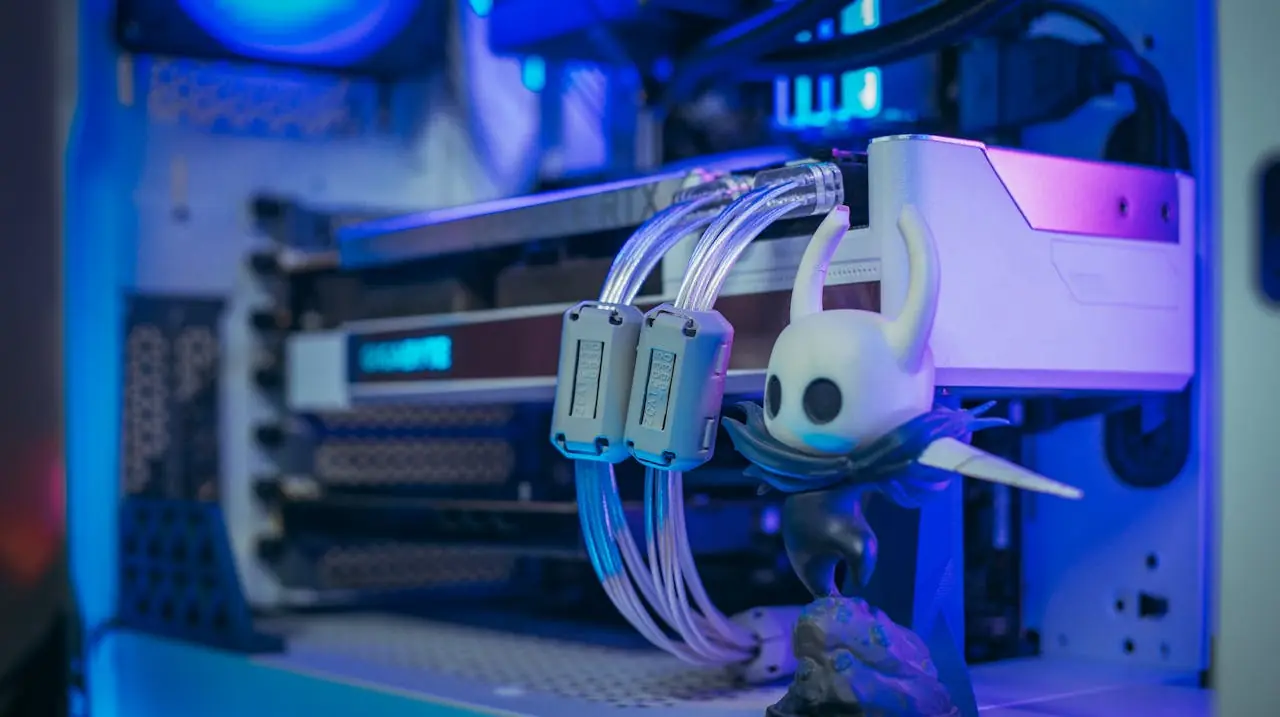
Picking the right GPU for 1440p gaming needs careful thought. Your choice affects frame rates, visual quality, and overall gaming experience.
Refresh rate support (144Hz, 240Hz, etc.)
Refresh rate support is essential for smooth gaming at 1440p. Higher refresh rates like 144Hz and 240Hz deliver more fluid motion and reduced input lag. Most modern GPUs can handle 1440p at 144Hz, but 240Hz demands more power.
The RTX 4070 Super and RX 7900 GRE excel at high refresh rates, pushing 1440p gaming beyond 144 fps in many titles.
GPU choice affects your monitor’s performance. A powerful card lets you take full advantage of 144Hz or 240Hz displays. For competitive gaming, higher refresh rates give an edge in fast-paced action.
It’s important to note that you’ll need a monitor that supports these high rates to see the benefits.
Ray tracing and DLSS/FSR support
Ray tracing brings lifelike lighting to games. It mimics how light bounces off surfaces in the real world. This tech makes shadows, reflections, and global illumination more realistic.
Nvidia leads in ray tracing performance, while AMD is catching up.
DLSS and FSR boost frame rates without losing image quality. Nvidia’s DLSS uses AI to upscale lower-res images. AMD’s FSR works similarly but doesn’t need special hardware. Both techs help GPUs run games smoother at higher resolutions.
For 1440p gaming, these features can make a big difference in performance.
VRAM capacity
VRAM capacity plays a key role in 1440p gaming performance. Modern games at this resolution often need 8GB to 12GB of VRAM for smooth gameplay. High-end GPUs like the AMD Radeon RX 7900 GRE offer 16GB GDDR6 VRAM, ideal for demanding titles and future-proofing.
More VRAM allows for higher texture quality, better anti-aliasing, and improved frame rates at 1440p.
GPUs with ample VRAM handle large textures and complex scenes without stuttering. This is crucial for open-world games and titles with detailed graphics. For 1440p gaming in 2025, aim for at least 8GB VRAM.
12GB or more will ensure top performance in the latest games with room for future upgrades.
Power consumption and efficiency
Moving from VRAM capacity, we shift our focus to power use and efficiency. These factors play a big role in GPU choice for 1440p gaming.
Power-hungry GPUs can drive up electricity bills and need beefy power supplies. The AMD Radeon RX 7900 GRE uses two 8-pin PCIe connectors, while the Nvidia GeForce RTX 4070 Super tops out at 220W.
Efficient cards run cooler and quieter, which is great for long gaming sessions. They also work well in smaller cases with less airflow. Gamers should weigh performance against power draw to find the right balance for their needs and budget.
Price-to-performance ratio
Power efficiency links closely to cost-effectiveness in GPUs. A card’s price-to-performance ratio weighs its gaming prowess against its price tag. This metric helps gamers find the best value for their money.
The RTX 4070 Super stands out here, offering strong 1440p performance at $590. It beats pricier options in frames per dollar spent.
Balancing cost and capability is key for smart GPU shopping. Some cards may seem cheap but struggle with high-end games. Others might be overkill for most users’ needs. The sweet spot lies in cards that deliver smooth 1440p gameplay without breaking the bank.
AMD’s RX 7900 GRE also shines in this area, rivaling Nvidia’s offerings at a competitive price point.
Best Overall 1440p GPU: Nvidia GeForce RTX 4070 Super

The Nvidia GeForce RTX 4070 Super stands out as the top choice for 1440p gaming. It offers great performance and value, making it ideal for high-refresh-rate displays and ray-traced games.
Features & Description (Nvidia GeForce RTX 4070 Super)
Nvidia’s GeForce RTX 4070 Super packs a punch for 1440p gaming. Launched in January 2024, this GPU boasts 12GB of GDDR6X memory. It offers ray tracing and DLSS 3 support, enhancing visual quality and boosting frame rates.
The card’s power efficiency shines, delivering high performance without excessive energy use.
Gamers can expect smooth gameplay at high refresh rates on 1440p monitors. The RTX 4070 Super handles demanding titles with ease, maintaining solid frame rates even with ray tracing enabled.
Its ample VRAM caters to texture-heavy games and future releases. Let’s explore how this GPU stacks up against the competition.
Pros & Cons (Nvidia GeForce RTX 4070 Super)
The Nvidia GeForce RTX 4070 Super offers a mix of strengths and weaknesses for 1440p gaming. Let’s explore its pros and cons:
- Strong 1440p performance: Handles most games at high settings and frame rates.
- DLSS 3 support: Boosts frame rates in supported games.
- Ray tracing capabilities: Enables realistic lighting and reflections.
- Power-efficient: Uses less energy than some rival cards.
- Reflex technology: Reduces input lag for competitive gaming.
- Limited VRAM: 12GB may not be enough for future games at max settings.
- High price: Costs more than some other mid-range options.
- No DisplayPort 2.1: Lacks support for the newest display standard.
- Large size: May not fit in smaller PC cases.
- Driver issues: Some users report occasional software glitches.
Best AMD GPU for 1440p: AMD Radeon RX 7900 GRE

The AMD Radeon RX 7900 GRE stands out as a top choice for 1440p gaming. This card offers great performance and value for gamers who want high-quality visuals without breaking the bank.
Features & Description (AMD Radeon RX 7900 GRE)
AMD’s Radeon RX 7900 GRE packs a punch for 1440p gaming. This graphics card boasts 16GB of GDDR6 memory, giving it ample room for high-res textures and complex game worlds. In tests, it delivers an impressive 77 FPS average at 1440p resolution, ensuring smooth gameplay across many titles.
The RX 7900 GRE uses AMD’s latest RDNA 3 architecture, offering improved power efficiency and performance. It supports ray tracing and AMD’s FidelityFX Super Resolution (FSR) technology, enhancing visual quality without tanking frame rates.
Gamers can expect solid 1440p performance in demanding titles and excellent frame rates in esports games. Let’s explore how this GPU stacks up against the competition.
Pros & Cons (AMD Radeon RX 7900 GRE)
Moving from features to pros and cons, let’s examine the AMD Radeon RX 7900 GRE’s strengths and weaknesses. This GPU offers a mix of benefits and drawbacks for 1440p gaming:
- Best-in-class performance: Delivers top-tier framerates at 1440p resolution
- 16GB VRAM: Ample memory for high-resolution textures and future games
- Cost-effective: Offers great value for its performance level
- No AMD reference card: Only available through third-party manufacturers
- Weak creative performance: Lags behind in content creation tasks
- Power-hungry: Requires a robust power supply unit
- Limited ray tracing ability: Falls short in ray-traced games compared to NVIDIA
- Driver issues: Some users report stability problems with AMD software
- Runs hot: May need extra cooling in compact cases
- Limited availability: Can be hard to find in stock at times
Best Budget 1440p GPU: Nvidia GeForce RTX 3060 Ti
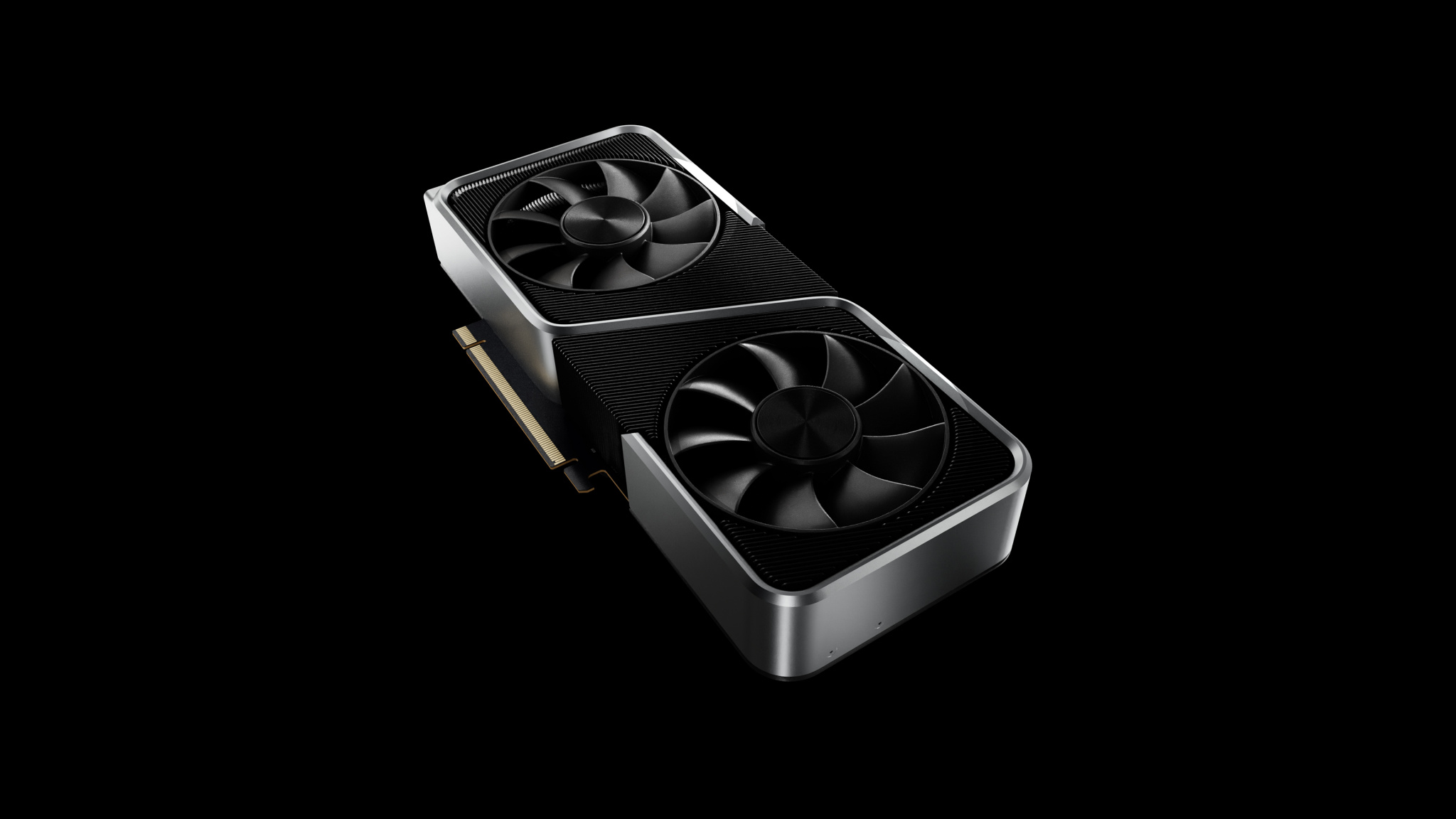
The Nvidia GeForce RTX 3060 Ti offers great value for 1440p gaming. It packs enough power to run most games at high settings while keeping costs down.
Features & Description (Nvidia GeForce RTX 3060 Ti)
Nvidia’s GeForce RTX 3060 Ti packs a punch for 1440p gaming. This GPU boasts 8GB of GDDR6 memory, perfect for handling high-resolution textures and complex game worlds. It delivers smooth gameplay with an average of 57 FPS at 1440p resolution across various titles.
RTX 3060 Ti supports ray tracing and DLSS, enhancing visual quality and boosting performance. Its power efficiency makes it a great choice for budget-conscious gamers. The card’s compact size fits well in most PC builds, offering solid 1440p gaming without breaking the bank.
Pros & Cons (Nvidia GeForce RTX 3060 Ti)
The RTX 3060 Ti offers a balance of performance and value for 1440p gaming. Let’s explore its strengths and weaknesses:
- Strong 1440p performance: Handles most games at high settings and 60+ FPS
- Ray tracing capability: Supports real-time ray tracing for enhanced visuals
- DLSS support: AI upscaling boosts frame rates in supported games
- Cool and quiet operation: Stays cool under load with low noise levels
- 8GB VRAM: Sufficient for most current 1440p gaming needs
- Power efficient: Requires less power than higher-end GPUs
- Affordable price point: Offers good value for 1440p gaming
- Limited 4K performance: Struggles with demanding games at 4K resolution
- Ray tracing performance hit: Enabling ray tracing can significantly lower frame rates
- VRAM limitations: 8GB may not be enough for future games at max settings
- Availability issues: Can be hard to find in stock at MSRP
- Non-standard power connector: Requires adapter for some power supplies
Best Intel GPU for 1440p: Intel Arc A770

Intel’s Arc A770 brings a fresh option to 1440p gaming. This GPU offers solid performance and ray tracing at a fair price.
Features & Description (Intel Arc A770)
The Intel Arc A770 packs a punch for 1440p gaming. It boasts 16GB of GDDR6 memory, giving it ample room for high-resolution textures. In tests, it delivers an average of 46 FPS at 1440p resolution.
This GPU supports ray tracing and AI-enhanced upscaling, matching features found in its rivals.
Intel’s first high-end graphics card shows promise in the 1440p arena. It offers competitive performance at a lower price point than some alternatives. Gamers can expect smooth gameplay in most titles, though some tweaking may be needed for the most demanding games.
Let’s look at the pros and cons of this GPU next.
Pros & Cons (Intel Arc A770)
Intel’s Arc A770 GPU offers a mix of benefits and drawbacks for 1440p gaming. Let’s look at its pros and cons:
- Strong performance in modern games at 1440p resolution
- Competitive pricing compared to similar GPUs from NVIDIA and AMD
- Intel XeSS technology enhances frame rates in supported titles
- 16GB VRAM capacity suits demanding games and future titles
- Ray tracing support for enhanced visual effects
- Decent power efficiency for its performance class
- Driver updates have improved stability and game compatibility
- Good for content creation tasks like video editing
- Supports AV1 encoding for efficient video streaming
- Struggles with some older games due to driver issues
- Limited availability makes it hard to find in some regions
- High power draw under load compared to some rivals
- Lacks NVIDIA DLSS support found on GeForce cards
- Fewer optimized games compared to AMD and NVIDIA GPUs
- Ray tracing performance lags behind NVIDIA’s offerings
- May require more tweaking to get optimal performance in some games
Additional GPUs Worth Considering
The GPU market offers more options beyond our top picks. Check out these other graphics cards that might suit your 1440p gaming needs.
Nvidia GeForce RTX 4060 Ti
Nvidia’s RTX 4060 Ti packs a punch at $420. It matches the AMD RX 7700 XT’s performance but uses 80W less power. This GPU boasts 4352 cores, a 2,535 MHz boost clock, and 8GB GDDR6 RAM.
It hits 60 fps in 1440p ultra settings for most games. Ray tracing at higher resolutions needs DLSS help.
Compared to older cards, the 4060 Ti shines. It beats the RX 6700 XT by 30-35% while costing just 26% more. Against the RX 6650 XT, it’s 25% faster for only 12% extra cost. For 1440p gaming, this card offers solid value and efficiency.
AMD Radeon RX 7700 XT
The AMD Radeon RX 7700 XT packs a punch for 1440p gaming. It boasts 12GB GDDR6 memory and a 230-watt power draw. Priced at $419, this card offers 30-35% more power than its predecessor, the RX 6700 XT.
It shines in rasterization, beating the RTX 4060 Ti by up to 21%.
This GPU excels in standard rendering but lags in ray tracing. Its FSR2 tech falls short of Nvidia’s DLSS. Still, the RX 7700 XT slightly outperforms the RX 6800, making it a solid mid-range choice for 1440p gaming in 2025.
It’s a great pick for those seeking high frame rates at this resolution.
Nvidia GeForce RTX 4080 Super
Nvidia’s GeForce RTX 4080 Super packs a punch for 1440p gaming. This GPU boasts impressive specs, delivering smooth gameplay at high frame rates. It handles ray tracing with ease, thanks to its advanced architecture.
The card’s 16GB VRAM ensures ample memory for demanding titles.
Power users will appreciate the RTX 4080 Super’s performance in both gaming and content creation. Its DLSS 3 technology boosts fps without sacrificing image quality. While pricey, this GPU offers future-proof features for serious gamers and professionals alike.
FAQs About 1440p GPUs
FAQs about 1440p GPUs cover key points for gamers. These questions tackle VRAM needs, 1440p vs 1080p, ray tracing, and AMD vs Nvidia performance. Read on to learn more about choosing the right GPU for your 1440p gaming setup.
What is the minimum VRAM needed for 1440p gaming?
For smooth 1440p gaming, you need at least 8GB of VRAM. This amount handles most modern games at high settings. But 12GB or 16GB is better for future-proofing. More VRAM lets you use higher texture settings and run games with ray tracing.
It also helps with multitasking and streaming while gaming.
Some games push VRAM limits at 1440p. Open-world titles and games with lots of mods can use over 8GB. GPUs with 16GB VRAM, like some high-end models, offer the best experience. They let you max out settings without worrying about memory limits.
For the best 1440p gaming, aim for a GPU with at least 12GB VRAM if your budget allows.
Is 1440p worth it over 1080p?
Moving from VRAM needs to display quality, let’s explore the benefits of 1440p over 1080p.
1440p offers a big jump in image sharpness and detail over 1080p. You’ll see clearer textures, crisper text, and more on-screen space for work or play. Games look stunning at this higher res, with less jagged edges and more visual info.
While 1440p needs more GPU power, many find the upgrade worth it for the improved visuals. Modern GPUs handle 1440p well, often with high frame rates for smooth gameplay. The extra pixels also help for tasks like video editing or graphic design.
Can 1440p GPUs handle ray tracing effectively?
Building on the benefits of 1440p, let’s explore its ray tracing capabilities. Modern 1440p GPUs can handle ray tracing well. High-end cards like the RTX 4070 Super and RX 7900 GRE excel at this task.
They offer smooth frame rates with ray tracing on in many games. Mid-range options may need to lower some settings for the best performance.
Nvidia leads in ray tracing tech, thanks to its dedicated RT cores. AMD has made strides but still lags behind in this area. Both brands offer upscaling tech (DLSS and FSR) to boost performance with ray tracing on.
This helps maintain high frame rates at 1440p resolution while enjoying improved lighting and reflections.
Are AMD GPUs better than Nvidia for 1440p?
Ray tracing performance isn’t the only factor to consider. AMD and Nvidia both offer strong options for 1440p gaming. AMD’s Radeon RX 7900 GRE leads in raw performance at this resolution.
It delivers top-notch frame rates in most games. Nvidia counters with features like DLSS and better ray tracing. The RTX 4070 Super, while pricier, matches the 7900 GRE in many titles.
Your choice depends on priorities. AMD often wins in pure fps, while Nvidia excels in extra features. Budget also plays a role. AMD tends to offer better value at lower price points.
For high-end 1440p gaming, both brands have solid choices. The best pick comes down to specific games and features you value most.
Conclusion
Selecting an appropriate GPU for 1440p gaming in 2025 is essential. Our guide highlights leading options such as the AMD Radeon RX 7900 GRE and Nvidia GeForce RTX 4070 Super. We’ve evaluated these cards in practical gaming scenarios to provide you with precise information.
Your selection will depend on your budget, game preferences, and desired features. This guide equips you with the necessary details to make a well-informed choice and experience smooth 1440p gaming.