The global demand for advanced memory, driven by the artificial intelligence (AI) boom, is creating a ripple effect across the semiconductor market, leading to unexpected shortages and price hikes for older DRAM technologies. Even the once-obsolete DDR2 memory is now experiencing significant price increases as manufacturers prioritize high-demand, cutting-edge products.
Key Takeaways
- The AI boom is driving demand for HBM and server DRAM, causing major manufacturers to shift production away from mature-node products.
- This shift has led to a shortage of consumer DRAM, including DDR4 and DDR3, forcing buyers to seek older generations like DDR2.
- DDR2 contract prices have seen substantial increases, with further rises expected in the coming quarters.
- Some manufacturers are reducing production of lower-margin legacy products to focus on more profitable advanced technologies.
The AI Effect on Legacy Memory
The insatiable appetite for AI infrastructure has compelled major DRAM suppliers like Samsung Electronics, SK Hynix, and Micron to prioritize the production of High Bandwidth Memory (HBM) and server DRAM. This strategic shift means reduced wafer allocations for mature-node products, such as DDR4 and older.
Cascading Shortages and Price Hikes
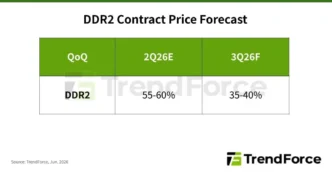
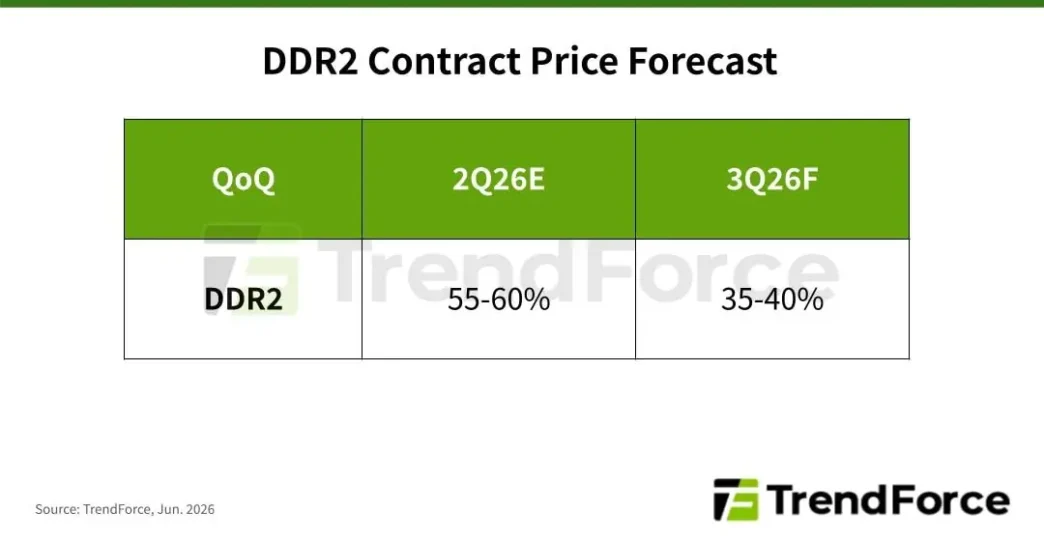
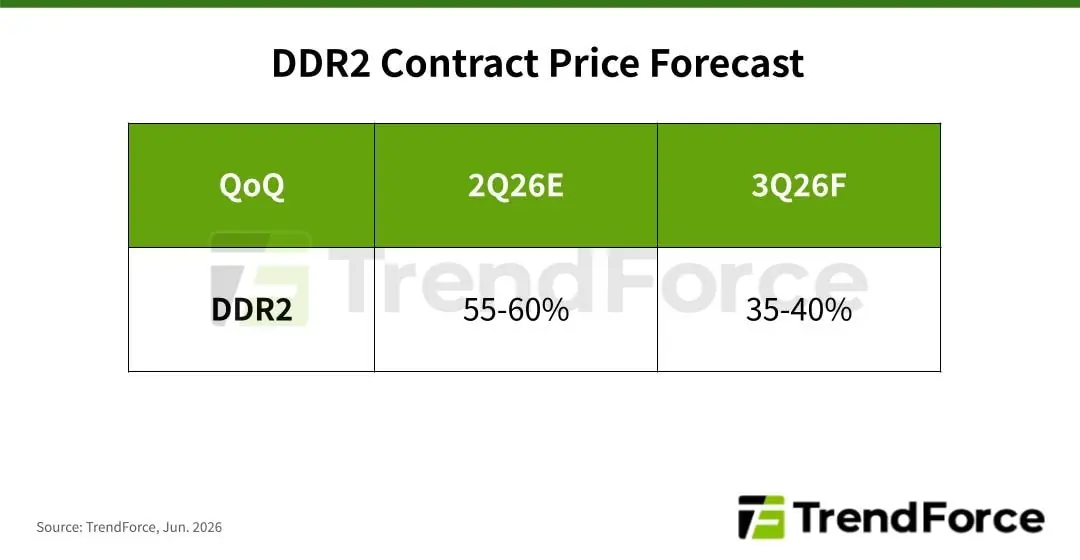
As the supply of DDR4 and DDR3 dwindles, consumer DRAM buyers are increasingly turning to Taiwanese manufacturers like Nanya and Winbond for legacy memory. Demand now significantly outstrips the available bit output from these suppliers, granting them considerable pricing leverage. Consequently, DDR2 contract prices, which saw an estimated 55-60% surge in the second quarter of 2026, are projected to climb another 35-40% in the third quarter.
Manufacturers Adapt to Market Demands
Facing limited production capacity and the drive for profitability, companies like Nanya and Winbond are strategically reducing the output of lower-margin products. Winbond, in particular, is gradually phasing out DDR2 production to reallocate its capacity towards more lucrative DDR3, DDR4, and LPDDR4 offerings. This move further tightens the already scarce DDR2 market.
OEM and ODM Responses
To manage escalating system costs amidst these shortages, some Original Equipment Manufacturers (OEMs) and Original Design Manufacturers (ODMs) are resorting to downgrading memory specifications. This includes redesigning products that used DDR4 to incorporate DDR3, and even shifting DDR3-based products to utilize DDR2.
ESMT’s Counter-Strategy
While Winbond scales back DDR2 production, another semiconductor company, ESMT, plans to maximize its DDR2 output within its existing wafer allocation from foundry partner PSMC. This effort aims to mitigate the supply gap created by Winbond’s exit from the DDR2 market and capitalize on the increased demand.
The current DRAM market dynamics illustrate how the intense focus on advanced AI technologies can unexpectedly impact even the most dated components, leading to a widespread supply crunch and significant price inflation across the memory spectrum.
Via Trendforce