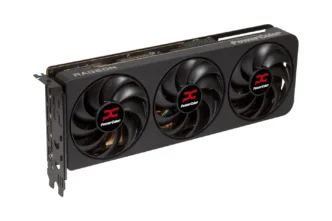

Enthusiasts are discovering a way to boost the performance of AMD’s Radeon RX 9070 graphics card by flashing it with the BIOS from the more powerful RX 9070 XT model. This unofficial modification allows for higher power limits and clock speeds, resulting in notable performance improvements in both synthetic benchmarks and gaming.
Key Takeaways
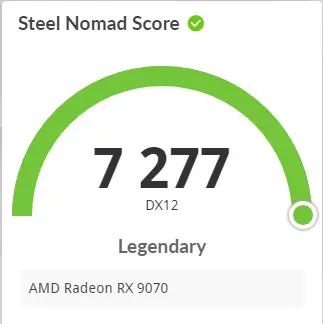
- Flashing an RX 9070 XT BIOS onto an RX 9070 can yield performance gains of up to 25% in synthetic benchmarks like 3DMark Steel Nomad.
- In real-world gaming scenarios, such as Cyberpunk 2077, users have reported performance increases of 8-12%.
- The primary mechanism for this boost is an increased power limit, allowing the RX 9070 to draw over 300W, up from its stock 220W.
- This modification does not unlock additional compute units or architectural features.
- The process carries significant risks, including the potential to “brick” the GPU and voiding the manufacturer’s warranty.
Unlocking Hidden Potential
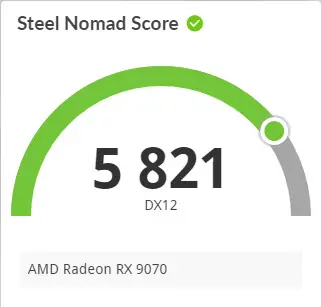
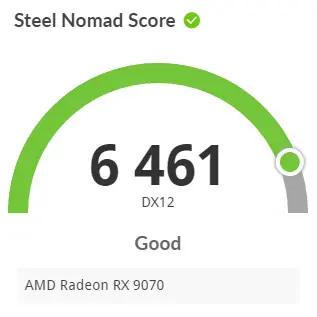
Users have successfully modified their Radeon RX 9070 cards by flashing them with the BIOS from the RX 9070 XT. This process, while not officially supported by AMD, has demonstrated impressive results. One user, identified as noVa-realiZe on Reddit, reported a 25% performance increase in 3DMark Steel Nomad after applying the XT BIOS and further tuning voltage and memory settings. The initial flash alone provided an 11% boost.
Gaming Performance Uplift
While synthetic benchmarks show substantial gains, the impact on actual gaming performance is more modest but still significant. In Cyberpunk 2077, played at 1440p with ray tracing enabled, the modified RX 9070 saw an average frame rate increase from 70 FPS to 78 FPS, an improvement of approximately 8-12%. This enhancement can lead to a smoother and more responsive gaming experience.
How It Works and Associated Risks
The performance boost is primarily attributed to the increased power limit. The XT BIOS allows the RX 9070 to operate at power levels exceeding 300W, a considerable jump from the stock 220W. This higher power draw enables the GPU to sustain higher clock speeds under load. However, this modification is not without its risks. Users must be aware of the potential for increased heat output, higher power consumption, and the possibility of system instability. Crucially, flashing a non-native BIOS can permanently damage the graphics card, rendering it unusable, and will almost certainly void the product’s warranty. Enthusiasts undertaking this mod are advised to proceed with caution and ideally use cards equipped with a dual BIOS feature for easier recovery.
Community Reaction and Future Implications
The community has shown a mix of excitement and caution regarding this mod. While the performance gains are attractive, the inherent risks are a significant deterrent for many. The fact that such a substantial uplift can be achieved through a simple BIOS flash highlights the potential headroom left in AMD’s GPU designs, often limited by conservative power and thermal targets set by manufacturers. This practice, reminiscent of older GPU modding techniques, continues to appeal to a segment of the PC hardware enthusiast community willing to push the boundaries of their hardware.
Via Reddit