


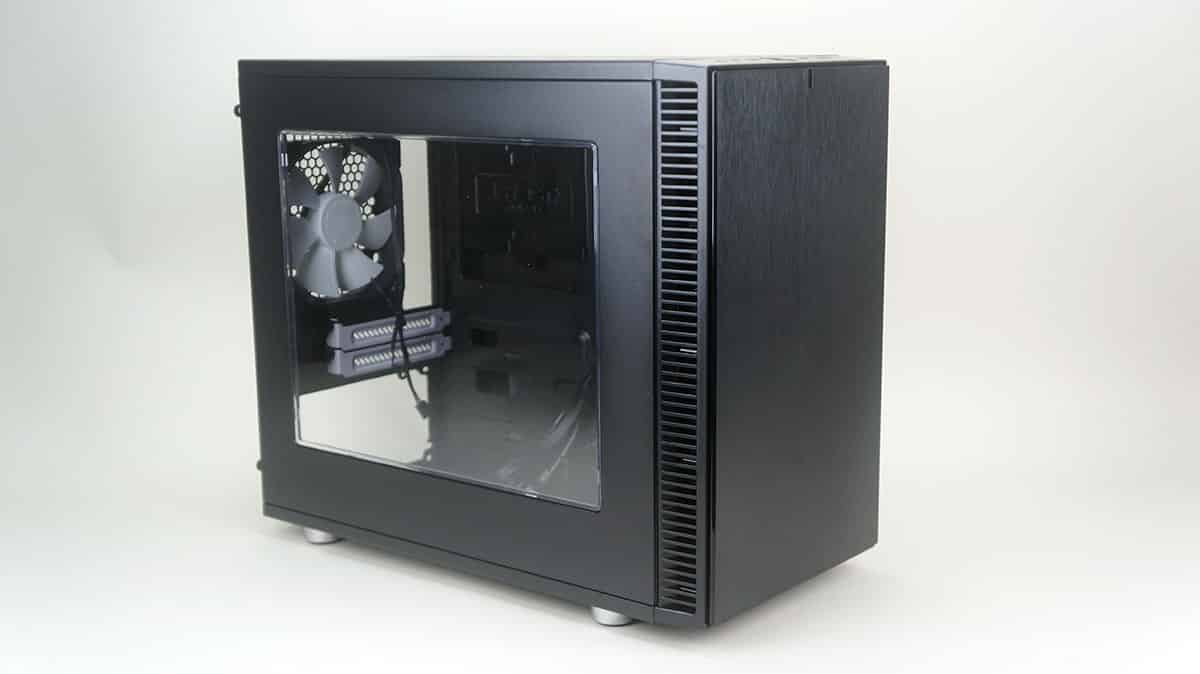
Fractal Design Define Nano S Overview
The first thing you will notice about the Define Nano S is its size, it is much smaller than your traditional case with official dimensions of 203 x 344 x 412mm. While most mini-ITX cases are designed as cubes or something similar, the Define Nano S looks much like a normal mid-tower, just smaller. This design is actually great, and will make installation and compatibility with components much easier.
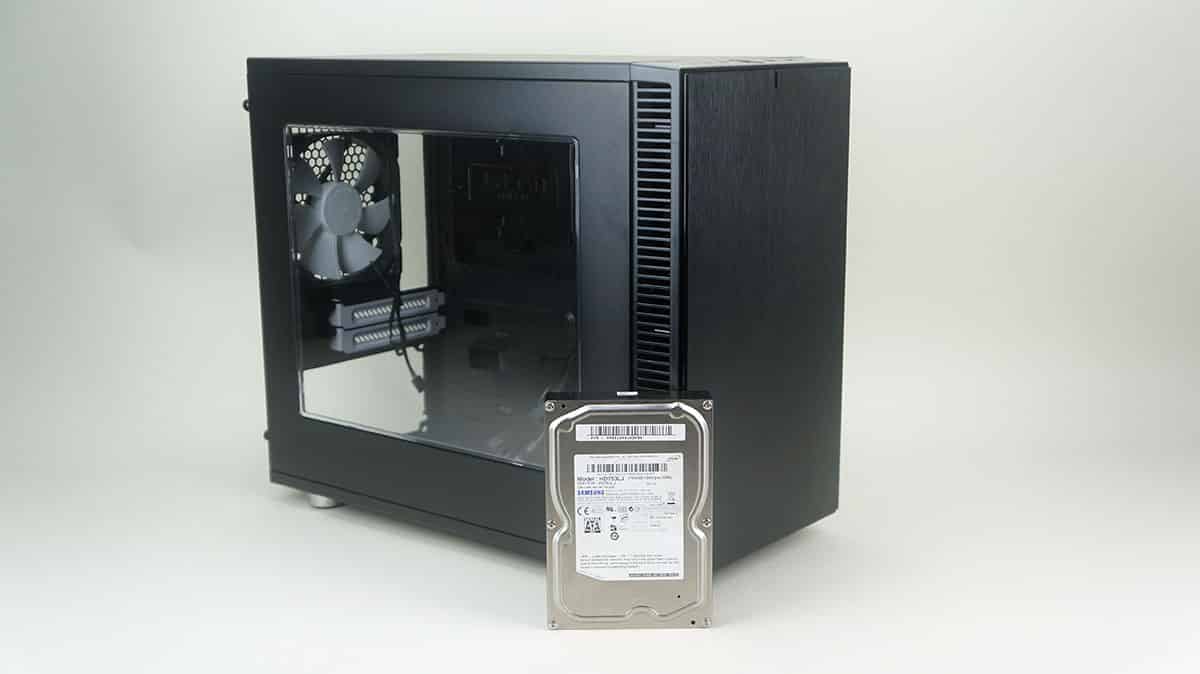
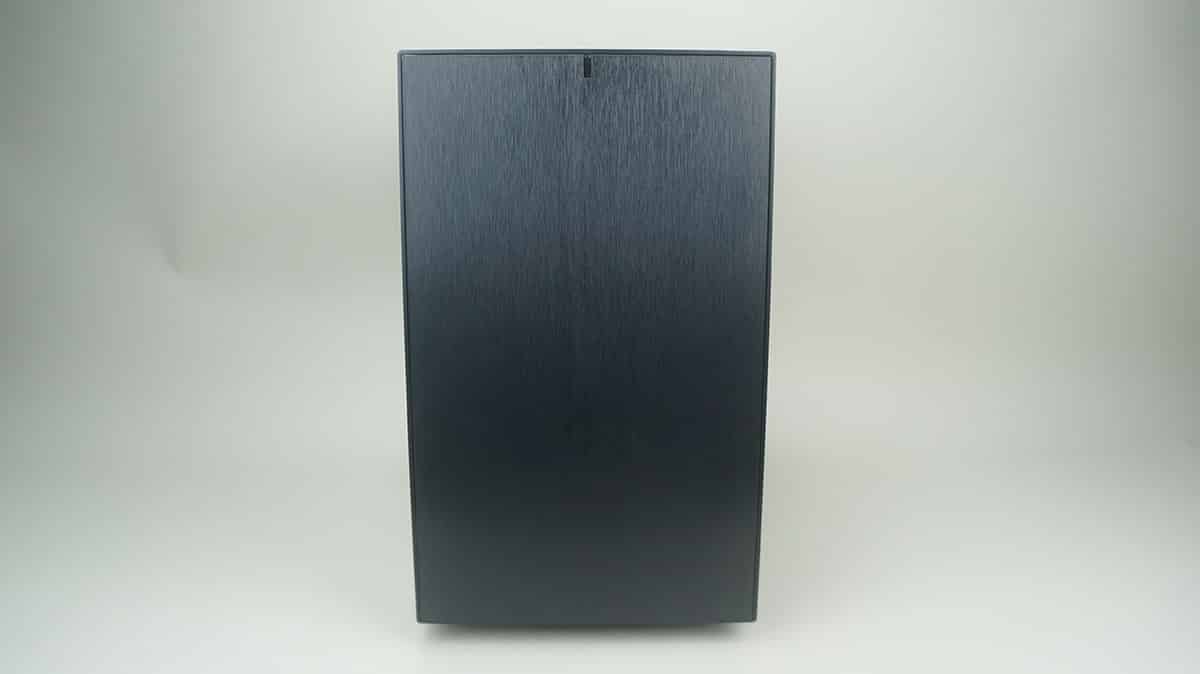
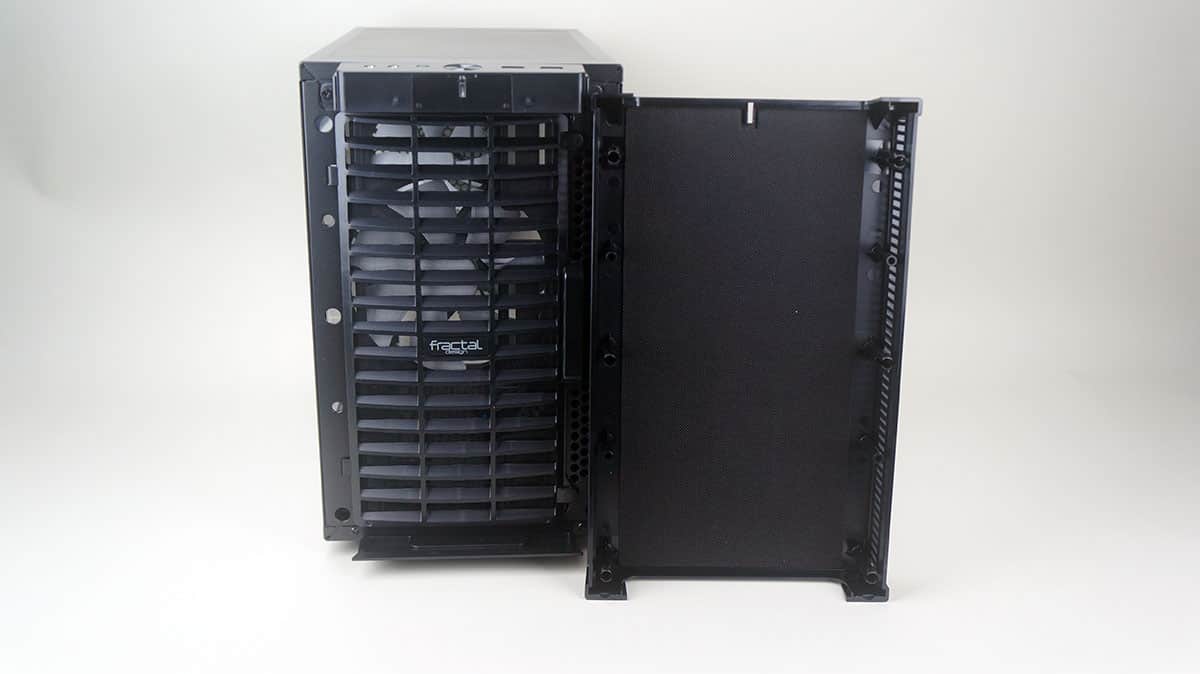
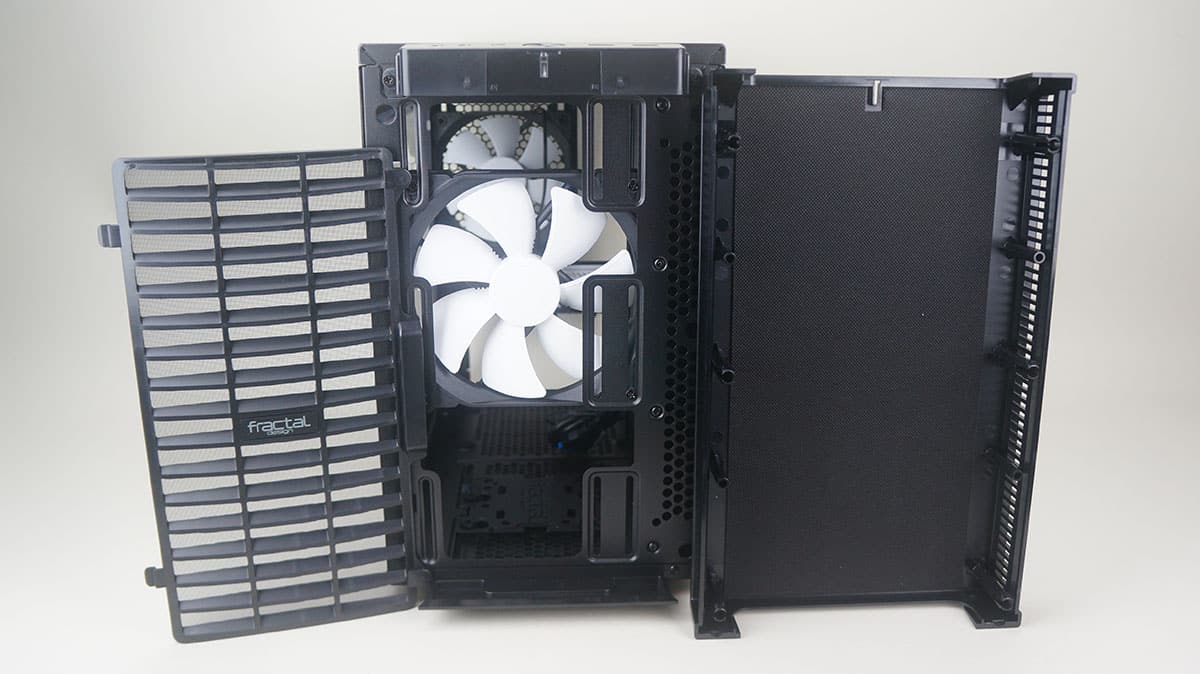
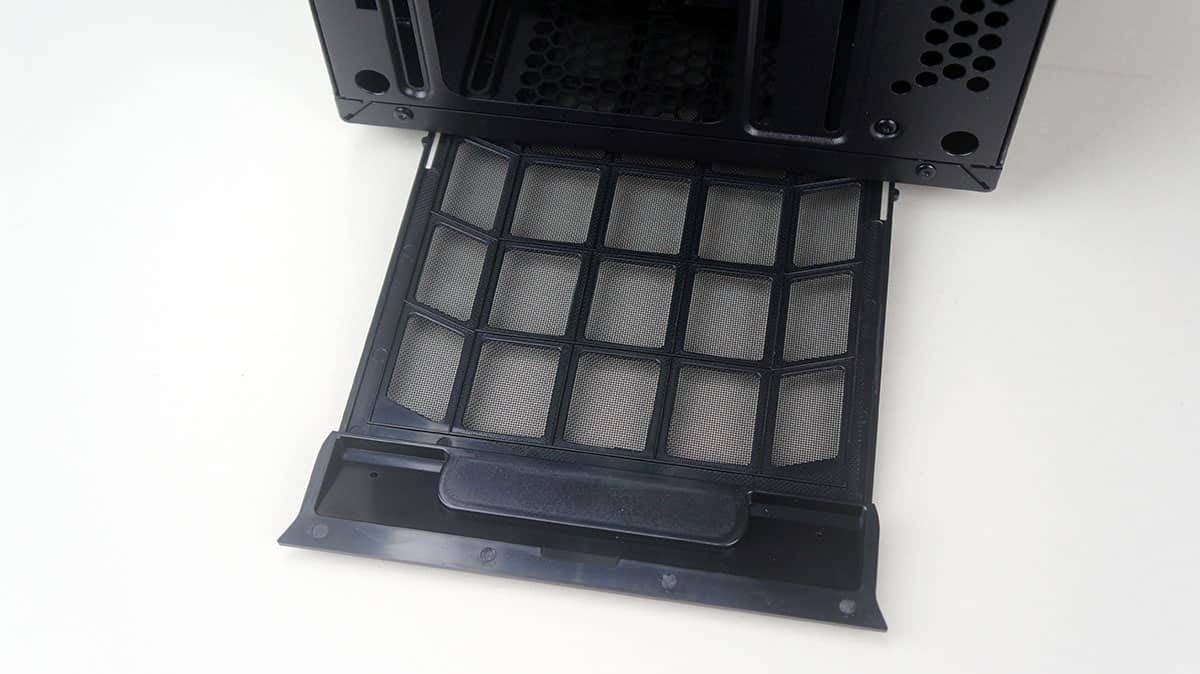
Like the other cases in the Define Series the Nano S goes for that sleek look. The front of the case is all plain besides a small LED at the top of the case. The front part of the case actually easily pulls off. When you take it off the first thing you see is a removable filter. With that out of the way you can see Fractal Design has included a 140 mm intake fan. The front of case supports two 120 / 140 mm fans or water cooling radiators up to 280 mm. There is also a filter on the bottom of the case that can be pulled out from the front of the case.
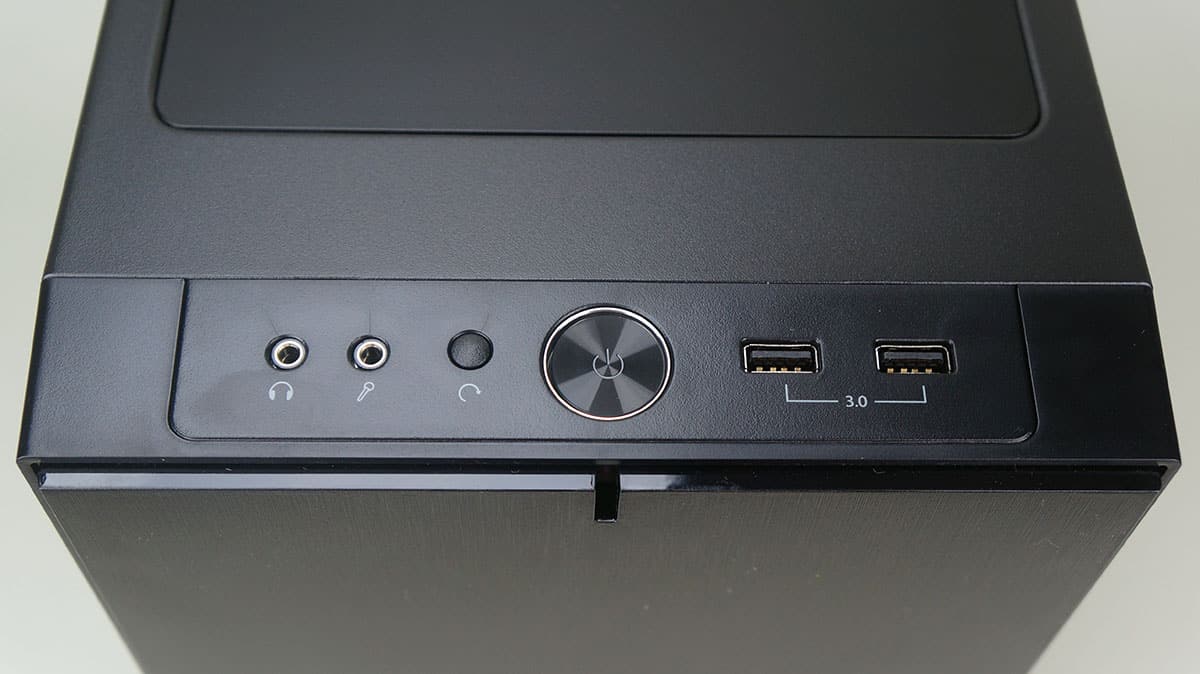
Moving up to the top part of the front of the case we have all of your buttons and connections. You have two USB 3.0 ports, HD Audio connections, a large power button and smaller reset button.
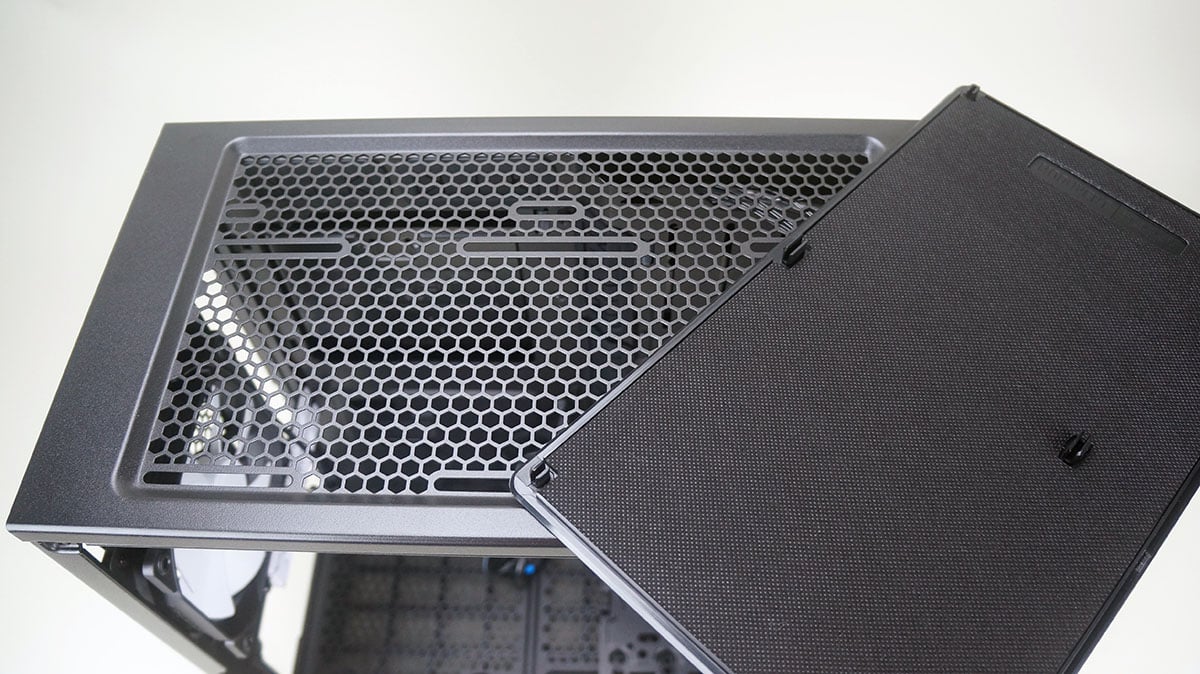
The rest of the top of the case is pretty plain. There is actually a top cover on the case that will help with sound dampening. The top cover is plastic, but has sound dampening material on the inside. With the top cover removed we can see there is room for cooling up top. You can fit two 120 / 140 mm fans or a 240 mm radiator up there.
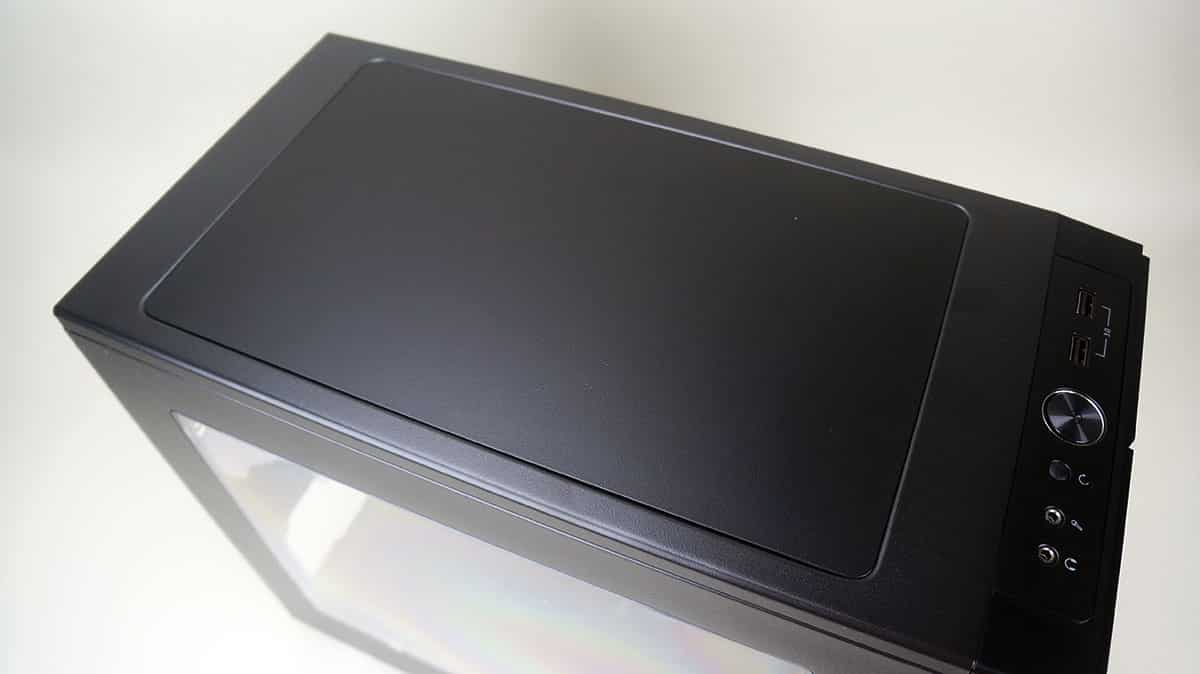
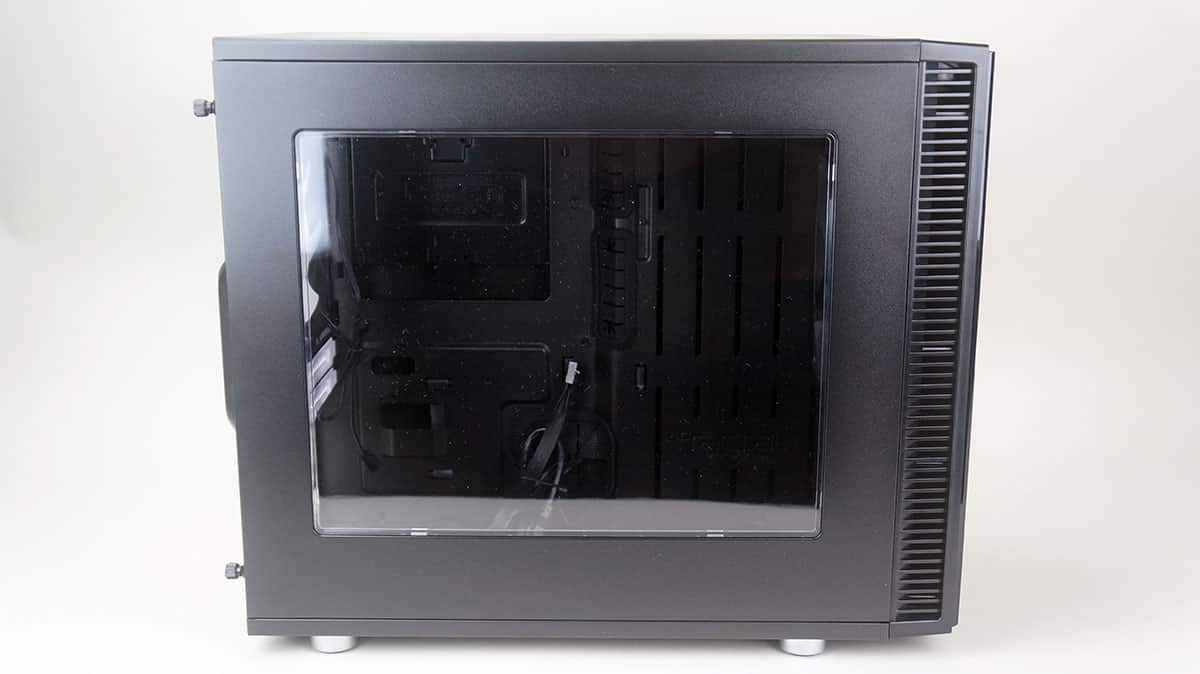
This is the windowed version of the case so you have a side panel window that allows your to show off most of the components in your system. There is also a non-windowed version available.
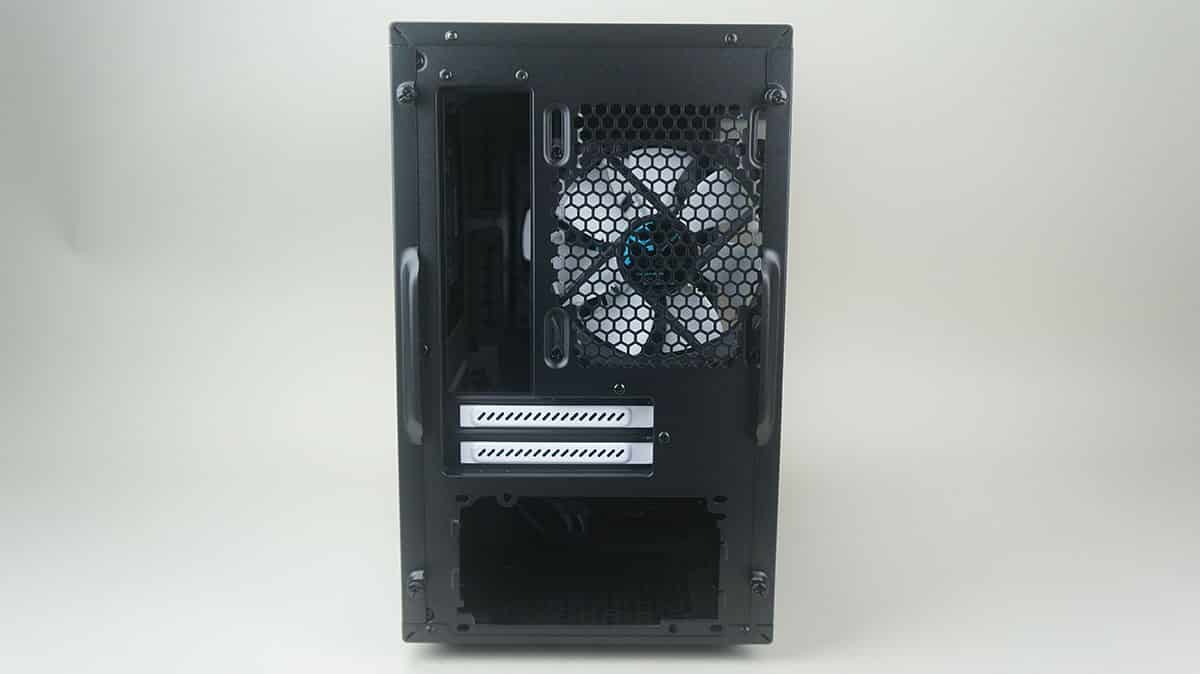
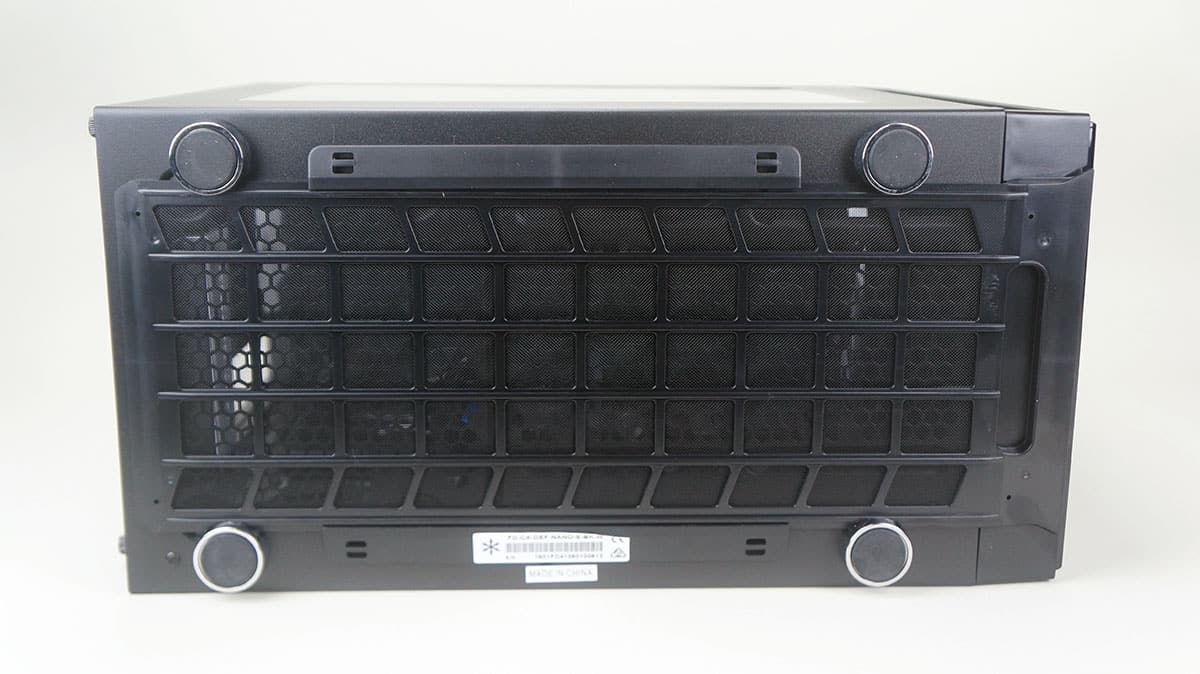
The rear of the case has a pretty simple design. For cooling you have a 120 mm exhaust fan. The mounting has a slit design so you can move the fan up and down depending on where your CPU is located and if you have top cooling installed. Taking a look at the bottom of the case we can see the filter that comes out from the front goes across the entire bottom of the case.



I have been keeping an eye on reviews of this case even after I already bought one to see if someone calls out on its shortcomings. While it looks utilitarian as Fractal’s cases always have (which I love) and seems to have good set of features, I think there is a number of small but significant misses with the case that Fractal overlooked.
For air cooling and silence, ITX has never been a good fit and despite being quite large for an ITX case Nano is unfortunately not an exception. GPU cooling is the main issue here. Only GPUs using reference coolers will work well in this case. There simply is not enough space in these 2 slots between the PCI-E x16 slot and PSU. Anything even slightly over 2 slots will not fit and air coolers at 2 slots will get starved of air extremely easily. Using less power hungry and thus smaller GPUs will not help as they get more easily covered by PSU.
OK, so air cooling is not a perfect match, how about water?
When you look at the specs, pay attention to the possibility of mounting a radiator to the top of the case. Why is there few if any reviewers who try that? Closer look at the specs reveals that you can have components with height up to 34mm on motherboard. Notably, this includes RAM which in its standard positioning is about 35mm from the top of case (so chance of fitting a radiator and fans between top of the case and RAMs is basically nonexistent). I have DDR4 with minimal heatsink on them (that specs say and measuring tape shows fit in the standard 34mm). A large 45mm thick 240mm radiator I have will not fit there. With the target audience of the case (and water cooling crows) I would expect tall RAM sticks a rule rather than exception.
OK, so the radiator will not fit up there. Will it fit in front? Sure, easily. the same 45mm thick 240mm radiator with 25mm fans on it fits there just fine. Having a standard 10.5″ GPU (like GTX 980Ti or GTX1080) will also work. Only a few millimeters to spare but it does fit which is honestly awesome!
What is less awesome is how restrictive both the front fascia and the air filter in front are to air flow. I have that same 240mm radiator cooling 980ti and an i7 (~350W TDP shoved into that poor radiator). Radiator attached to the front of the case and pulling air in from outside gave me around 50C temperatures in NZXT S340 (which also has a somewhat restrictive but different front fascia). The exact same setup moved to Nano S gave me 60C temperatures at higher fan speeds. Ripping the fascia off took temperatures down 4-5C and lowered the fan speed a little. Removing the air filter as well gave me almost the same 50C result I got in S340. All this with sides open for both cases (and top off for Nano S). Closed case results are predictably worse for Nano S due to smaller volume (again until I remove the fascia and air filter).
With all that, noise dampening is quite useless for high-end components as you will almost definitely want to take the top cover off the case to keep the noise down.
tl;dr:
– GPU is very close to PSU and this hampers open-air coolers on GPUs.
– Radiator at the top requires no high components on motherboard, nothing over 34mm including RAM.
– Front fascia and air filter are quite restrictive, at least when it comes to watercooling radiators.
I happen to own one and here is the list of what can be done better:
1. USB ports on front panel should be rotated 180 as one would expect to see the “front” of USB device. Some times they have indicator LEDs.
2. I’d really like to have an optional top cover similar to the front panel. I don’t want to see the fans when moduvent removed, I don’t want the dust get into the case when system is powered off and the sound dampening would be great. Though this might require optional (taller) front panel.