


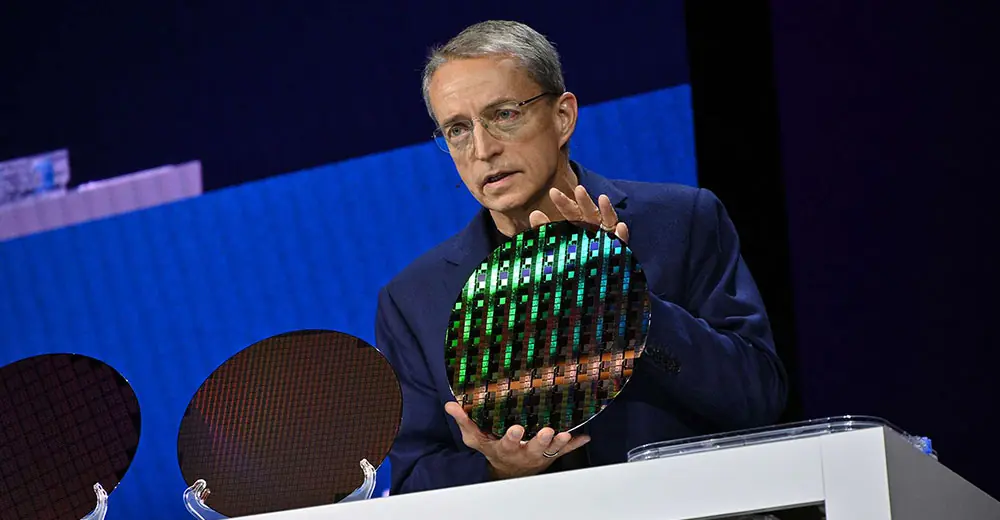
Intel’s CEO Pat Gelsinger is gearing up to unveil a pivotal reorganization plan aimed at cutting costs and revamping the tech giant’s strategy, which may include the sale of its programmable chip unit, Altera.
Short Summary:
- Gelsinger plans to present a cost-reduction proposal at a board meeting, focusing on divesting non-essential business segments.
- The restructuring may include pausing the $32 billion factory project in Germany and selling Altera, acquired for $16.7 billion in 2015.
- Intel faces intense competition from rivals like Nvidia, driving the need for this strategic pivot amidst a significant decline in market value.
Pat Gelsinger, Intel’s Chief Executive Officer, is slated to reveal a comprehensive restructuring strategy to the company’s board this month, as the chipmaker navigates one of the most challenging periods in its storied history. Following disappointing earnings and facing increasing pressure from competitors like Nvidia, Intel is under immense pressure to safeguard its position within the semiconductor landscape.

According to sources familiar with the development, Gelsinger’s proposal is expected to detail a series of measures designed to streamline operations and bolster profitability. Central to this strategy is the divestiture of non-core business units, prominently featuring the programmable chip division, Altera. Intel initially acquired Altera back in 2015 for a hefty $16.7 billion, a move that signaled its ambition in the field of programmable logic devices. However, as profits wane, the sustainability of such acquisitions is being called into question.
“It’s been a difficult few weeks,” Gelsinger remarked during an investor conference, expressing a commitment to address the issues plaguing the company.
This reorganization plan will be officially discussed at a mid-September board meeting, where Gelsinger and other senior executives will present the intricacies of their vision. While specifics of the strategy remain under wraps and are likely to be finalized before the board gathering, reports suggest involving steps to curtail capital expenditure associated with new factory expansions. A significant point of contention appears to be the potential suspension or outright cancellation of a $32 billion manufacturing plant initiative in Germany, aimed at enhancing Intel’s production capabilities. This initiative has already faced multiple delays, and any decision to scale back further expenditure would undoubtedly impact local economies in the region.
Intel’s struggles are exacerbated by its formidable competitors. Nvidia, which has successfully positioned itself as the preeminent AI chipmaker, boasts a staggering market capitalisation that has recently surged to approximate $3 trillion. In stark contrast, Intel’s market cap has dwindled to below $100 billion, following a dreary second-quarter earnings report in August that disclosed a net loss of $1.65 billion—compared to a net income of $1.47 billion during the same period last year.
Changing the Game
As part of its broader restructuring strategy, Intel has actively engaged advisory firms like Morgan Stanley and Goldman Sachs to inform its next moves. These firms are tasked with identifying which business units can be sold off while determining which segments are vital for the company’s future. Although bids for product units have not yet been solicited, such actions are anticipated contingent upon board approval.
The looming board meeting is crucial as Intel’s leadership decides the future of its operations amidst significant staffing changes, including a 15% workforce reduction aimed at yielding approximately $10 billion in savings. This operational overhaul also includes the suspension of dividend payouts, indicating an urgent necessity to reshape financial priorities.
Intel’s woes are further highlighted by the company’s recent decision to divest its 1.18 million shares in Arm Holdings, a prominent UK-based chip design firm, through which Intel realized about $147 million. This sale aligns with the overarching goal of rationalizing Intel’s portfolio and returning to profitable growth, focusing on its most critical assets.
“We’re working hard to address the issues,” Gelsinger added, indicating a strong commitment to minimizing operational inefficiencies.
Industry Landscape
The competitive landscape in the semiconductor industry is evolving rapidly. The advancements made by companies like Nvidia have set a high bar for performance and profitability. Intel has been forced to adapt, recognizing the immediate need to bolster its AI capabilities and technological portfolio to reclaim lost ground. Analysts predict that positions taken by competitors could substantially hinder Intel’s ability to regain its former glory without decisive action.
Amid these disruptions, the prospects for Altera are particularly noteworthy. As the programmable chip segment faces scrutiny, the potential sale of Altera could bring relief to Intel’s financial structure. While Intel has plans to initially consider taking Altera public, future discussions may revolve around outright sales to interested parties, including potential suitors like Marvell Technologies. Marvell’s interest could provide an avenue for Intel to offload Altera, restructuring both companies’ focuses in the highly contested chip sector.
Intel’s operational strategy continues to shift towards enhanced independence between its distinct business units. The company has already initiated a structural separation of its foundry services from its product design, a move intended to ensure confidentiality for clients utilizing its facilities. This segmentation will protect proprietary technologies from potential leaks while ensuring that both branches can operate more effectively and react to market conditions.
Overall, as Pat Gelsinger prepares to outline Intel’s strategies in mid-September, the board and stakeholders will be looking for bold, transformative actions that may steer the company back towards profitability while navigating an intensely competitive environment.
Future developments will be closely monitored by industry analysts and tech enthusiasts alike, as the implications of Intel’s decisions will resonate across the semiconductor sector and influence the broader technology landscape. Analysts and stakeholders alike will be watching to see if Gelsinger’s plans can turn around Intel’s fortunes, potentially marking a new chapter in this storied tech giant’s saga.
As the situation unfolds, keep an eye on ThinkComputers.org for ongoing insights into this critical moment in the world of PC hardware, as well as updates about how these changes might impact tech consumers and PC building enthusiasts.


