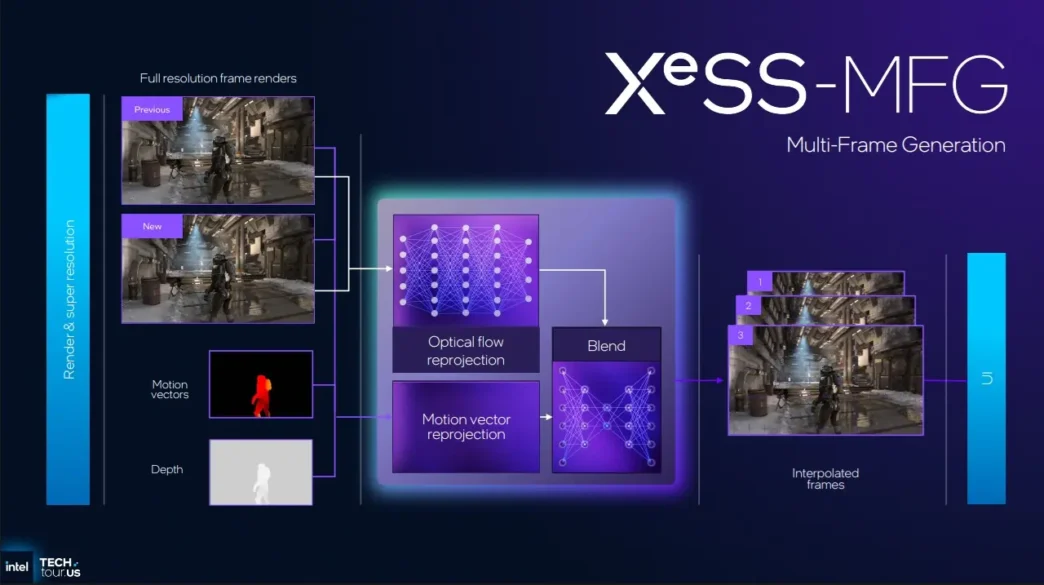
Intel has revealed XeSS 3 with Multi-Frame Generation (MFG), a major update set to shake up the world of AI-powered graphics. The announcement positions Intel’s technology squarely against NVIDIA’s DLSS and AMD’s FSR, with the promise of dramatic performance improvements across a range of GPUs.
Key Takeaways
- Intel XeSS 3 introduces Multi-Frame Generation (MFG) with up to 4x frame output.
- The technology will be available on all Intel Arc GPUs with XMX hardware—including older models.
- Frame Generation Override and shared memory features will be added to Intel Graphics Software.
- Enhanced shader precompilation and performance optimizations are included for smoother gaming.
Multi-Frame Generation: How It Works
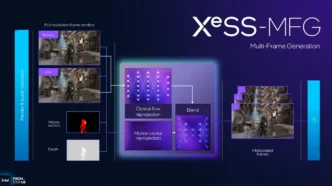
Unlike traditional single-frame interpolation, XeSS 3’s Multi-Frame Generation can insert up to three additional frames between two rendered frames, potentially quadrupling perceived frame rates. Using motion vectors and depth buffers, the system utilizes AI to quickly generate smooth, high-quality frames, reducing the load on the GPU and delivering an ultra-fluid gaming experience.
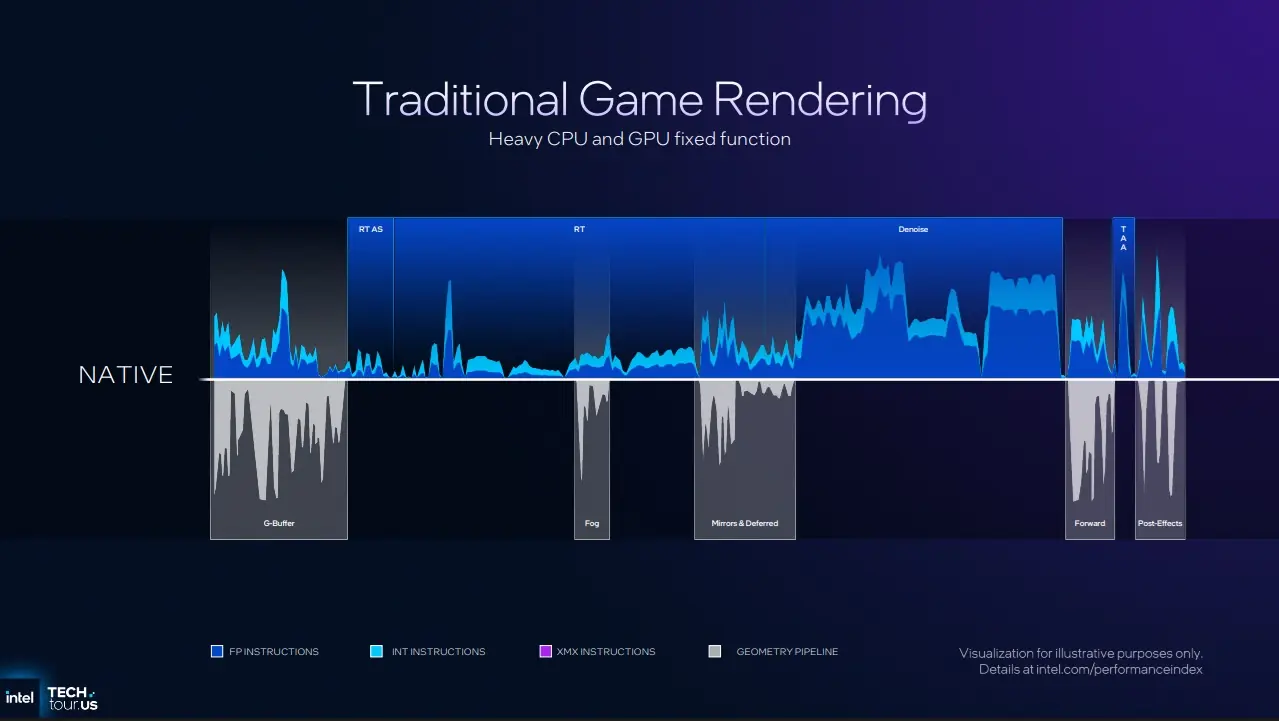
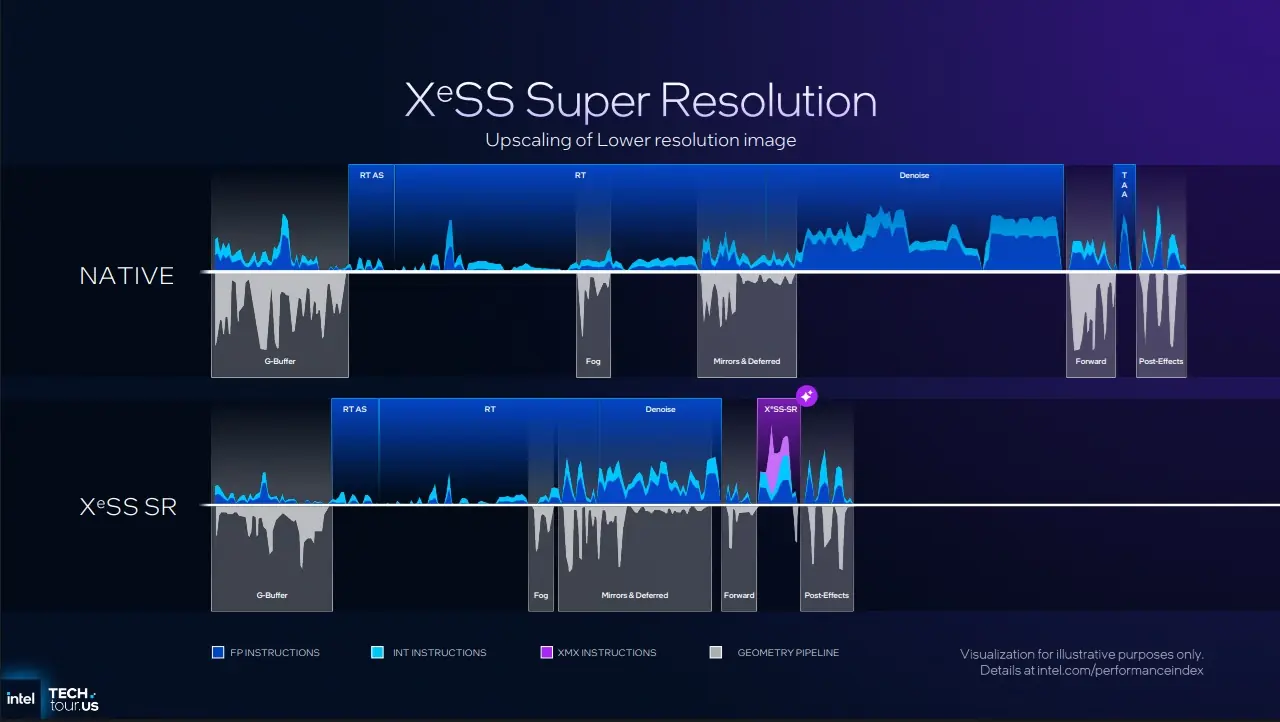
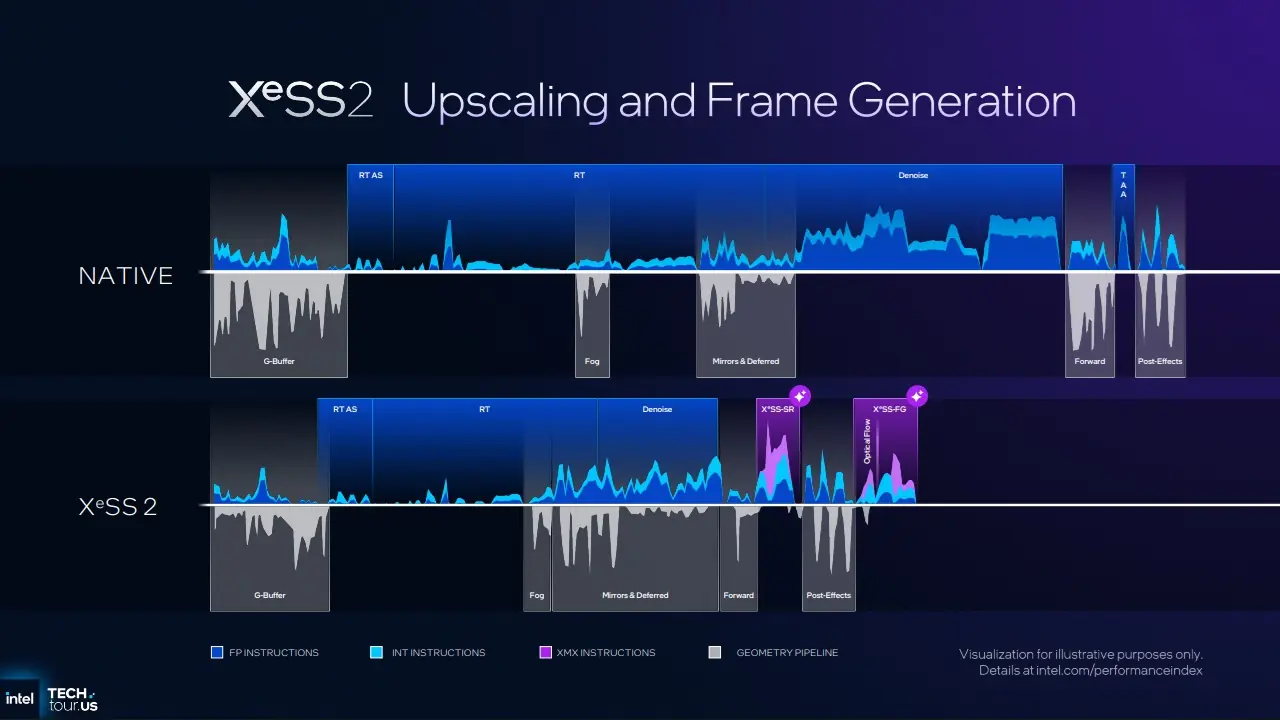
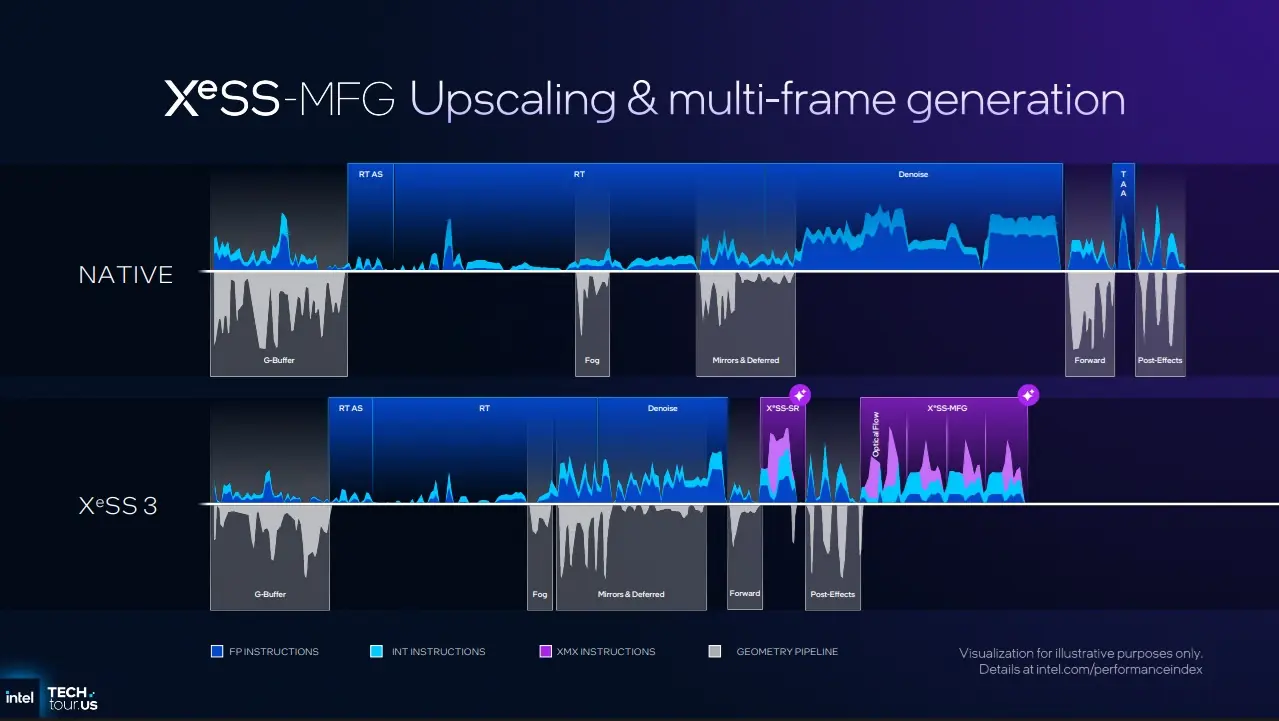
For example, in early demonstrations, games running at around 45–60 frames per second (FPS) could, with 4x MFG enabled, reach up to 200 FPS. For users, this means smoother visuals and more responsive gameplay, especially on hardware where native performance might otherwise be a limiting factor.
Broad Compatibility and Improved Software Features
Intel is making the technology widely available by supporting all Arc GPUs equipped with XMX units, including upcoming Panther Lake CPUs and older Xe1 and Xe2 architectures. Notably, this is a broader rollout than NVIDIA, whose DLSS 4 MFG requires the latest RTX 50-series hardware. Intel’s move also leaves AMD as the sole major vendor yet to offer wide-reaching multi-frame generation.

A new Frame Generation Override feature will let users select their preferred MFG mode—2x, 3x, or 4x framing—directly through the Intel Graphics Software app. An added Shared GPU/NPU Memory Override is designed to give integrated graphics access to more system memory, echoing features found in AMD’s solutions.
Focus on Smoother User Experience
Addressing the perennial issues of shader stutter and load times, Intel integrates support for Microsoft’s Advanced Shader Delivery. This will allow precompiled shaders to be downloaded from the cloud, reducing those frustrating delays on first game launches or after driver updates.
Intel is also enhancing reporting tools like PresentMon to clearly distinguish between native and generated frames, and it is rolling out more intelligent power and scheduling optimizations for low-power SoCs. This ensures gaming laptops and handhelds can make the most of XeSS 3 without sacrificing battery life or performance consistency.
Implications for the Gaming and Graphics Market
The debut of XeSS 3 with MFG emphasizes Intel’s aggressive move into a space long dominated by NVIDIA and AMD. By prioritizing both compatibility and user control, Intel could disrupt the status quo, especially in mobile gaming and entry-level hardware segments.
The broader availability of multi-frame generation—once reserved for flagship GPUs—may even spur developers to focus more on Intel platforms. As a result, gamers could soon see smoother, higher-fidelity experiences across a wider range of devices, all powered by Intel’s ambitious AI-driven graphics advancements.
Via Intel