


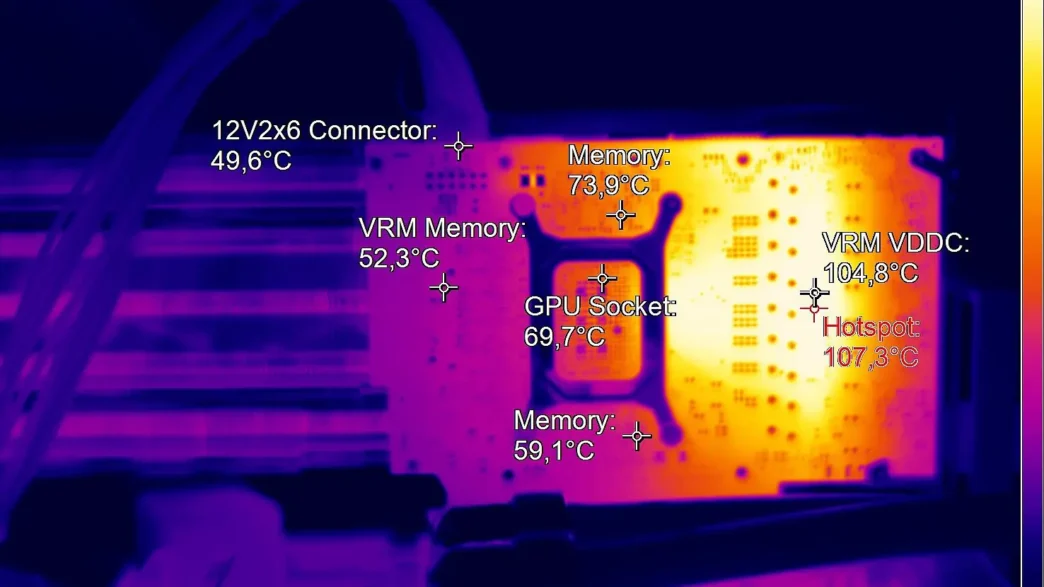
Recent findings from Igor’s Lab have raised alarms regarding the Nvidia RTX 50-series graphics cards, revealing significant hotspot issues that could jeopardize their longevity. The report indicates that these hotspots, primarily located in the power delivery systems, can reach dangerously high temperatures, potentially leading to hardware failure over time.
Key Takeaways
- Hotspot Discovery: All RTX 50-series GPUs, including models like the RTX 5070 and RTX 5080, exhibit high-temperature hotspots in their power delivery areas.
- Temperature Concerns: Recorded temperatures can exceed 107°C, particularly in lower-tier models, raising concerns about long-term durability.
- Design Flaws: The compact arrangement of power delivery components contributes to overheating, with inadequate cooling solutions exacerbating the issue.
- Mitigation Attempts: Simple modifications, such as adding thermal pads, have shown promise in reducing hotspot temperatures significantly.
Overview of the Hotspot Issue
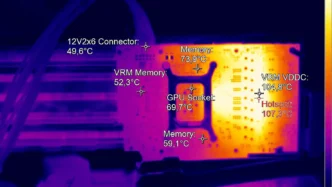
Igor Wallossek of Igor’s Lab conducted extensive testing on various RTX 50-series graphics cards, including those from partners like PNY and Palit. The results were alarming, with hotspots recorded at temperatures as high as 107.3°C in the PNY RTX 5070 and 80.5°C in the Palit RTX 5080 Gaming Pro OC. These temperatures were observed in the power delivery areas, which are crucial for the card’s operation.
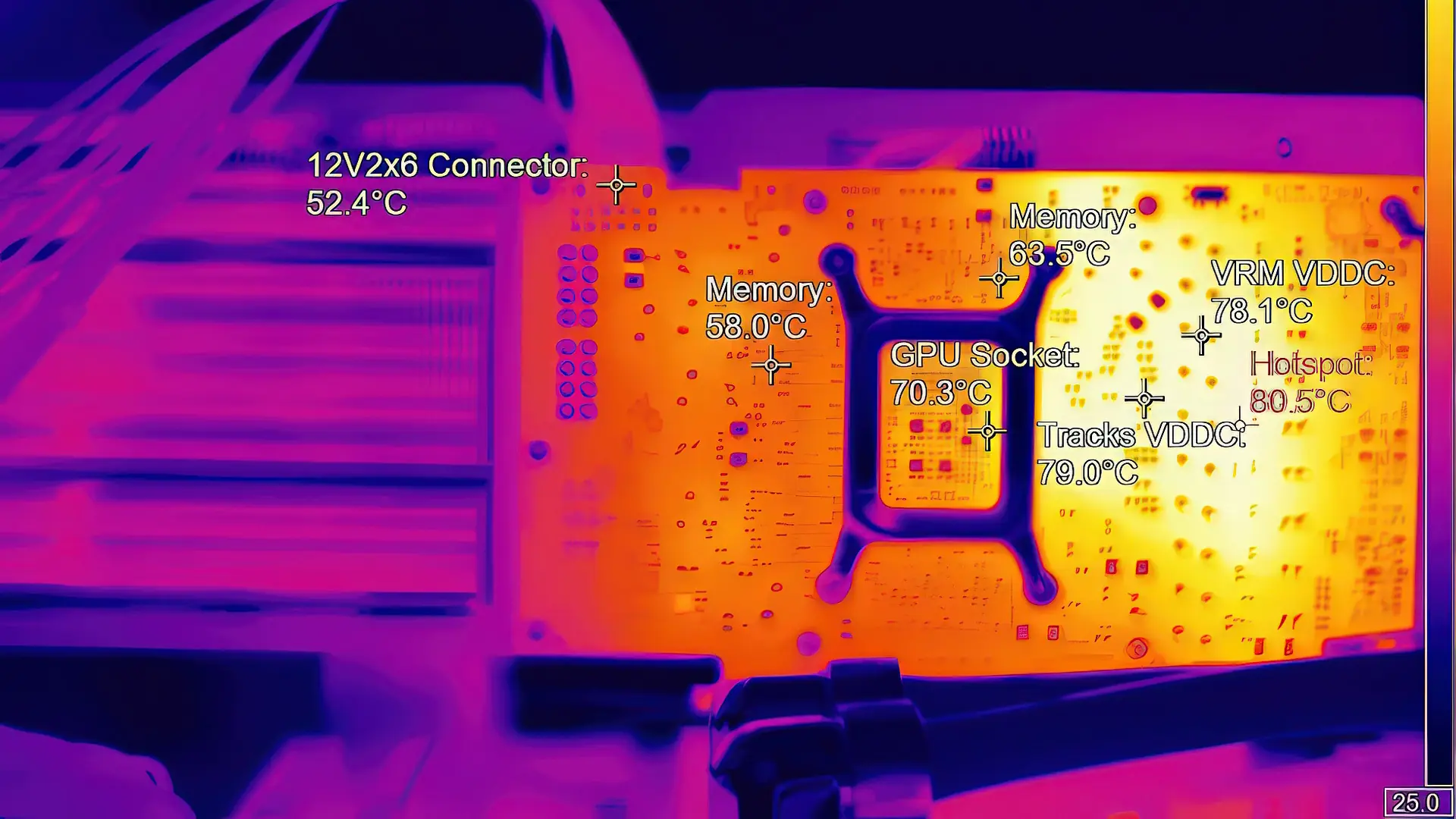
The problem stems from the design of the power delivery systems, where components such as FETs, coils, and drivers are densely packed. This compact layout, while beneficial for size, leads to increased thermal density and insufficient cooling, particularly in lower-tier models like the RTX 5070, which has a shorter PCB.
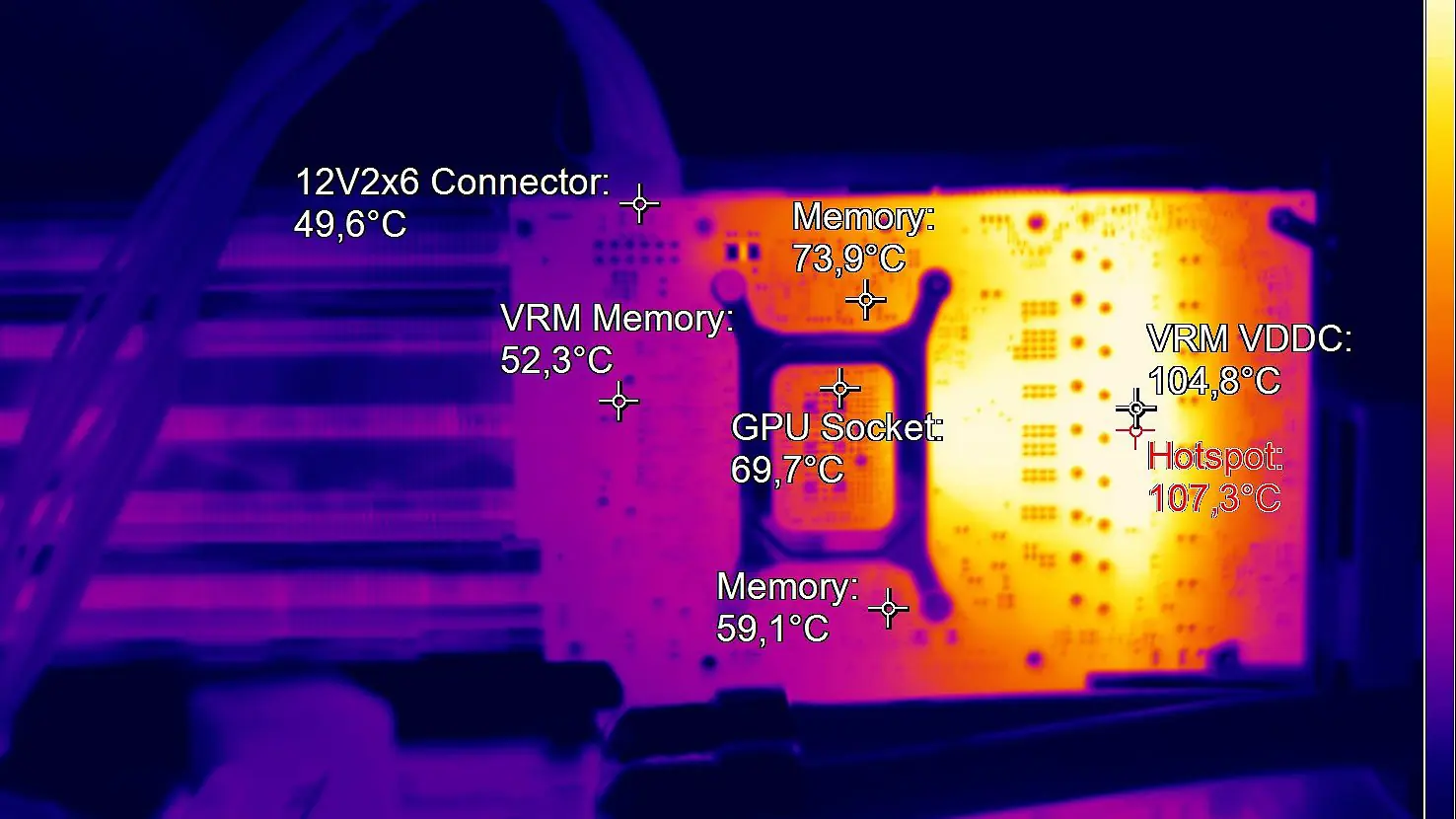
Implications for Longevity
The high temperatures recorded in these hotspots pose a significant risk to the longevity of the graphics cards. Igor’s Lab warns that prolonged exposure to such heat could lead to premature failure, potentially rendering the cards unusable within a few years of heavy use. The report highlights that temperatures exceeding 80°C can initiate aging effects in the materials used in the cards, further compromising their lifespan.
Design and Cooling Limitations
Igor’s Lab also criticized Nvidia’s Thermal Design Guide, which is intended to assist manufacturers in creating adequately cooled graphics cards. The guide’s parameters are often based on ideal conditions rather than real-world scenarios, where factors like poor ventilation and high humidity can exacerbate overheating issues.
Potential Solutions
In an effort to demonstrate that the issue could be mitigated, Igor’s Lab applied thermal pads to the affected areas of the GPUs. This simple modification resulted in significant temperature reductions: the RTX 5080’s hotspot temperature dropped from 80.5°C to 70.3°C, while the RTX 5070’s temperature fell from 107.3°C to below 95°C. These findings suggest that with targeted improvements in design and cooling solutions, the longevity of these graphics cards could be enhanced.
Conclusion
The discovery of hotspot issues in Nvidia’s RTX 50-series GPUs raises serious concerns about their long-term reliability. As gamers and professionals rely on these powerful graphics cards for demanding applications, it is crucial for Nvidia and its partners to address these design flaws and implement effective cooling solutions to ensure the durability of their products. The community eagerly awaits Nvidia’s response and potential corrective measures to safeguard the future of the RTX 50-series.
Via Igor’s Lab





Sounds like we EK to release the rear GPU water blocks again like they did for the 30 series.