


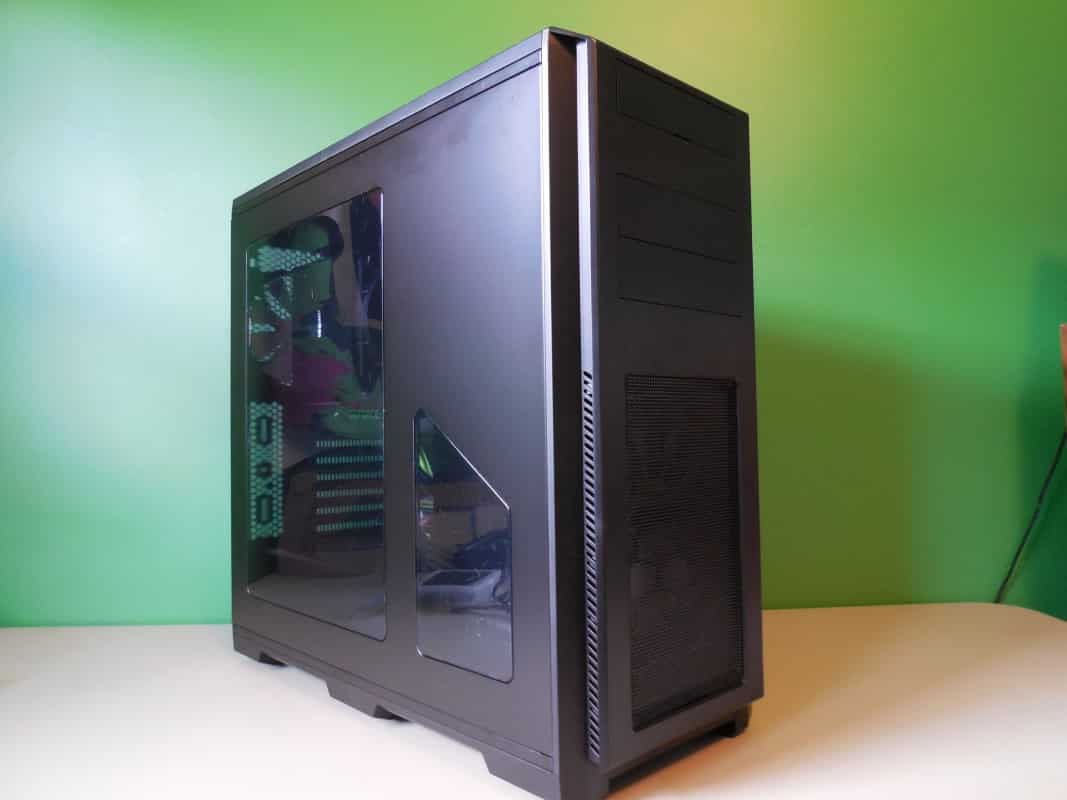
Testing
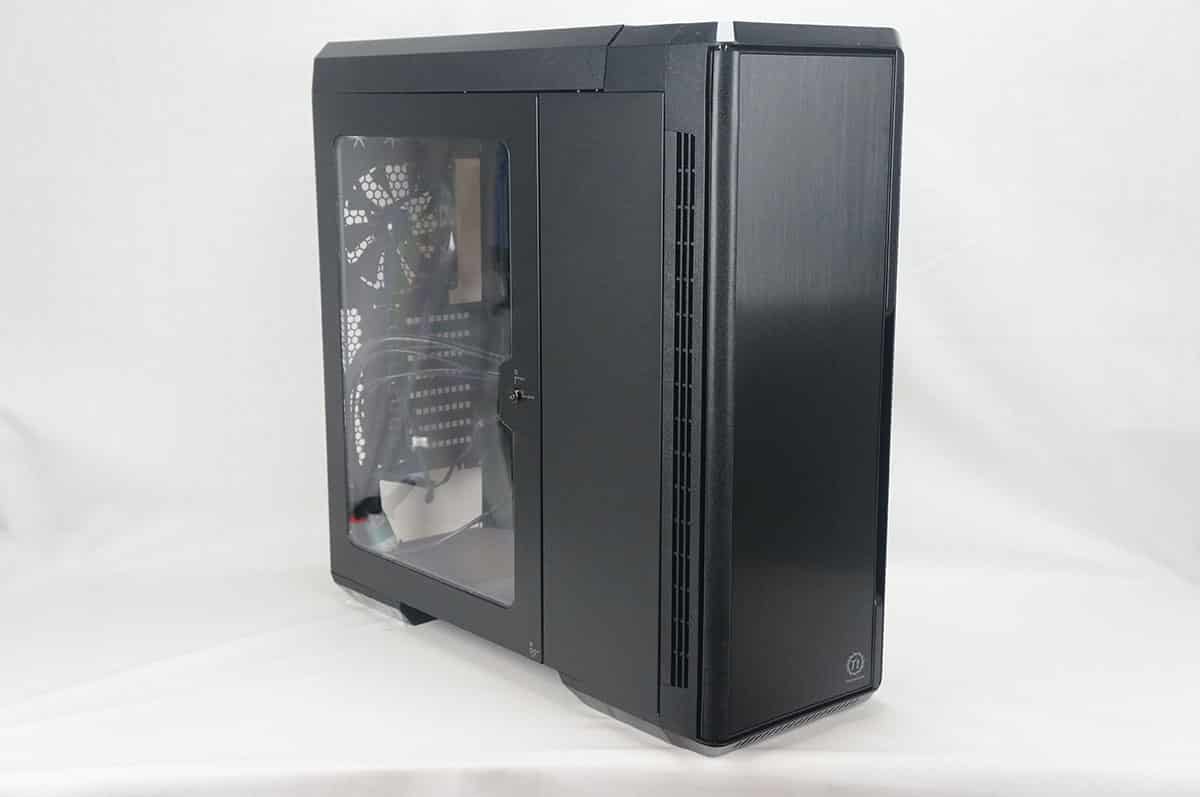
We did just a little bit of testing to see how a smaller case like this would keep cool. This included running both Intel Burn Test and the Valley Graphic benchmark on our stock clocked 3770K and GTX 690. Keep in mind there are only two fans in the case and our system is entirely air cooled.
Ambient temps: 22.22C/72F
Idle temps after sitting for 10 hours: 38.75C/101.75F core average
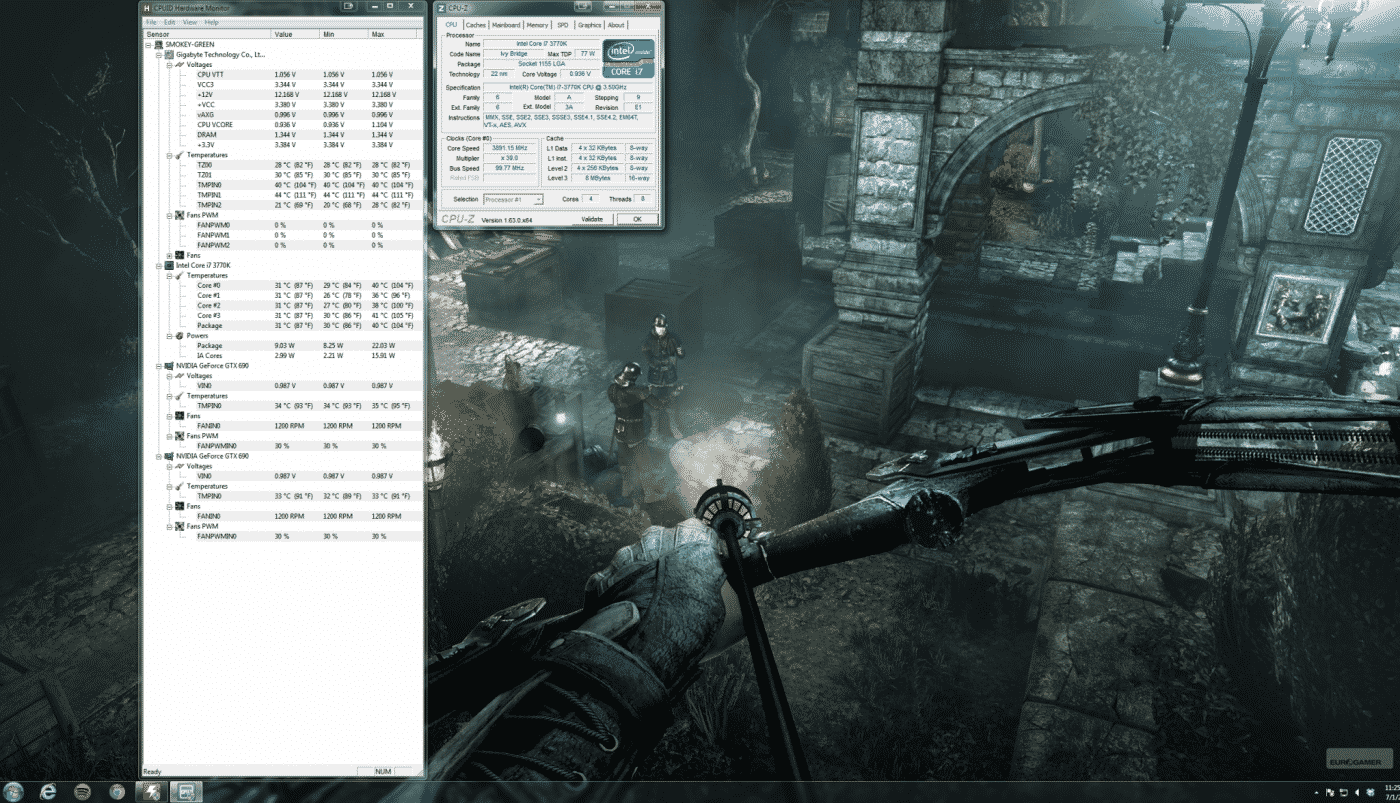
One pass of IBT at Max Mem setting: 63.5C/146.3F core average
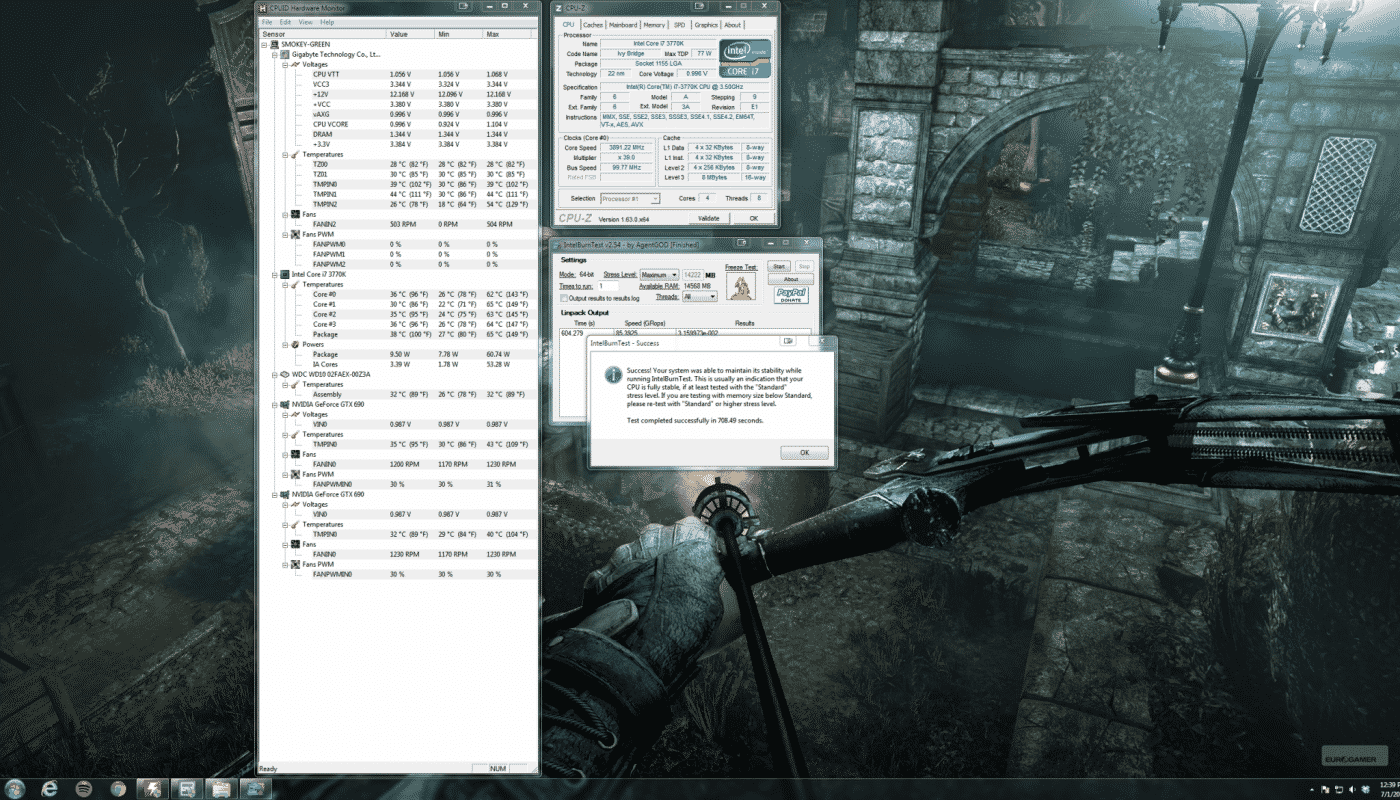
One run of the full Valley benchmark*: 80.5c/176.9F GPU core average 48C/118.4F CPU core average
*DX11, Ultra Quality, x8 AA, and 2560×1440
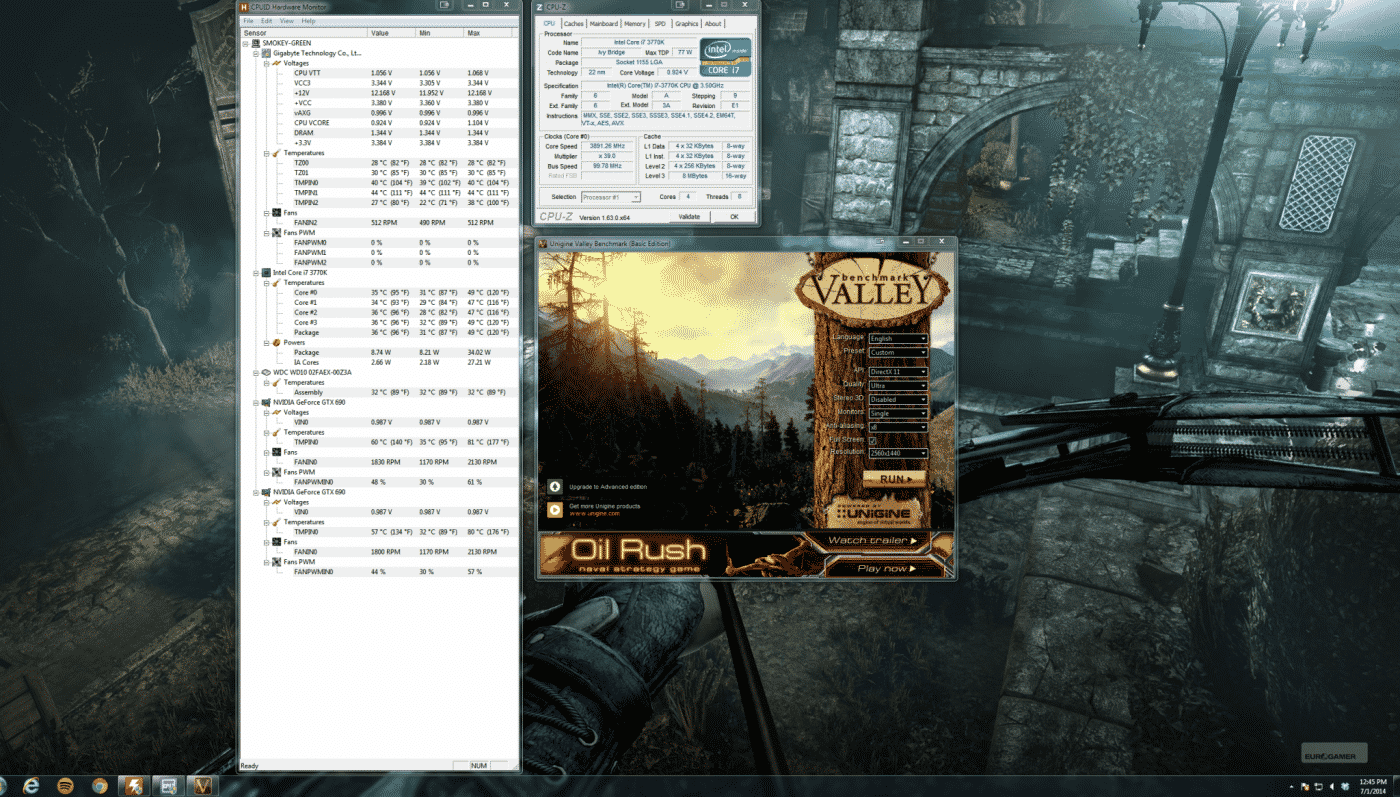
Additionally we measured the top rear exhaust and internal temperatures using an infrared temp probe while running both IBT and Valley simultaneously.
Exhaust: 31.39C/88.5F max
Internal (all areas max temp): 57.5C/135.5F
Our final temperature measurement was the exhaust temps after 10hrs and 24hrs idle.
10hrs:28.89C/84F
24hrs:28.61C/83.5F
Considering we are running on air with only a single 200mm fan providing fresh air I am actually very pleased with these results. And just to be thorough we connected four USB drives to the front panel and had full functionality on all ports.



Just my 2 cents…
1) If you think that the case not having a fan controller is a bad thing, I guess we’re all entitled to our own opinion.
This being said; for folks that are into modding their case(s) – as you pointed out – they’re probably either going to remove the built-in fan controller anyway, so why have it? Personally, I much prefer to install my own controller.
2) If I were to buy this chassis, then the 1st thing I’m going to probably going to do is swap out the existing fans for something I like (or a fan that has better static pressure for radiators). So not having enough fans included in this rather inexpensive case doesn’t bother me.
3) While it’s always nice to have an entire chassis built from steel (or aluminum); for this chassis to come in under $100, sacrifices have to be made. Besides; most brushed aluminum finishes are fingerprint magnets, so if the plastic doesn’t have this trait, then I’m all for it.
Both a bog-standard controller and the PWM controller have their own advantages.
One thing I find no-one explores is that due to the way it works, you don’t get the buzzing at low speeds with the PWM that you tend to find with certain combinations of fans and controllers i.e Corsair fans with Bitfenix Hydra/NZXT Sentry etc.
If you’re controlling all fans at the same time, with decent software it is the far superior solution.
Brechan, thanks for the comments! I completely agree with you on all points here. But when you’re reviewing you have to point these things out.
1) Agreed it’s just something you see at this price range.
2) Understandable, but for most people shopping at this price range they’re not going to want to spend another $15-20 more per fan to replace them. That aside, they are actually quite nice fans, I would just have liked one more. And for water cooling of course you get your own and quite a few more. 😉
3)All true, and again for the sake of the review it just had to be pointed out.
Thanks for reading!
Very interesting point, I know what you’re talking about but it hadn’t occurred to me that the buzzing was absent. Plus one to Phanteks there.
I will semi disagree with you on the point of the PWM controller being superior. Yes there are a few nice fan controller suites that make it easy to control. However not until your into your OS do you have access to make any changes.
Additionally any decent add in controller is going to have more fan support and better functionality in the area of thermal performance. There is no way the small board that comes with the Pro can output at high levels as consistently and for as long while keeping heat build up under control. It is a fine place holder, but is no substitute.
Thanks for reading and keep commenting Adrian!
Thanks for responding to my “Reply” so soon, it means a lot.
Now; speaking of reviews, I realize it takes a lot of time to (upload, edit, etc.) produce a quality review of just about anything. But.
More sites are including the size of radiator supported for the particular product (usually PC chassis’) but completely forget to post the maximum thickness ( or heaven forbid thinness ).
For those of us that are considering a specific (new) chassis for an upcoming build, how difficult is it to post the maximum thickness of supported radiators?
Some company(s) are doing away with the “traditional ” fan controller, let alone 5 1/4″ bays altogether…
Those of us that water cool the old-fashioned way, may want this external 5 1/4″ bay specifically for a controller that can handle 20+ watts, which includes the D 5’s, the EK 4.0’s and the DDC’s.. So the inclusion a controller that can only handle only 12 watts (max) is wasted space. Better filled with something useful.