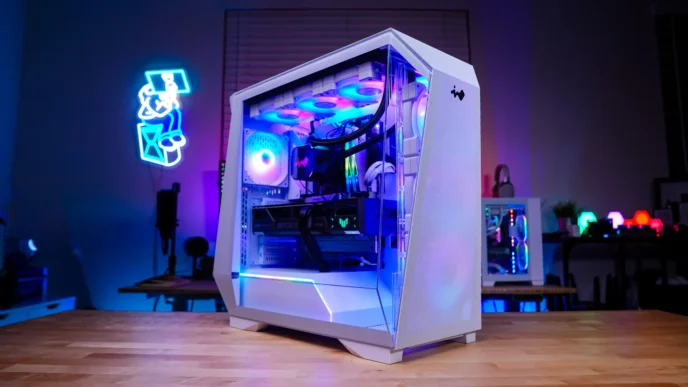
SAMA L70 Overview
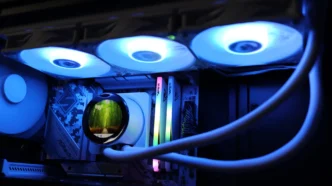
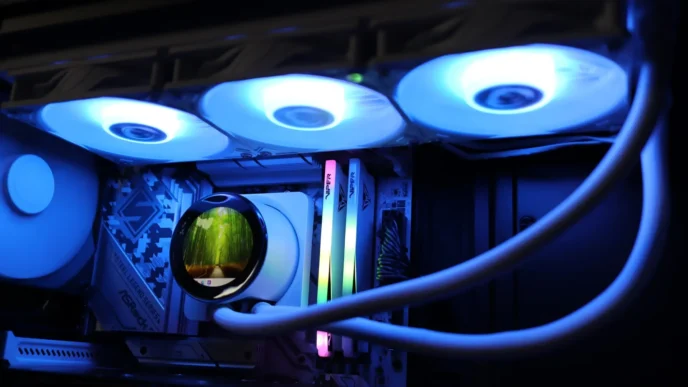
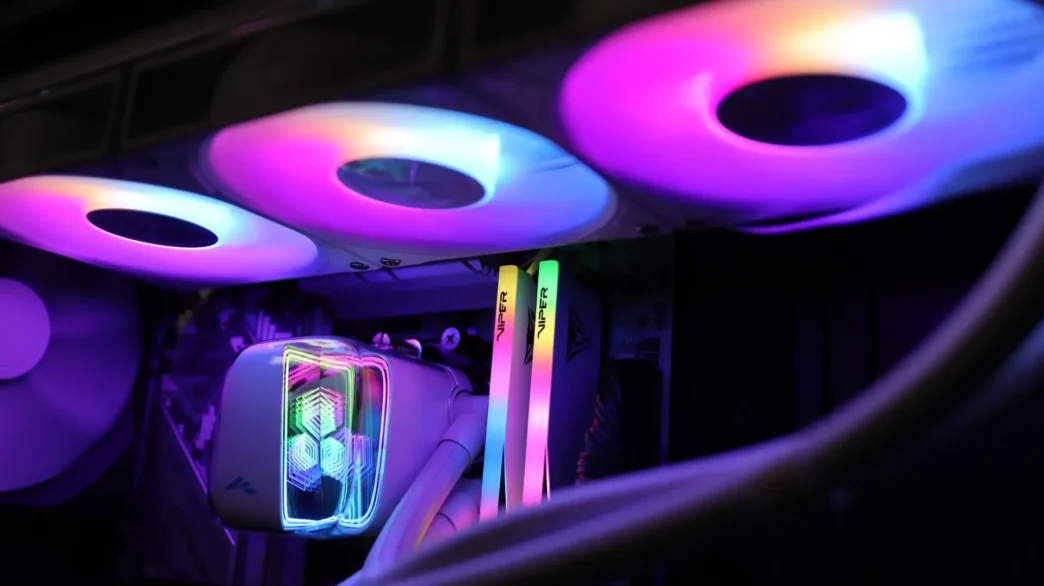
Available in both black and white versions, our review sample of the L70 looks great in the white colorway. The L70 is a 360mm cooler, though they also offer a 240mm version as well. Out of the box the L70 is a pretty standard looking AIO. You have your three 120mm ARGB fans attached to a 27mm radiator, and a pump housing with ARGB accent lighting and a cool mirror design we will cover in a bit.
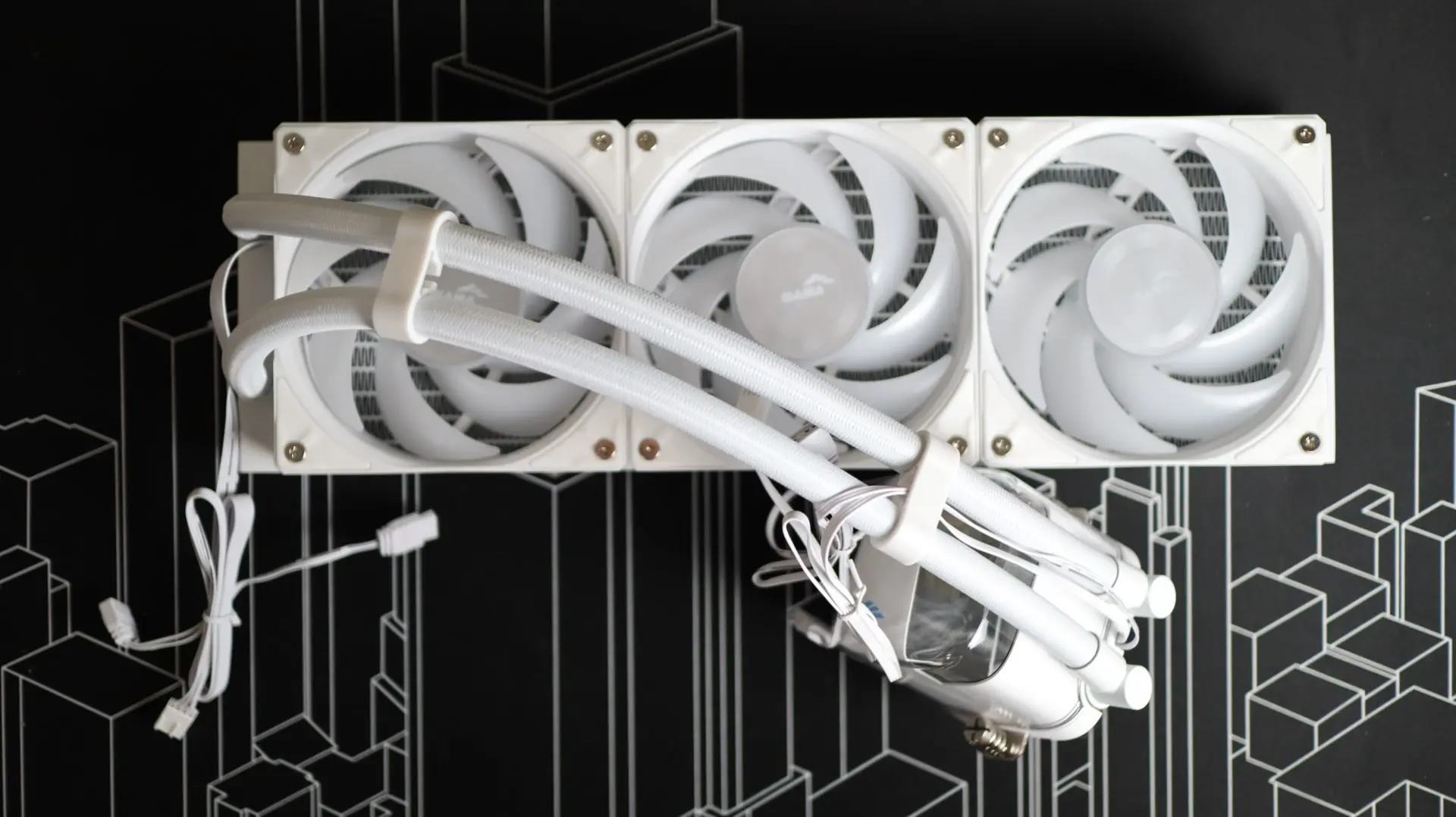
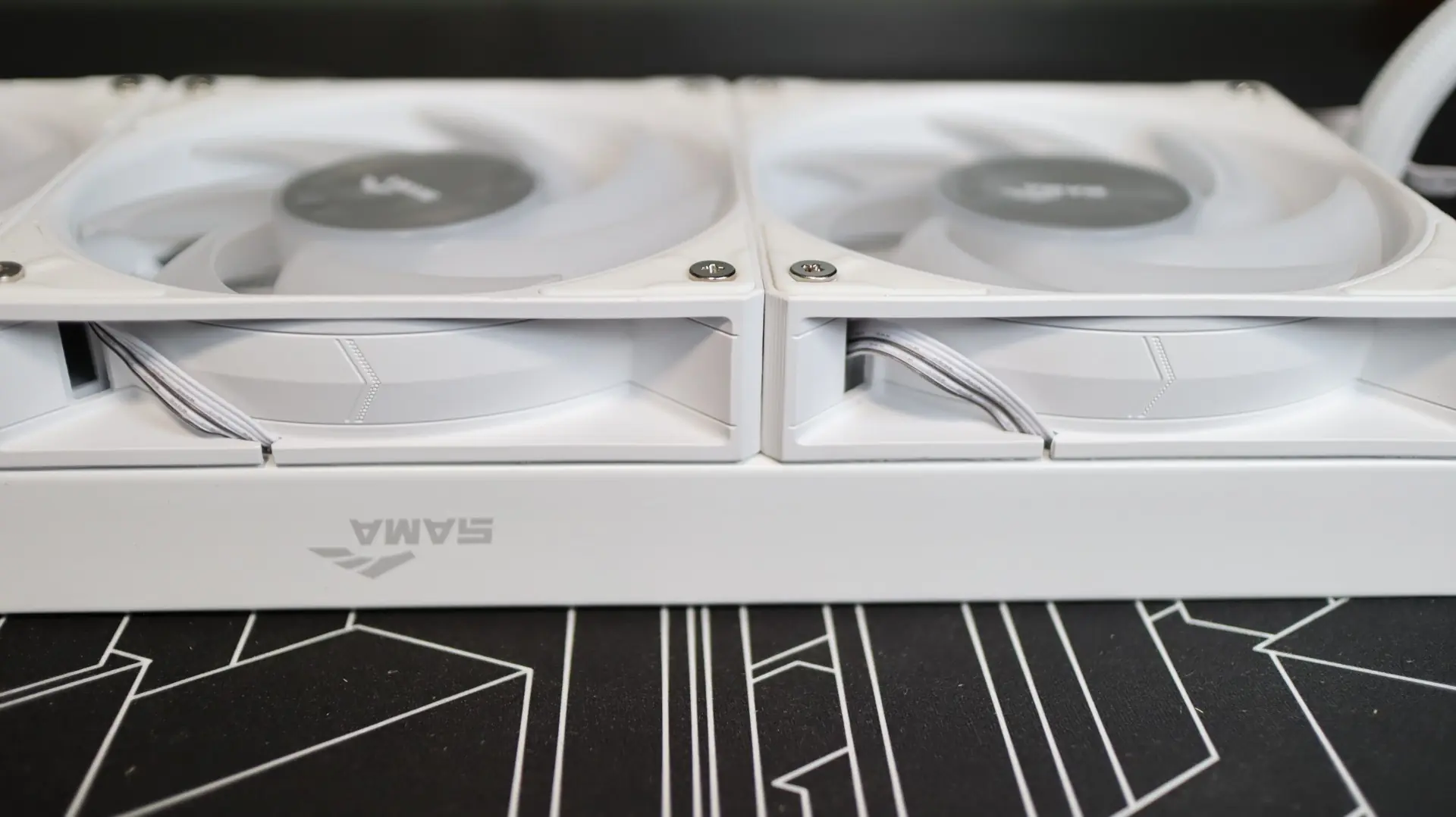
The first component up in our overview is the 360mm aluminum radiator. This radiator is very straight forward in it’s design, with a white paint job and a bit of gray SAMA branding along the sides.
The 27mm thickness is right in line with the standard size we see on most AIOS, and should work quite well specs-wise with the included pre-installed fans.
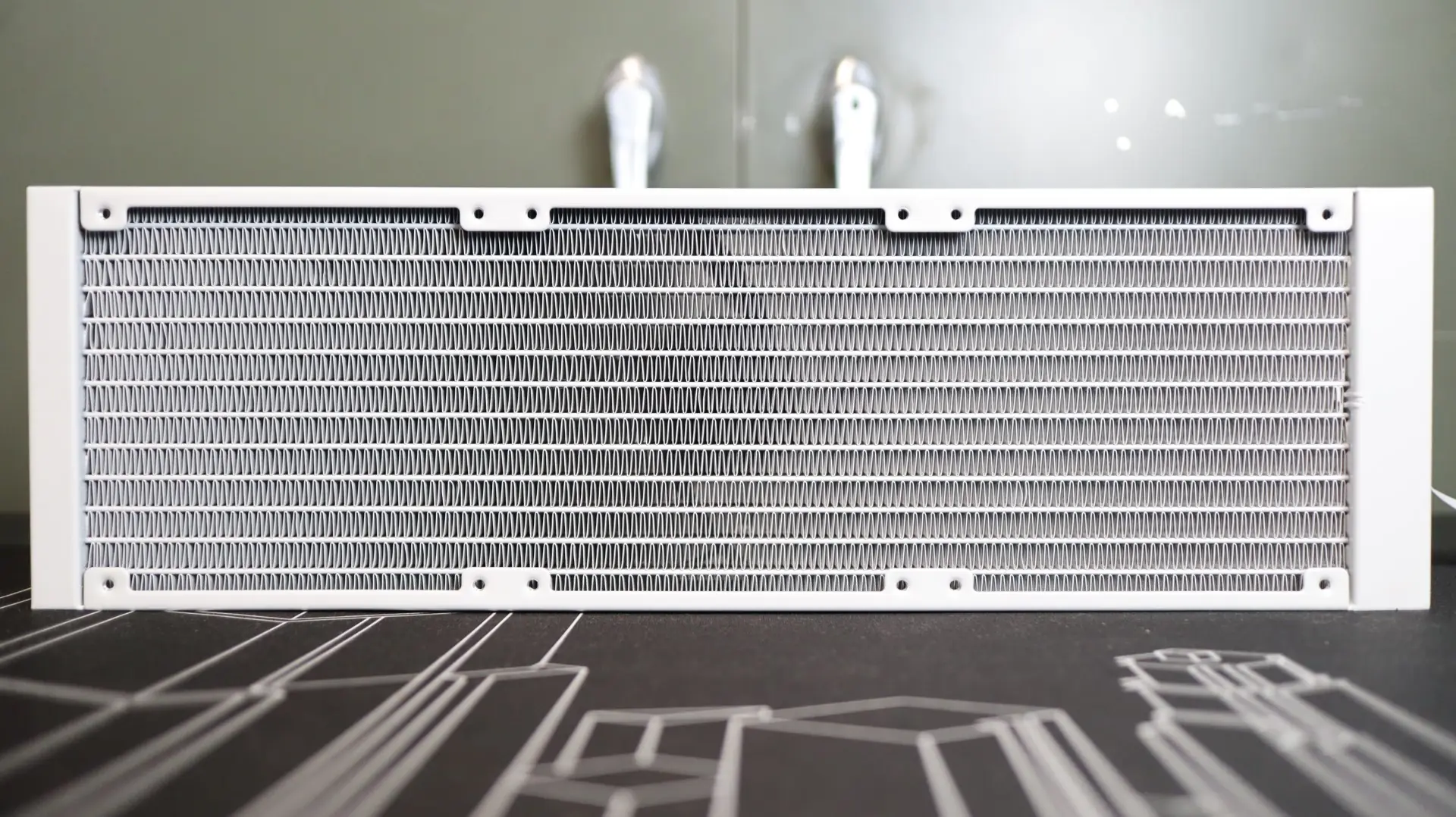
With 20 fins-per-inch, the included 120mm ARGB PWM fans included with this kit should do quite well. They have a static pressure rating of up to 2.85mm-H2O, which is on the lower side of our experiences with AIO fans, so we will have to see how well they are able to get air moving through the radiator fins.
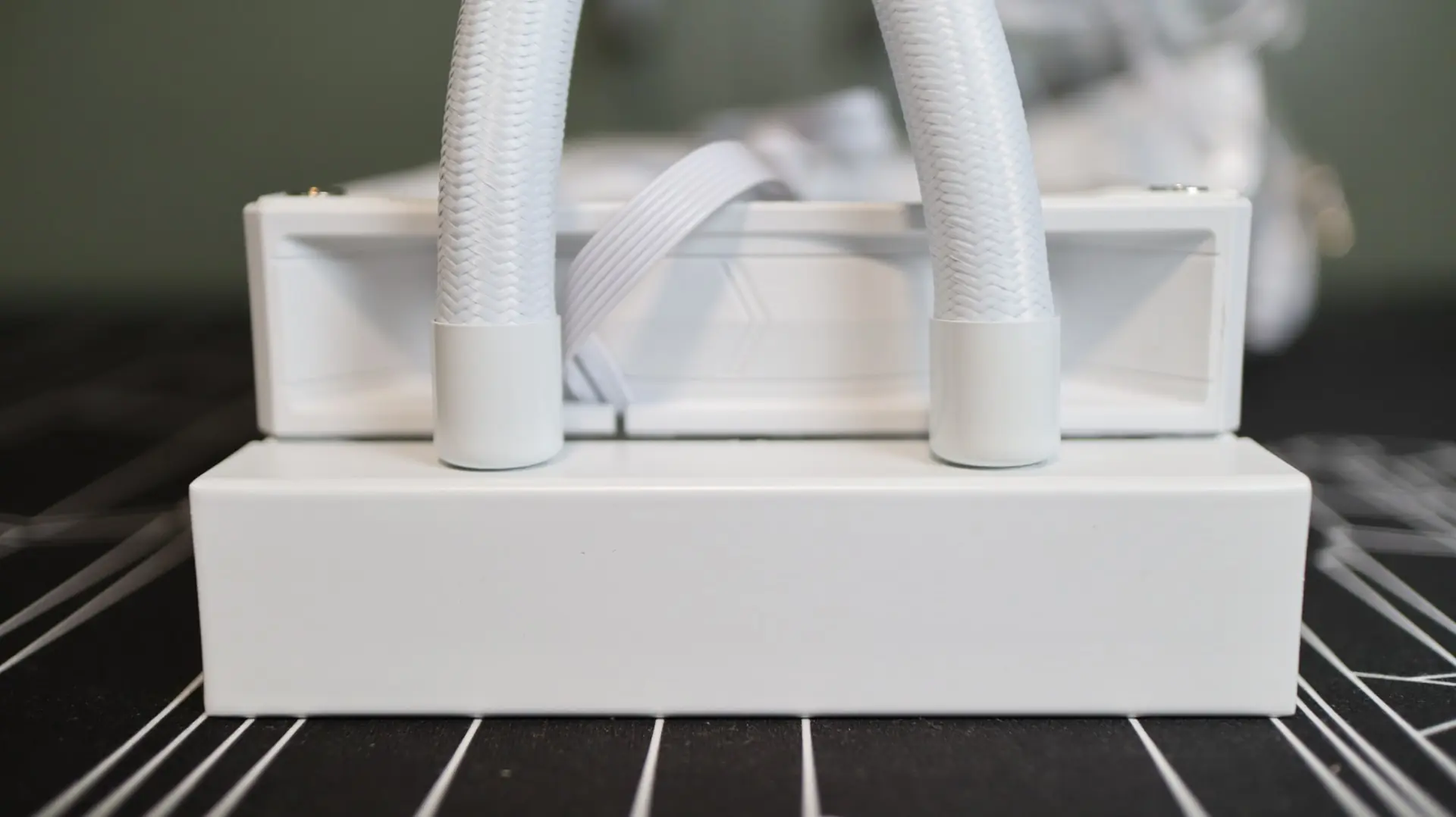
Coming in at 400mm in length, the sleeved cooling lines exit from one end of the radiator’s end cap, and connect to the radiator via crimped connectors. I found the cooling lines to be decently flexible during installation, though I would have preferred them be a bit more malleable.
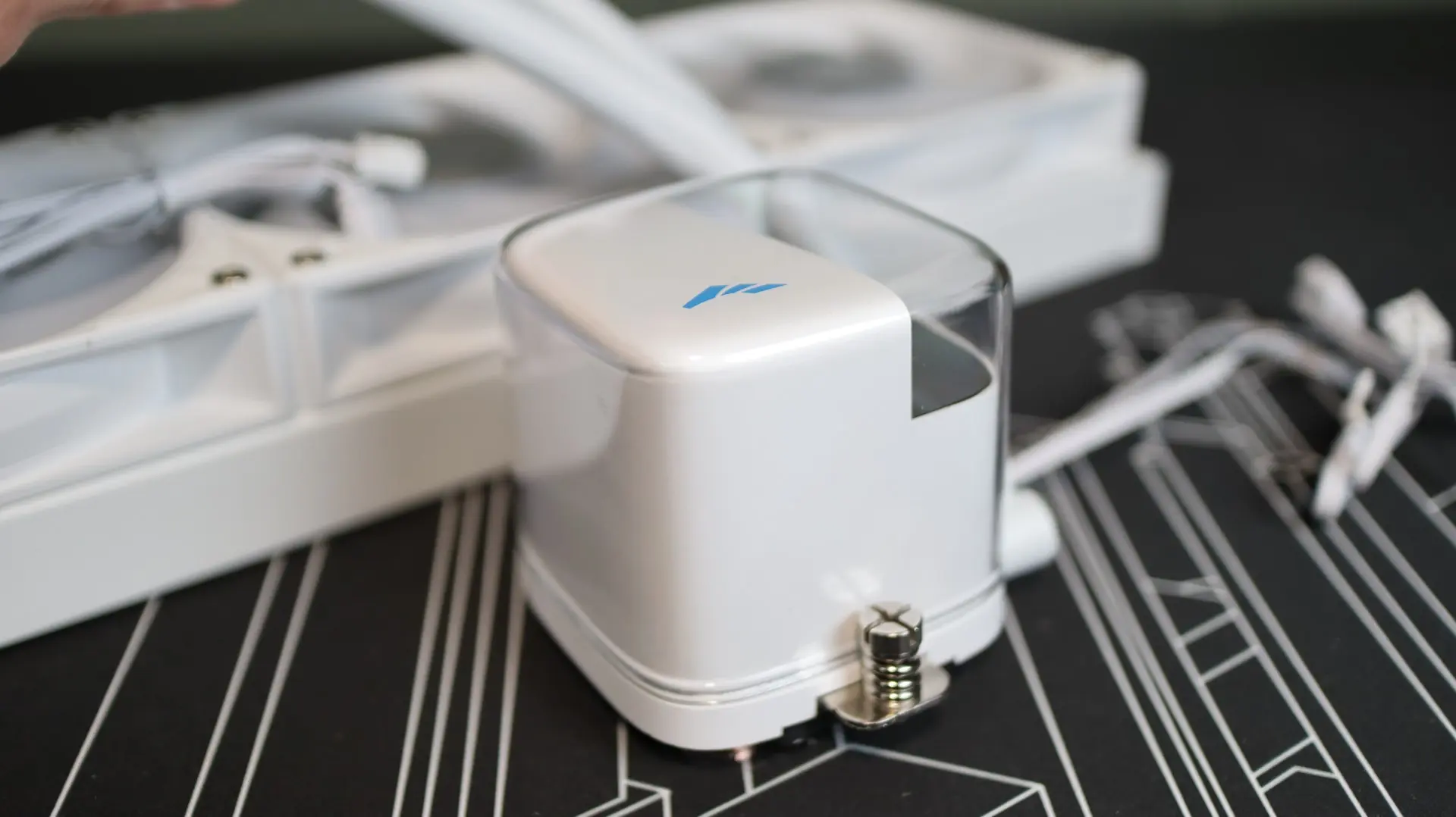
Moving over to the pump housing is where we see one of the standout features of the L70 – an infinity-mirrored LED zone that sits beneath a crystal clear plastic covering that encompasses the entire pump housing. We have seen all sorts of ARGB lighting zones and LCD displays on pump housings in the past, and this one is shaping up to be very similar in design. This look isn’t out of the ordinary, but the angled lines and clear canopy do a good job in the looks department.
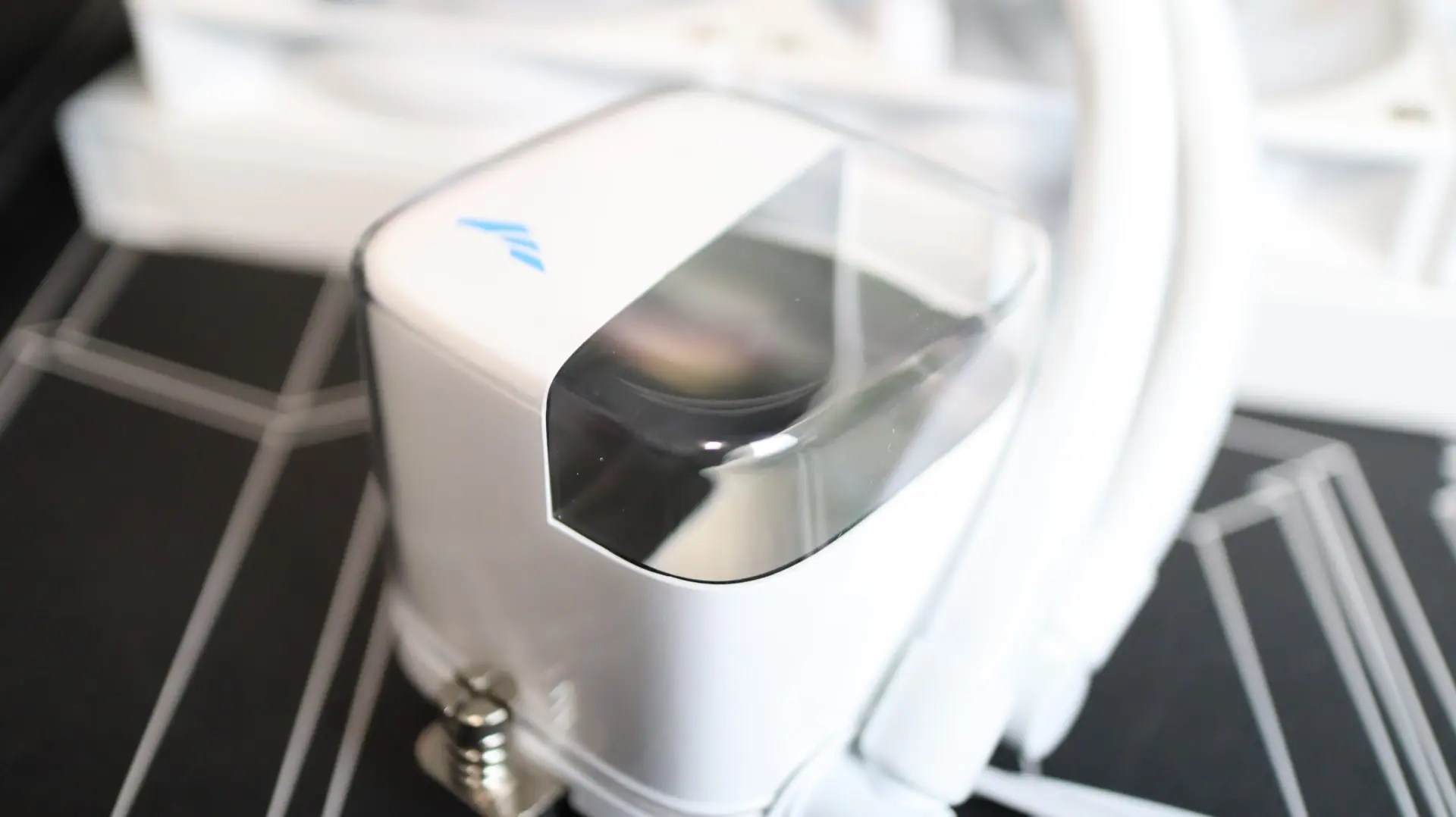
Moving around to the sides we find the two cooling lines exiting from the right side of the pump housing. Each line is paired up with a swiveling fitting to make installation and fitment much easier than with fixed connections. Internally, the pump provides an operating range of 2000-3000RPM, and thanks to its in-house design and use of ceramic components, it should provide plenty of fluid flow to ensure safe and efficient operations.
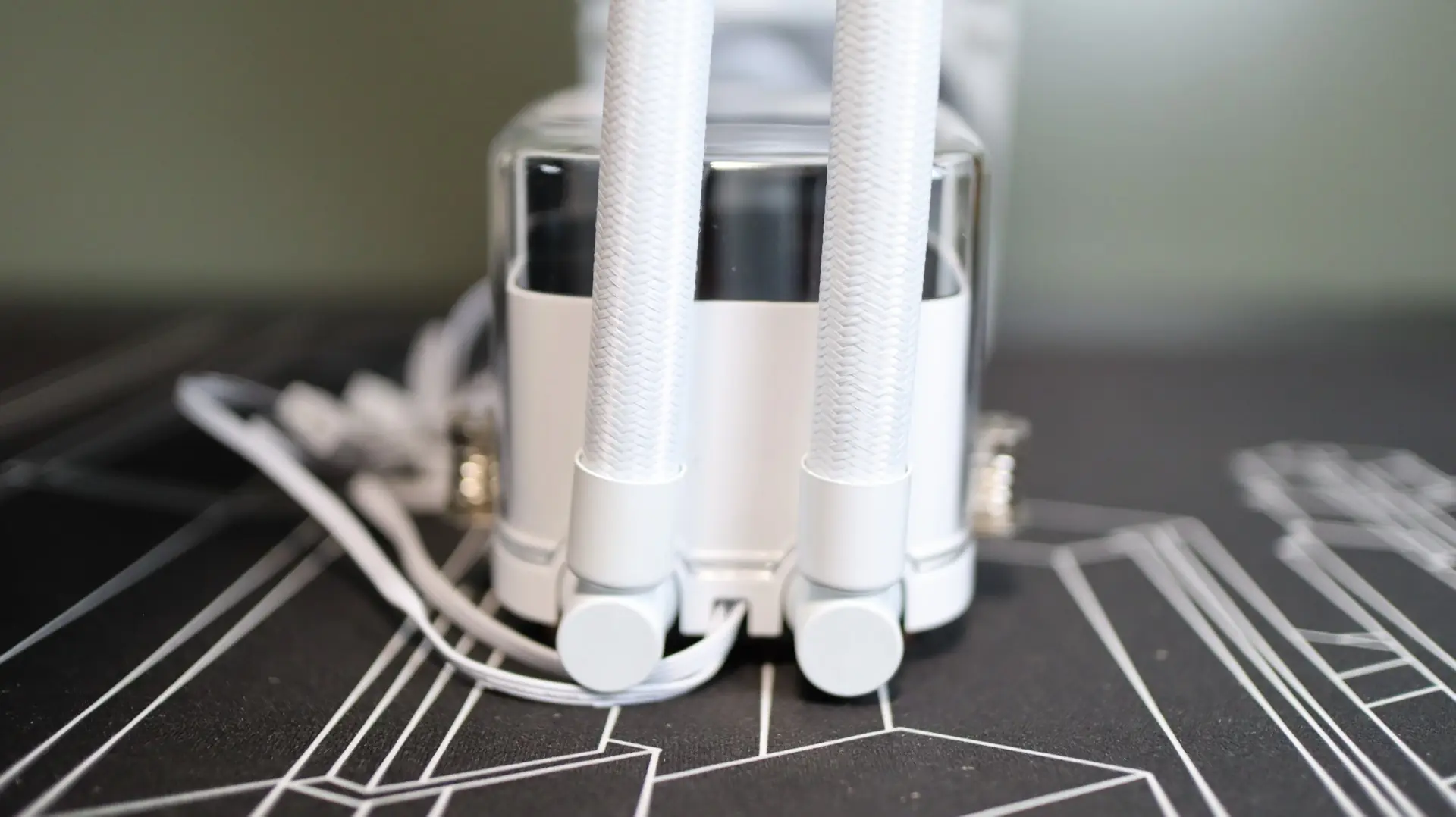
The other sides of the pump housing are free from any real features of note. Both a PWM and 3-pin ARGB cable exit from the pump housing from in between the two fittings in order to provide power and monitoring for the pump, and control of the LEDs in the housing.
Taking a look at the base of the cooler, we find a large copper base, free from any pre-applied thermal material. SAMA does include a small syringe of thermal paste for installation needs. I was a bit disappointed in the surface of the cold plate on the L70 – it just looked “dingy”. This is not a mirror-finish by any means, and while there weren’t any major imperfections, it just feels like there could be a bit more time spent on this surface during manufacturing.
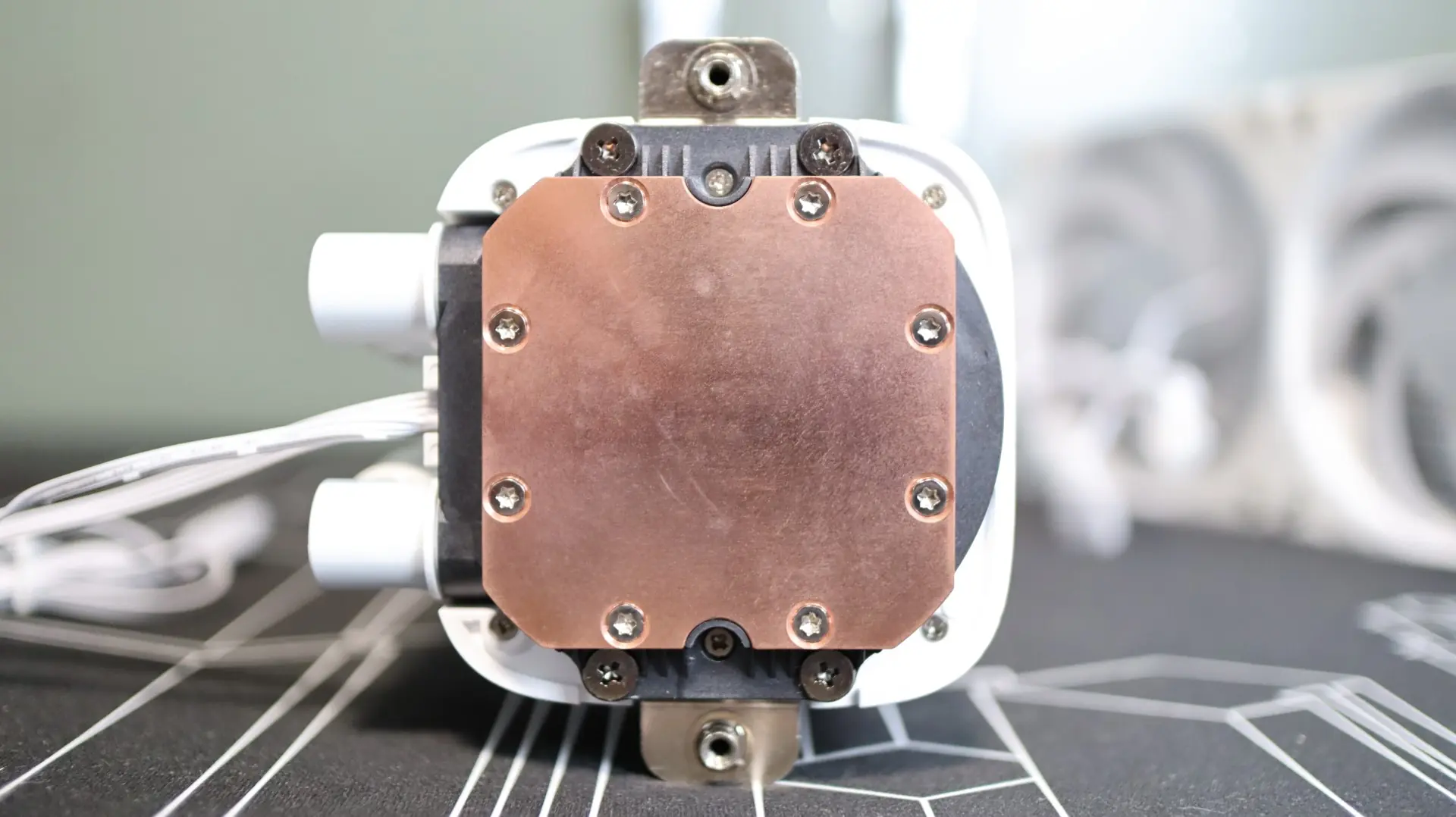
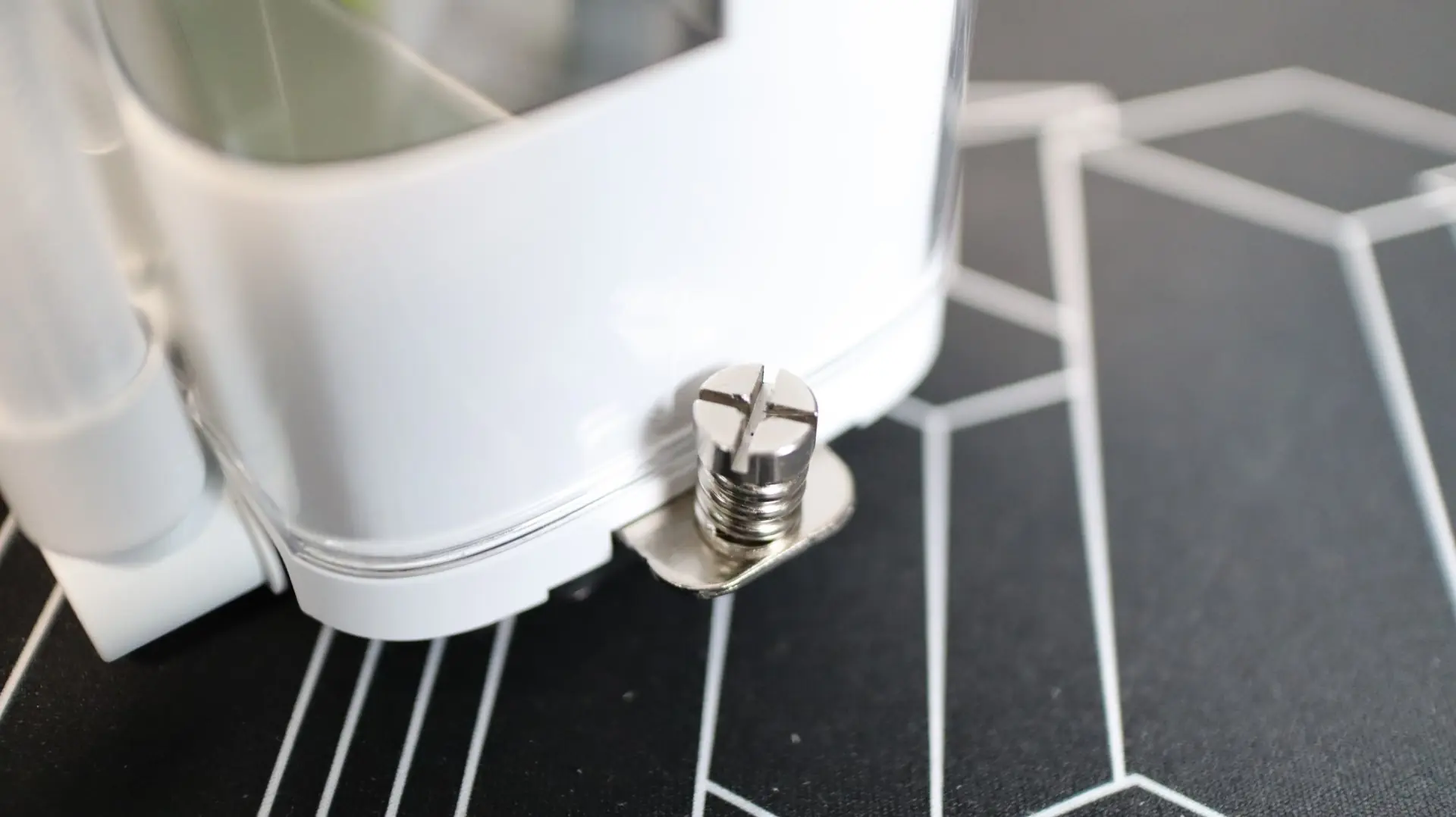
Universal mounting hardware for both AMD and Intel installations is built into the pump housing body, which just requires you to make sure you have the appropriate motherboard brackets installed during installation.
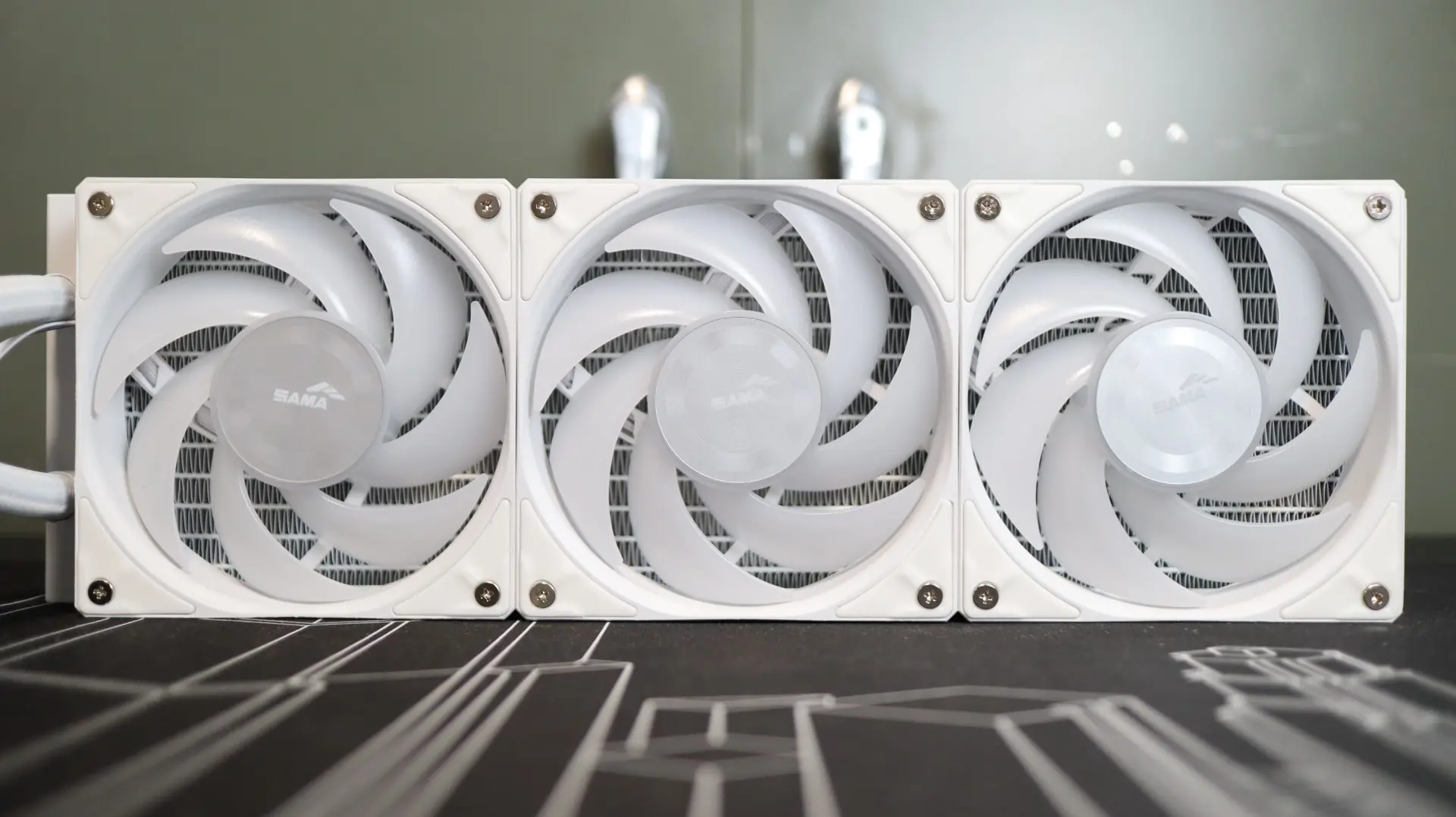
As far as the included fans go, SAMA has provided three, 27mm thick, 120mm ARGB fans that provide up to 2.85mm-H2O of static pressure at full speed, with 72.3 CFM of airflow at their full speed of 2,200 RPM. These fan specifications don’t necessarily convey much ability to efficiently move air through the radiator’s 20 FPI density, though we have seen in other recent reviews that these specification numbers don’t always equate to higher or lower performance alone.
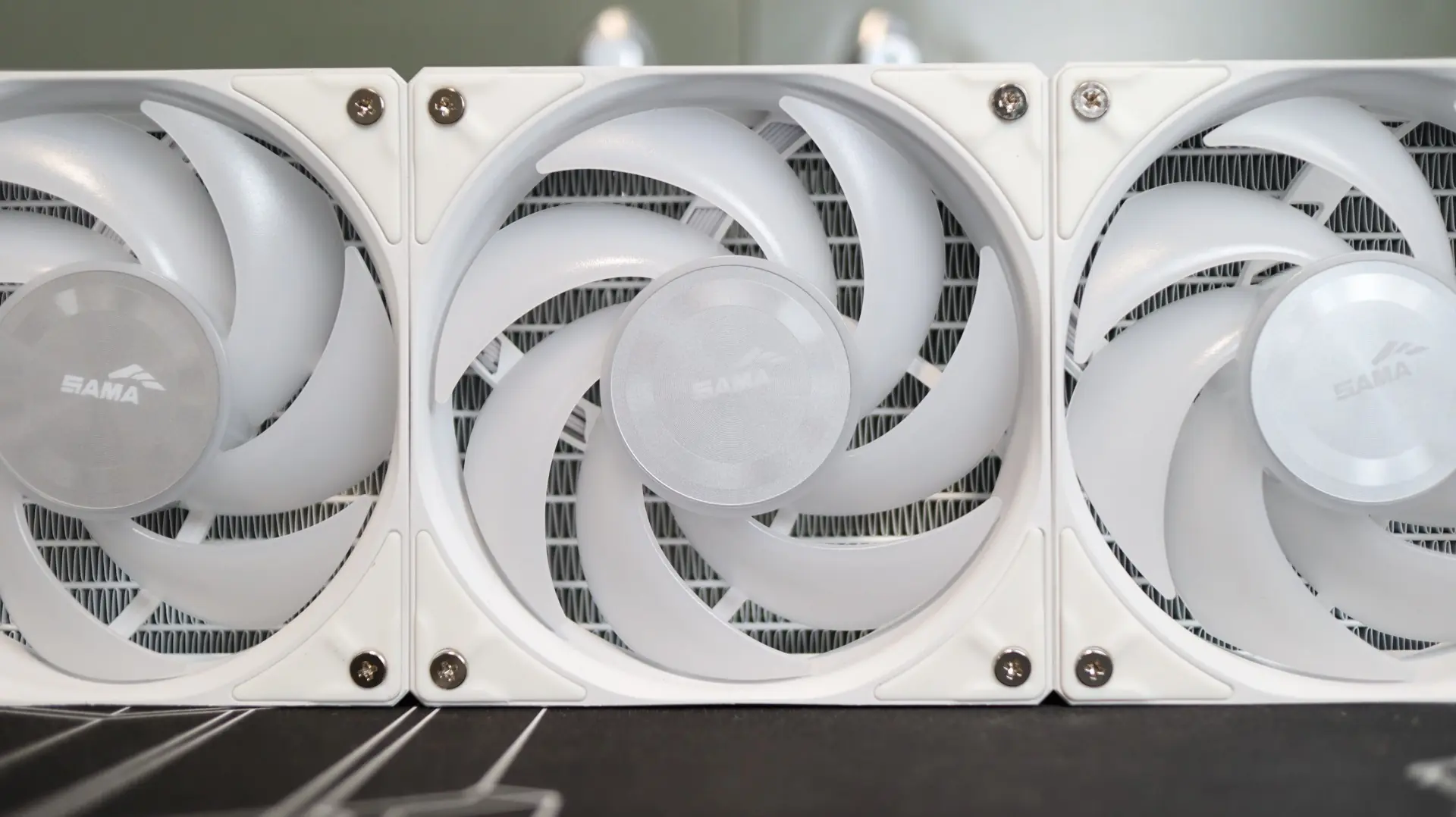
The rubber feet at each corner help isolate any vibrations that may come from the seven fan blades, which is always a welcome feature. The use of hydraulic bearings should help with efficiency and longevity. A maximum noise level of 28 dBA is claimed by SAMA, and we will see just how that translates in our noise testing.
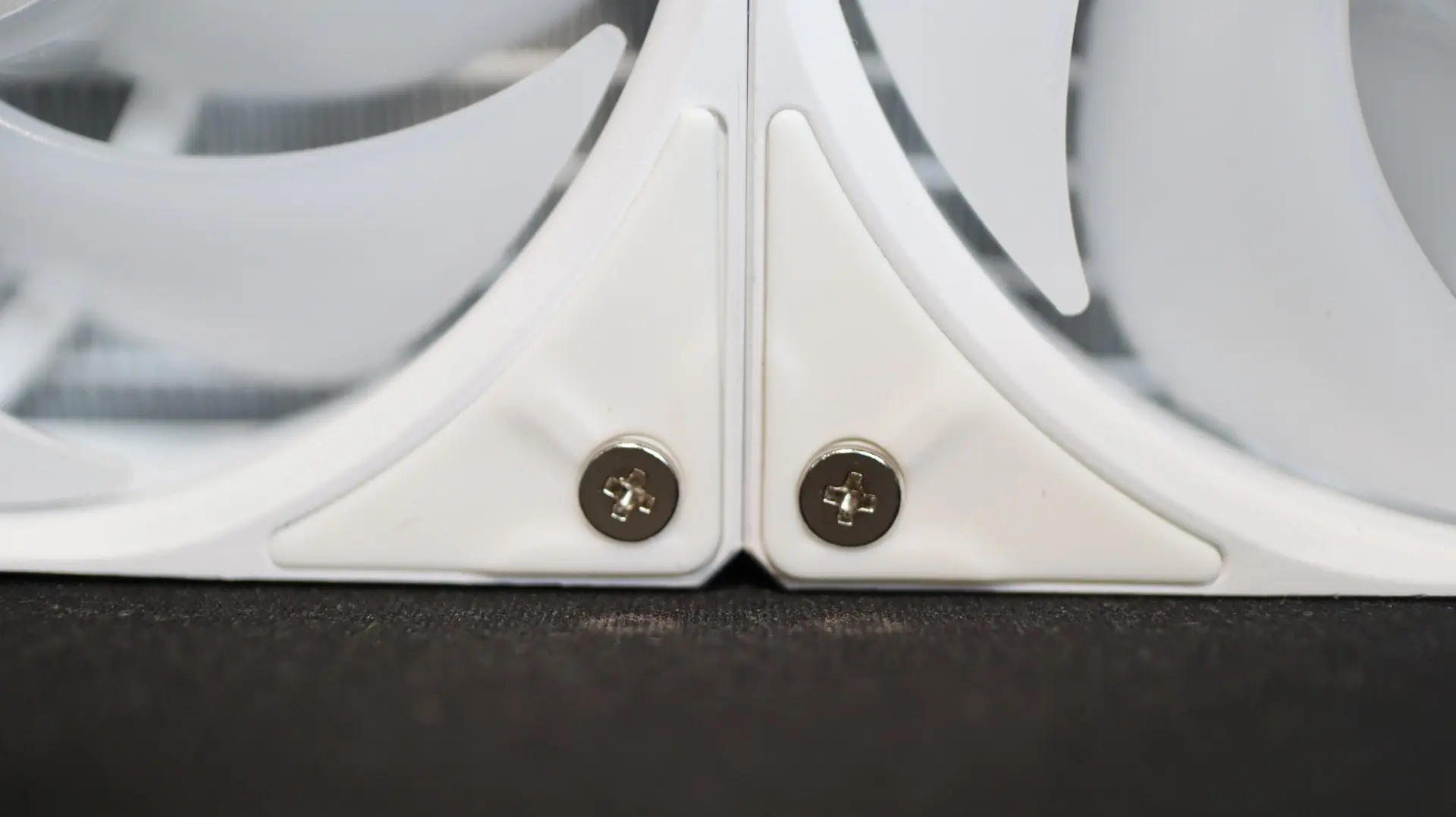
SAMA has already mounted these fans to the radiator from the factory, which is another welcome feature, and the fact that they also chain to each other without any external cabling will really help reduce cable clutter and installation headaches that can come from trying to wrangle the power and lighting cabling from each cable.