


Intense gaming sessions on PCs and monitors demand sustained visual attention, leading to various symptoms of eye fatigue and screen fatigue gaming. Despite common awareness around blue light, deeper mechanisms like blink rate reduction, accommodative strain, and screen flicker are frequently overlooked. Understanding these technical contributors can help gamers manage discomfort during long hours in front of a screen, and some players also consider gaming eye strain glasses as part of a broader plan.
Prolonged focus on a monitor is a well-known trigger for visual discomfort, yet many gamers may not realize the full scope of mechanisms involved. It’s more than just occasional dry eyes or headaches. Visual fatigue often builds from involuntary changes such as reduced blinking and the effort required to maintain sharp focus at a single distance for extended periods. For some setups, PC gaming glasses are used alongside breaks and monitor tuning to support comfort. To manage or prevent these symptoms, it is crucial to understand what really happens to your eyes during immersive, uninterrupted gaming, and which measures can actually help mitigate the effects.
The hidden culprits: blink rate, accommodative strain, and screen demand
When players concentrate deeply on the action, their blink frequency typically drops by more than 50 percent, according to clinical studies. This reduction in blinking leaves the eyes’ surface unmoistened for longer, intensifying dryness and discomfort. Gamers frequently experience problems like burning or gritty sensations due to a destabilized tear film, especially during high-pressure or visually complex scenes. Because these demands add up, screen fatigue gaming can worsen faster than many expect in competitive or story-driven marathons.
Another significant factor is accommodative strain. Staring at a monitor for hours forces the eye’s focusing muscles to stay locked at a short distance. Over time, this sustained tension can cause soreness, slow adaptation when looking away, and lingering blur after the session. These issues are exacerbated by the demanding nature of modern games, which require constant visual attention, quick tracking of moving objects, and navigating between high-contrast elements that stress the visual system. In response, some players try blue light gaming glasses to cut glare and manage perceived brightness without relying solely on display changes.
Mitigation strategies: from habitual changes to technical solutions
There are several practical steps gamers can take to address these sources of visual fatigue. Regularly practicing the 20-20-20 rule—looking at something 20 feet away for 20 seconds every 20 minutes—supports proper blinking and reduces accommodative tension. Adjusting monitor brightness to moderate levels, optimizing contrast, and using consistent ambient lighting all help minimize harsh visual transitions that tax the eyes. When glare or contrast changes remain irritating, blue light gaming glasses may be considered as an add-on in a broader comfort routine.
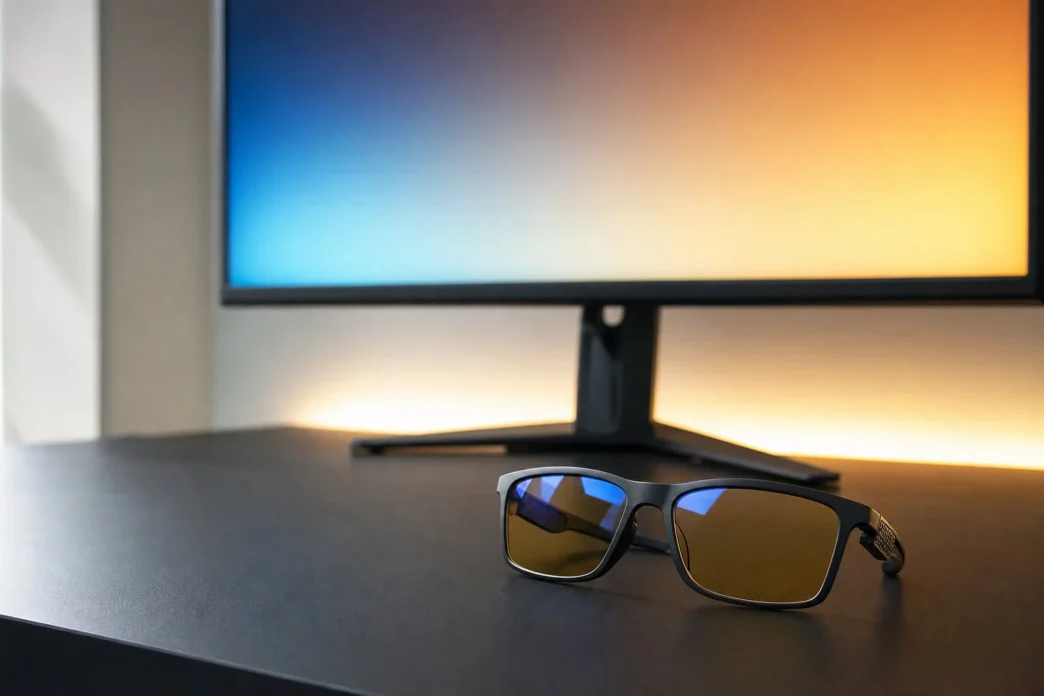
Many users also investigate purpose-built eyewear as a complementary solution, not a substitute for ergonomic habits. Specialized glasses for gamers are designed to filter certain light wavelengths and reduce glare, but their effectiveness is maximized when combined with other mitigation strategies like blink rate monitoring and careful setup of the gaming environment. Some consumers compare different PC gaming glasses based on lens tint, reflections, and fit to match their lighting and display characteristics. Brands like NoIR Insight create eyewear tailored for individuals in screen-heavy technical work and marathon gaming, highlighting their role as part of a broader, multi-layered approach to visual comfort.
Screen flicker, refresh rate, and their interaction with eye fatigue
Many displays modulate their brightness using rapid on-off cycles controlled by pulse width modulation (PWM), which creates flicker. Even when this flicker is imperceptible to the naked eye, it can trigger subtle neural and muscular responses that contribute to strain over long gaming sessions. Lower brightness settings, common in dimly lit gaming rooms, often intensify this flicker, amplifying cumulative fatigue. Some users pair calibration with gaming eye strain glasses to reduce glare and improve perceived comfort during flicker-prone conditions.
Monitor refresh rate also plays a complex role. While higher refresh rates typically provide smoother visuals and can help reduce visible flicker, they do not eliminate all sources of stress. Variability in brightness output, backlight modulation, and HDR or variable refresh rate (VRR) settings can alter the visual load placed on the eye. These small but persistent fluctuations, coupled with reduced blinking and sustained near focus, can lead to increasing discomfort over hours of gameplay. In practice, PC gaming glasses are sometimes chosen to complement refresh-rate improvements rather than replace them.
Building a sustainable gaming environment for visual health
Ultimately, reducing eye fatigue during long gaming sessions requires a holistic understanding of both behavioral and technical contributors. By improving your awareness of blinking habits, managing accommodative strain through scheduled breaks, and configuring your monitor settings to avoid unnecessary flicker or brightness extremes, you can significantly lessen discomfort. Ambient bias lighting, for example, can smooth visual transitions and relieve eye muscles from sharp contrast adjustments. For players who still feel taxed after optimizing the room, gaming eye strain glasses can be one more element in a layered strategy.
While no single solution can eliminate eye strain outright, a combination of good ergonomic practice, conscious breaks, and advances in purpose-built eyewear offers the best defense. In addition to calibration and lighting, screen fatigue gaming can be reduced when visual demands are distributed through scheduled focus changes. As brands continue to engineer products aimed at minimizing the burdens of intense screen use, many users evaluate blue light gaming glasses for comfort and glare control in brighter setups. Some also explore different gaming eye strain glasses as part of personal experimentation, keeping expectations realistic and prioritizing long-term visual well-being.