


AMD’s 300 series has been overlooked by a lot of people. Their Fury series really took all of the spotlight, but not everyone has that much money to spend on a graphics card. If you are an AMD fan the 300 series still does have a lot to offer. Today we will be taking a look at a R9 380 graphics card, which is more or less a rebranded R9 285. The card is based on the 28nm process and features 1792 stream processors, 32 ROPs, 112 TMUs. On the review block today is the MSI R9 380 Gaming 4G graphics card. MSI has given this card their “Gaming” treatment, which we are big fans of. So you have the Twin Frozr V cooling solution, a factory overclock, fans that turn off when you are not gaming, and of course the MSI Gaming styling on the card itself. Let’s take a look and see what this card is all about!
Special thanks to MSI for providing us with the R9 380 Gaming 4G Graphics Card to review.
Specifications
Graphics Engine: AMD Radeon™ R9 380
Bus Standard: PCI Express x16 3.0
Memory Type: GDDR5
Memory Size(MB): 4096
Memory Interface: 256 bits
Core Clock Speed(MHz):
– 1000 MHz / 5800 MHz (OC Mode)
– 980 MHz / 5700 MHz (Gaming Mode)
– 970 MHz / 5700 MHz (Silent Mode)
Memory Clock Speed(MHz): 1000 / 5800 (OC Mode)
Maximum Displays: 3
DVI Output: 2 (Dual-link DVI-I x 1, Dual-link DVI-D x 1)
Max Resolution: 2560 x 1600 @60 Hz. HDMI-Output 1 (version 1.4a)
Max Resolution: 4096×2160 @24 Hz (1.4a) DisplayPort 1 (version 1.2)
Max Resolution: 4096×2160 @60 Hz Multi-GPU Technology CrossFire
Power consumption (W): 190
Power Connectors: 6-pin x2
Display Output: DL-DVI-I/ DL-DVI-D/HDMI DisplayPort x3
DirectX Version Support: 12
OpenGL Version Support: 4.4
Card Dimension(mm): 268 x 138 x 40
Weight: 943g
Packaging
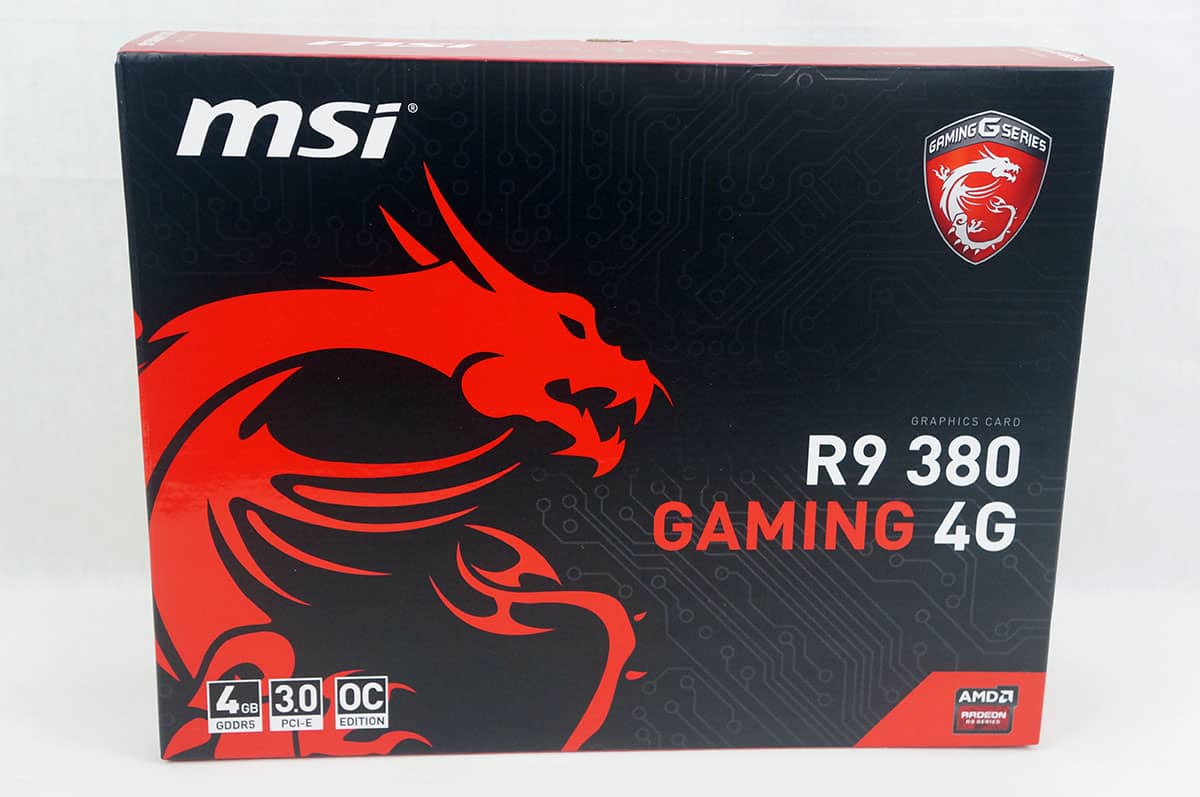
The card comes in MSI’s typical retail packaging for graphics cards. On the front is the MSI Dragon logo and it lets us know this is the “4G” card meaning that it has 4GB of GDDR5 memory. MSI also offers a “2G” version which has 2GB of memory.
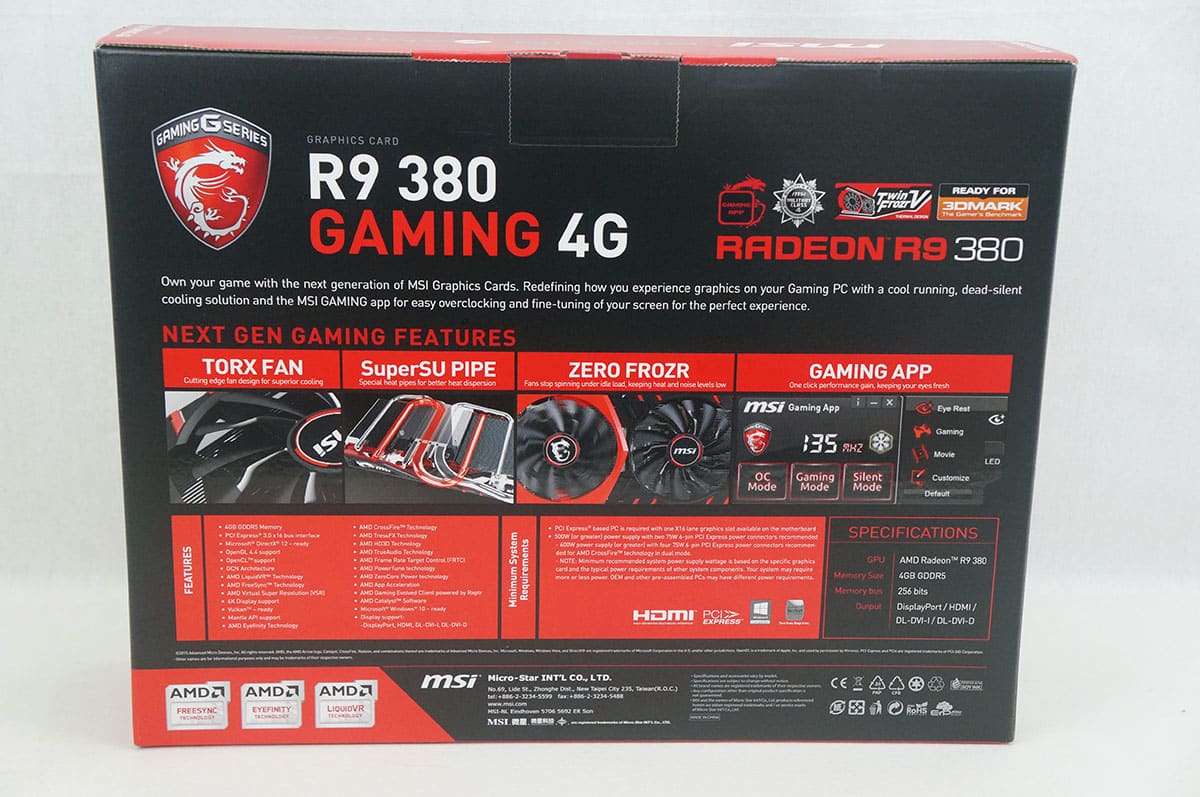
Flipping the box over it goes into detail on some of the main features of the card like the Torx fan, SuperSU pipe, Zero Frozr, and gaming app.
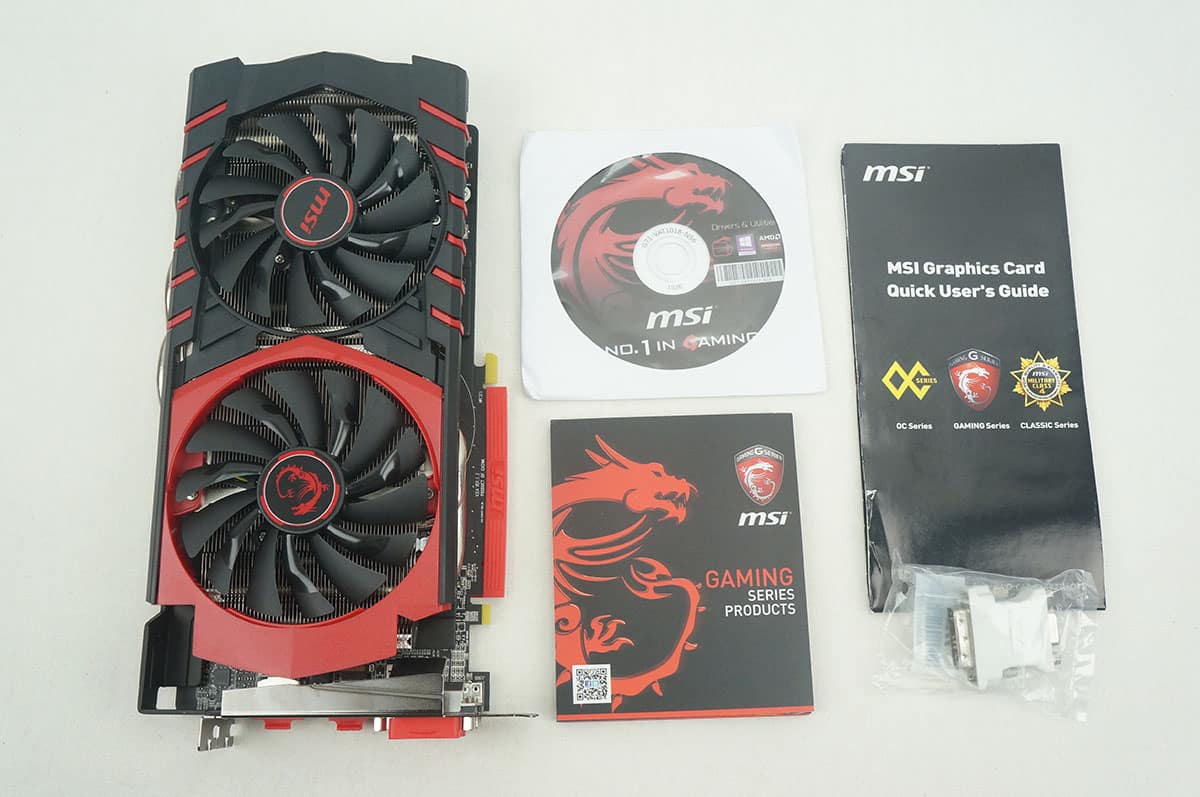
Getting everything out of the box you have the MSI R9 380 Gaming 4G graphics card, DVI to VGA adapter, driver and utility CD, user’s guide, and a product guide.
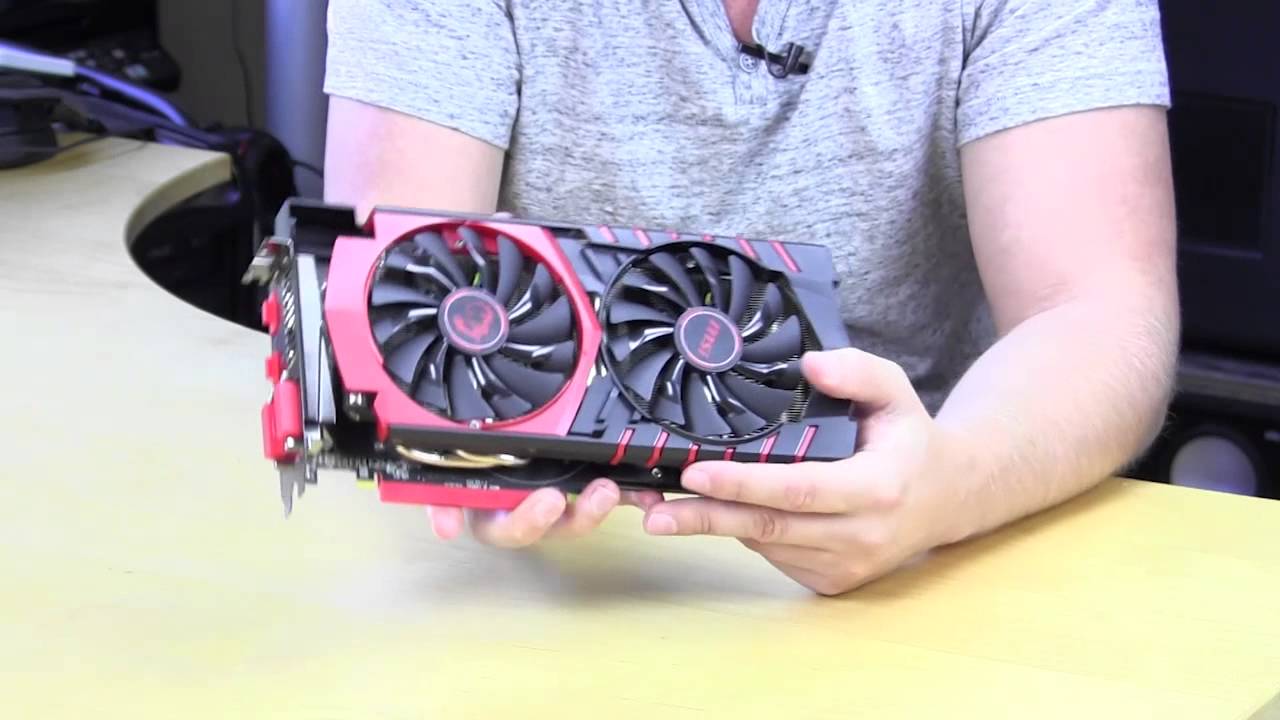
For a full unboxing and overview of the R9 380 Gaming 4G be sure to check out our video below.


Thanks for the review! I will say other than listed in test set-up you completely missed covering the Gaming Mode (980 MHz / 5700MHz) as tested “out-of-the-box”, while the MSI Gaming App software is used to enact the OC Mode (1000 MHz / 5800 MHz). I think that would be useful to readers
and those that watched the video to provide some detail on that. Interestingly you did provide a lot of “ink” on that subject back with the MSI GTX 770 Gaming review back Oct, 2013, even providing B-M in both Gaming and OC’d. I think that would’ve been to correct way to provide a consistent position for all your reviews.
You might want to say that the idle temperature is at 52°C as that because the ZeroFrozr technology which stops the
fans when they are not needed at that point basically a full-passive mode.
I’m really disappointed you neglected to include the results of you MSI GTX 960 Gaming review from February 10th. That is the more proper comparison as it’s the Nvidia product that is it closest competitor, while 770’s have be EoL for almost a year now. Looking at both the GTX 960 review and the MSI GTX 770 you’ve appear to have change your test rig, and the B-M titles used so those older reviews weren’t transferable. That said, I have a hard time saying a loop of Heaven B-M is characteristic of gaming loads, and from other reviews I’ve seen the inference that a MSI GTX 770 Gaming is like 4.5% better than a MSI 380 Gaming (@980MHz) at load is abnormal. I mean look at the Stix 970 and the 770 with the Maxwell only using 7% less. That MSI
770 Gaming you have is some golden sample right there!
Agreed, it does seem the review misses the main characteristics of the card–which is really amazing, when you think about it…;) That’s the quickest route to web-site obscurity, imo.