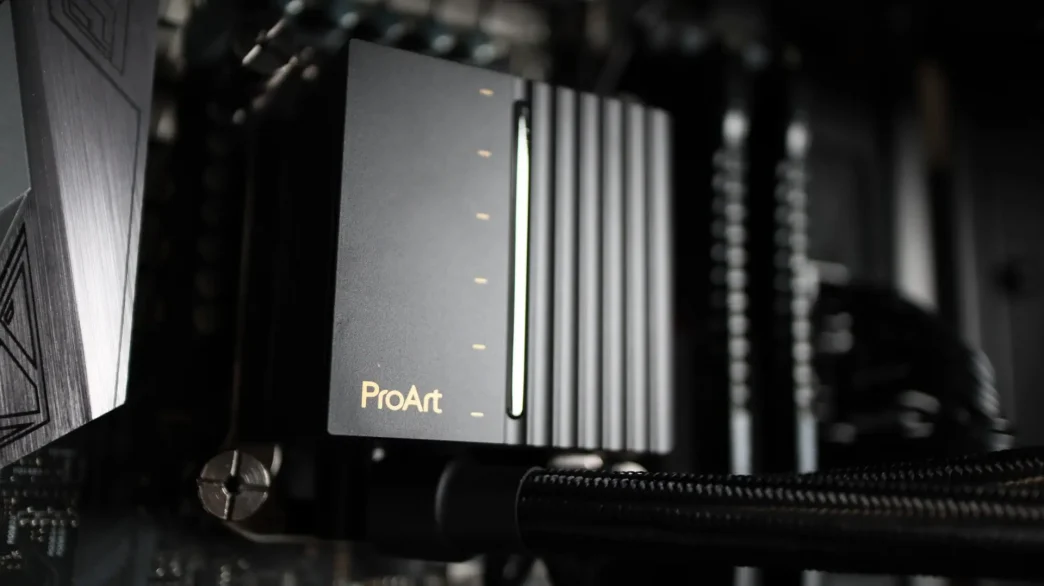
ASUS ProArt LC 360 Overview
With the ProArt LC 360 out of the box, you can see that it is a very plain looking AIO. You won’t find any LCD screens on this cooler, though it does have a thin LED bar on the pump that can be configured to show various stats, but more on that later. As the name suggests, the ASUS ProArt LLC 360 is a 360mm AIO cooler, pairing three of Alphacool’s 120mm Apex Stealth Metal Power fans with a 27mm thick 360mm radiator. There aren’t a lot of flashy features to this cooler, as it is focused purely on the job at hand, so let’s get right to it.
First up is the 360mm aluminum radiator. This radiator is very straight forward in it’s design, with a black paint job, and gold ProArt logos and titles found along its sides. The 27mm thickness is pretty much the average thickness we have been seeing lately, and keeps things simple when it comes to case compatibility and size requirements.
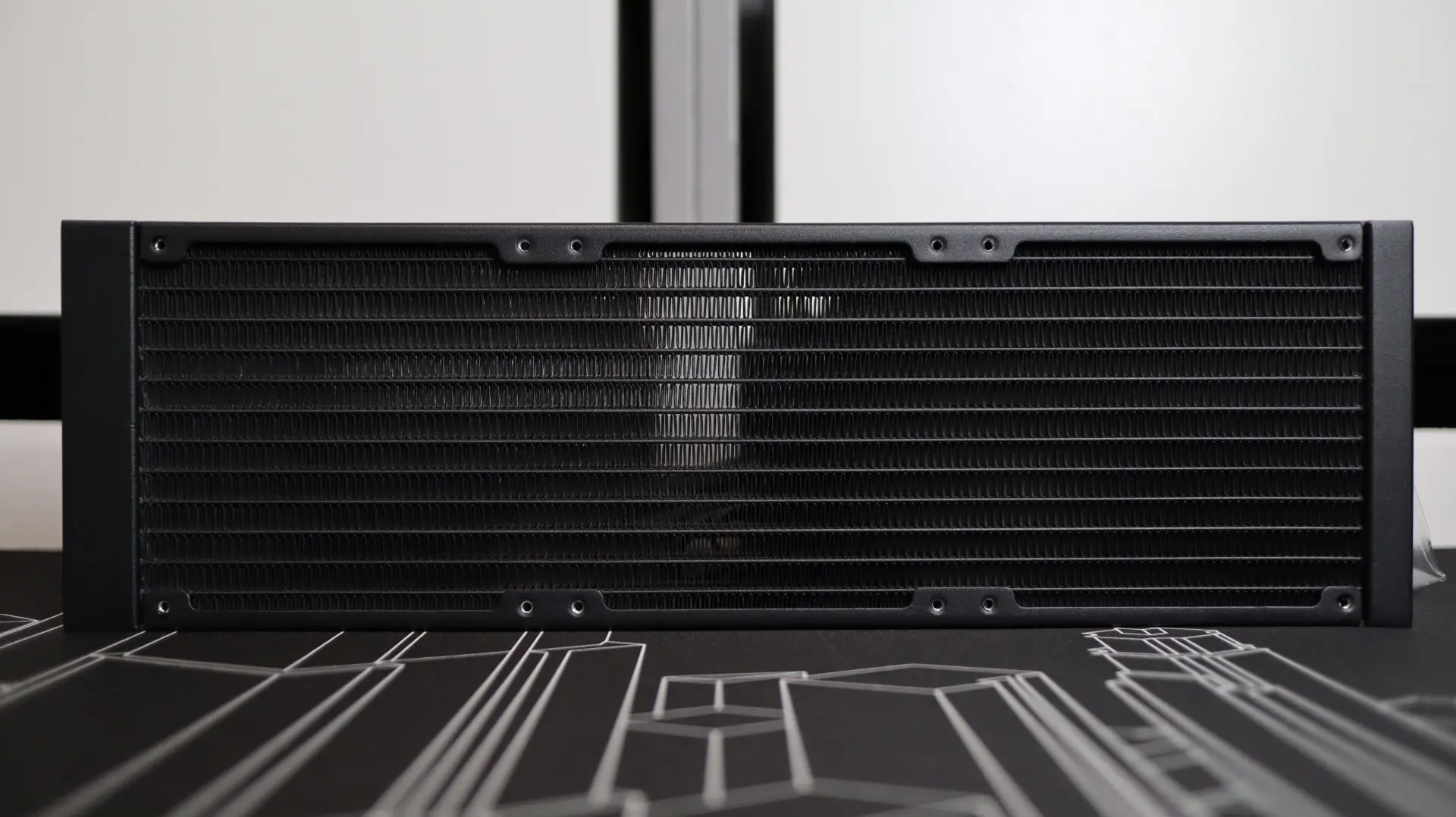
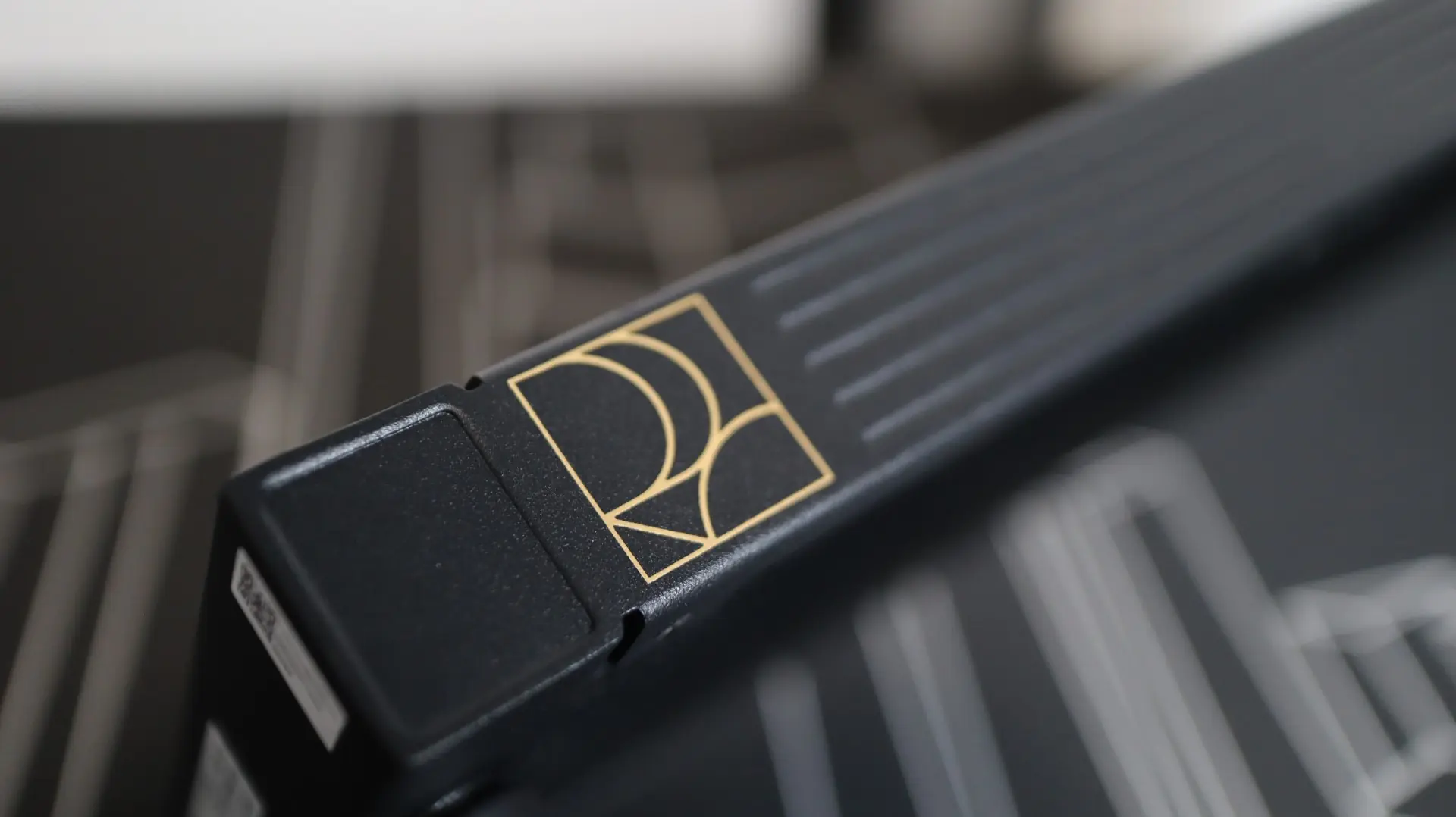

Found along one side of the radiator are five long accent lines that provide a bit of design aesthetic to the LC 360, and pair up with a few other components found later on.
With 20 fins-per-inch, the tight fin density is able to provide adequate surface area while still confined to a 27mm thickness. The 120mm Alphacool Apex Stealth Metal Power fans included with the this kit have a static pressure rating of up to 4.46mm-H2O, which is on the high side of fan specifications we typically see in our AIO reviews, and should provide plenty of push to get air moving through the radiator fins.
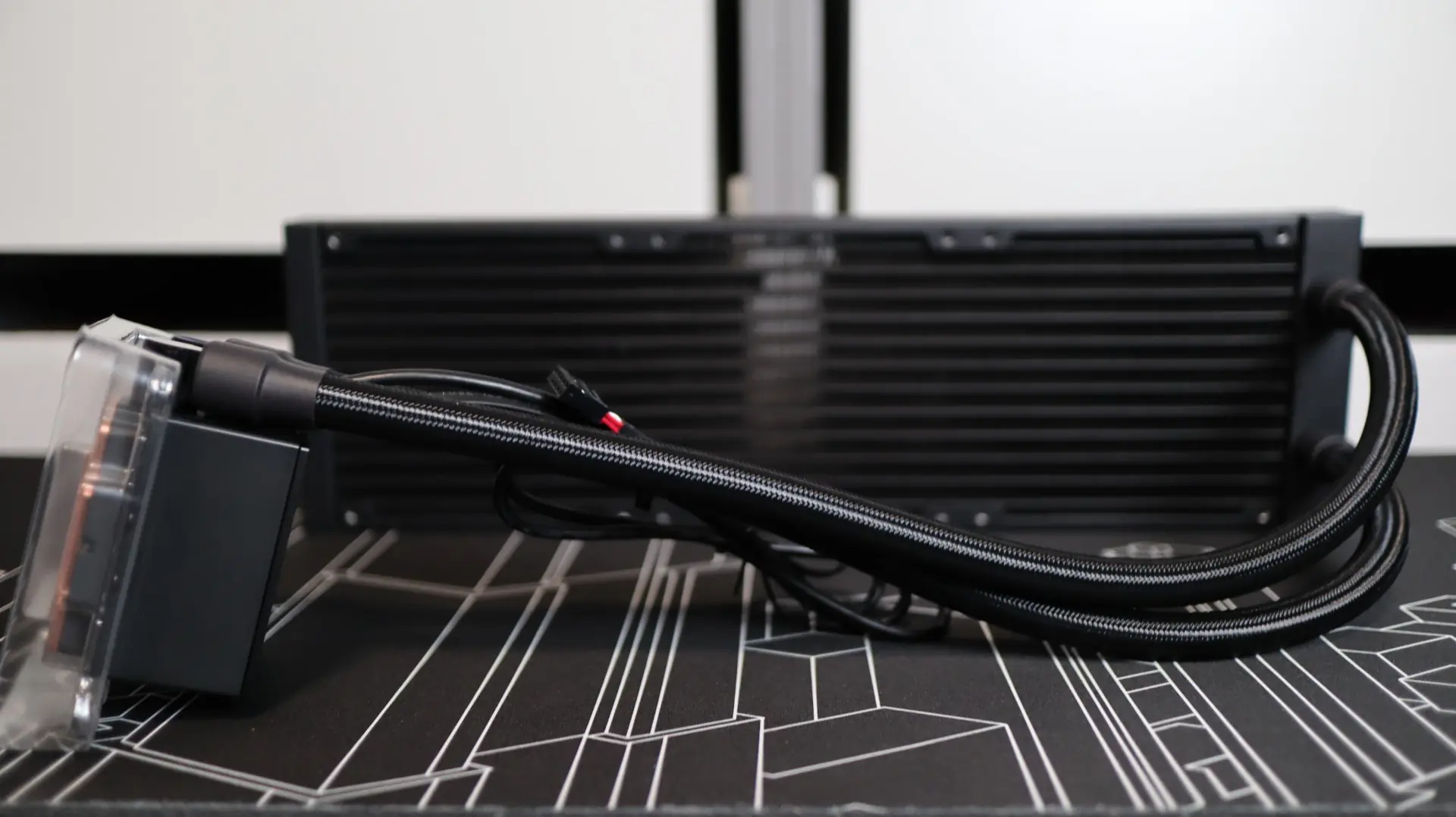
Each braided cooling line exits from one end of the radiator’s end cap, and these lines are connected to the radiator via crimped connectors. I found the cooling lines to be quite flexible during installation, and their length, 450mm, was quite adequate during installation.
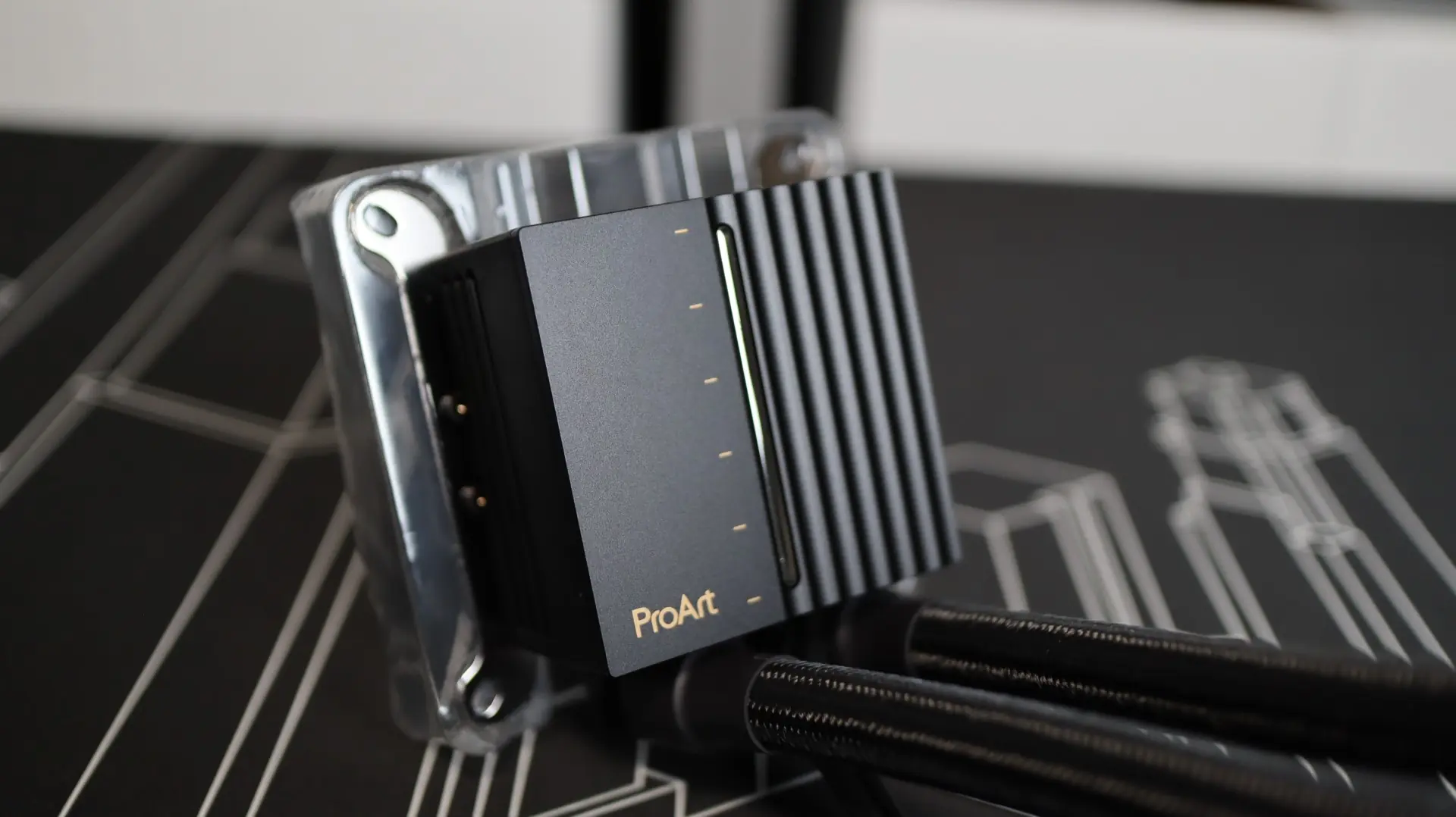
Moving over to the pump housing we find a fairly plain looking setup. This black square design incorporates some gold accents in the form of a ProArt nameplate and level indicators on the top side of the housing. Aside from that, it is pretty basic, with a few tweaks here and there. Internally, ASUS has provided a three-phase motor with a ceramic sleeve bearing to provide increased performance with reduced sound output.
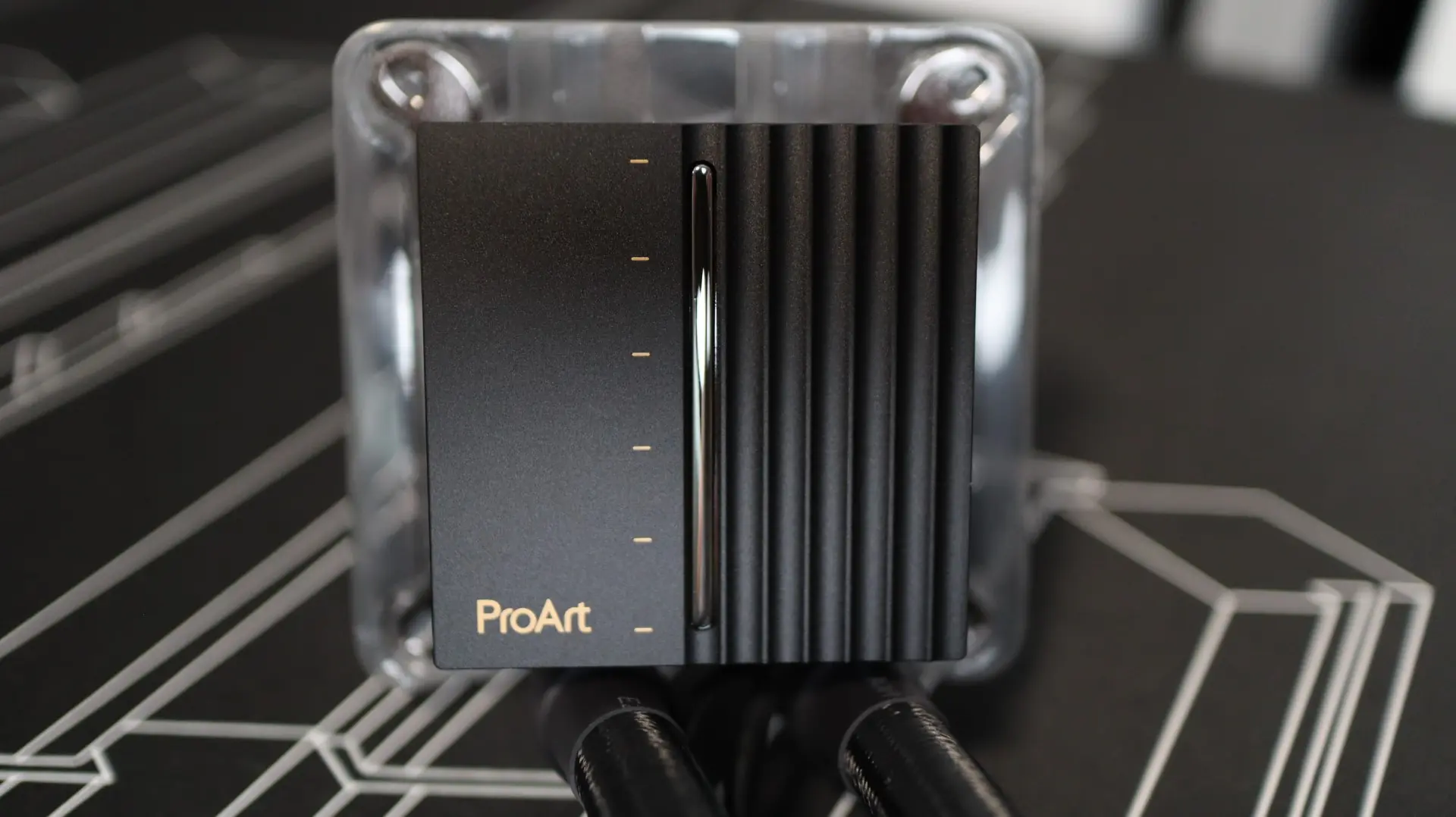
Looking at the top of the housing you have the aforementioned gold accents, but there is also a thin LED light bar that makes its way up and down the center of the cap. This all-white LED design is used as a status indicator for things like CPU or GPU usage, temperature monitoring, and more. With only so much you can do with a status bar, your options are much more limited than say an LCD screen, but that sort of feature just doesn’t fit in with the ProArt line. To the right of the status bar are a few ripples, or waves, in the cap that keep it from being just plain black plastic.
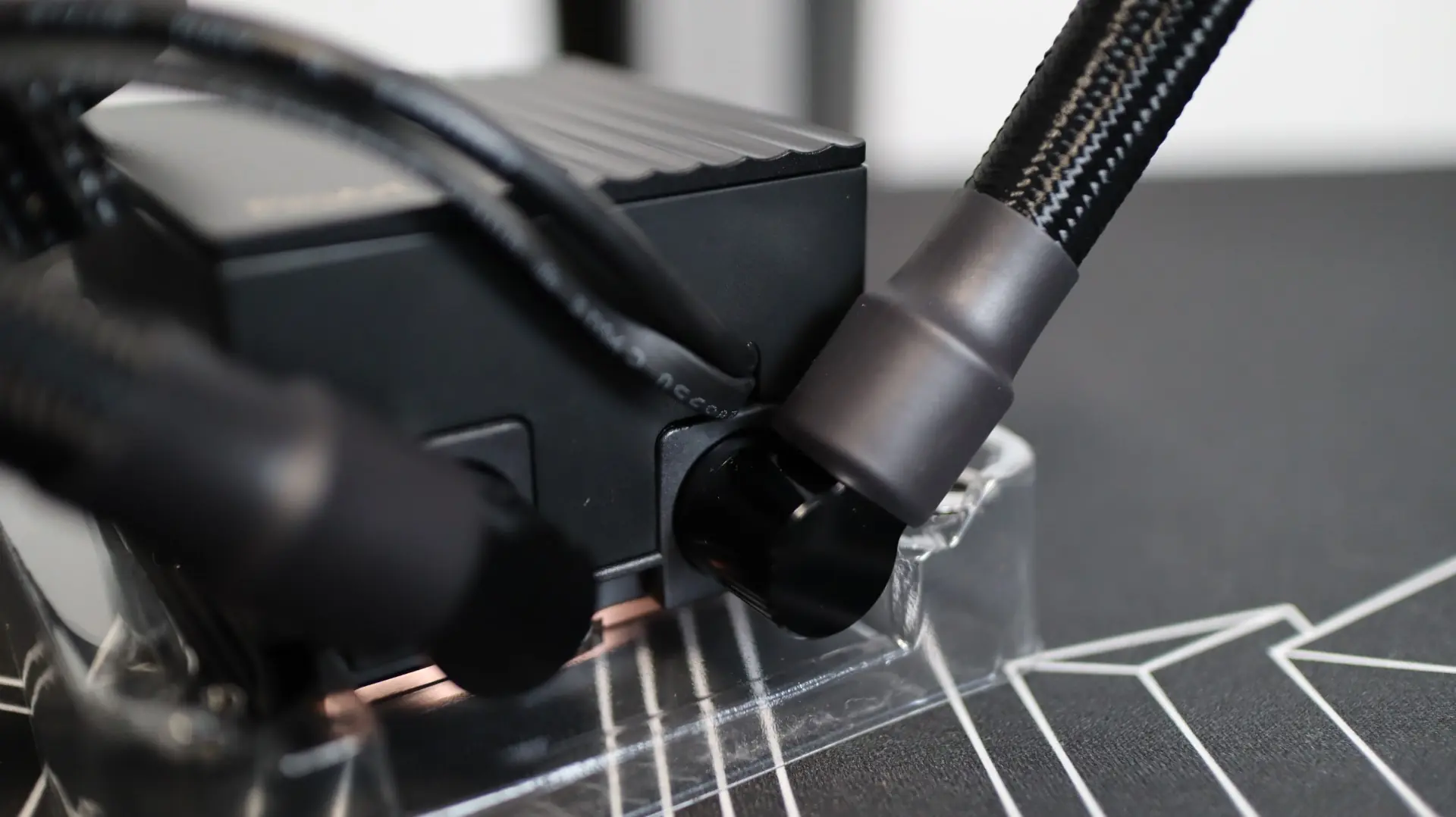
Moving around to the sides we find the two cooling lines exiting from the bottom side of the pump housing. Each line is paired up with a swiveling metal fitting to make installation and fitment much easier than with fixed connections.
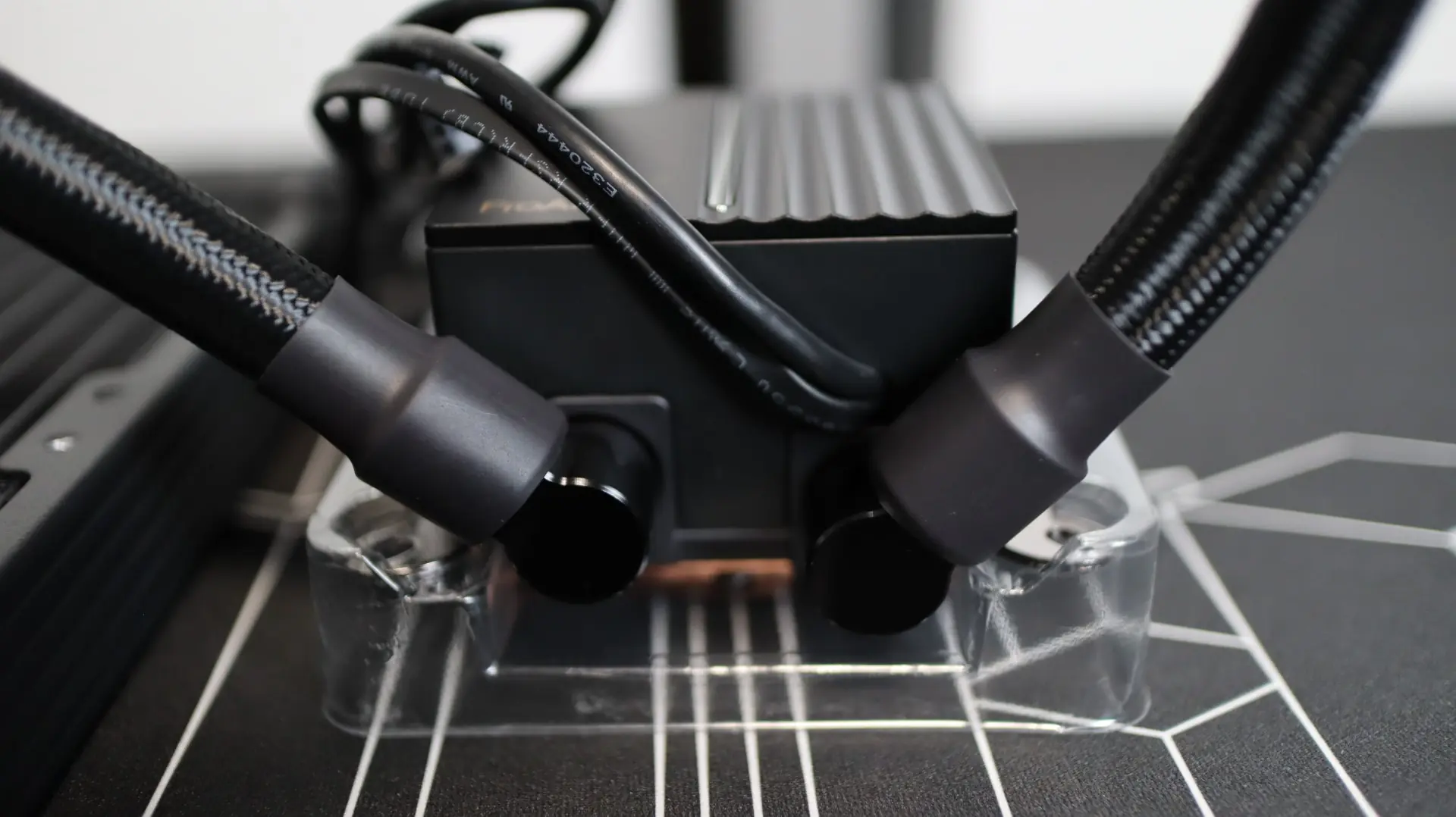
Also on this side are the USB 2.0 cable and PWM cable used for controlling the lighting and powering the pump, respectively.
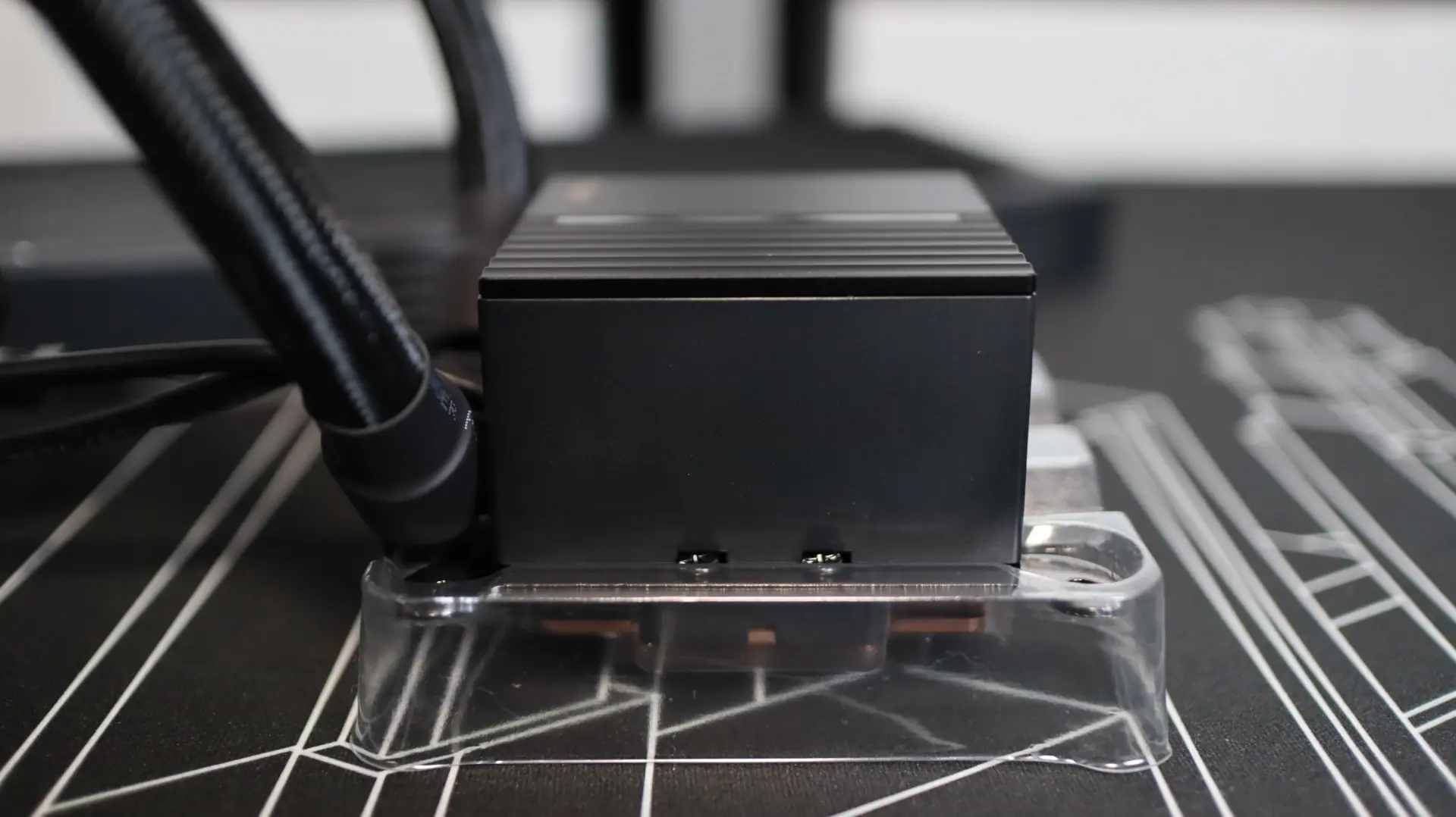
Both the right and top edges of the pump housing are plain black without any design accents.
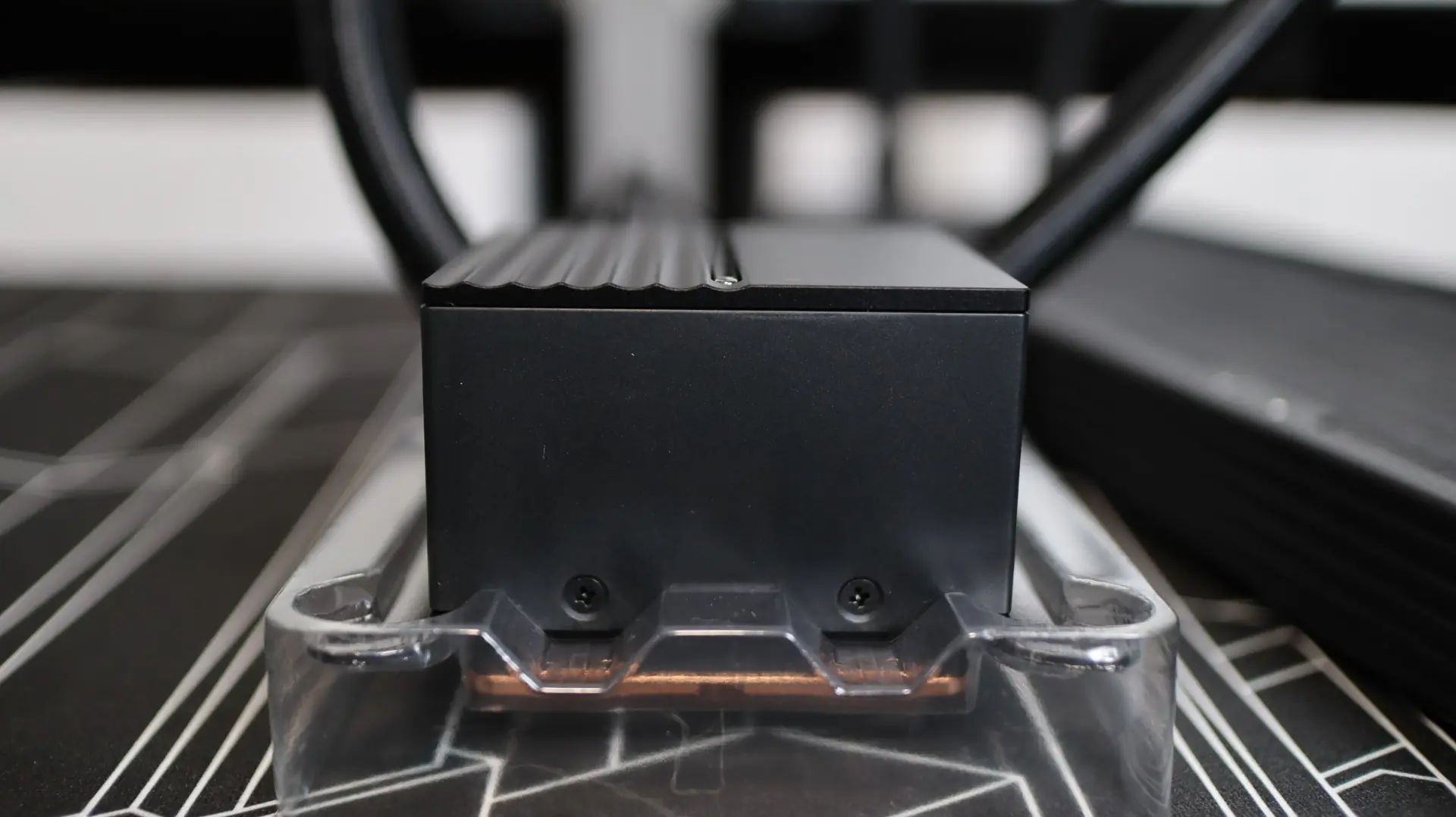
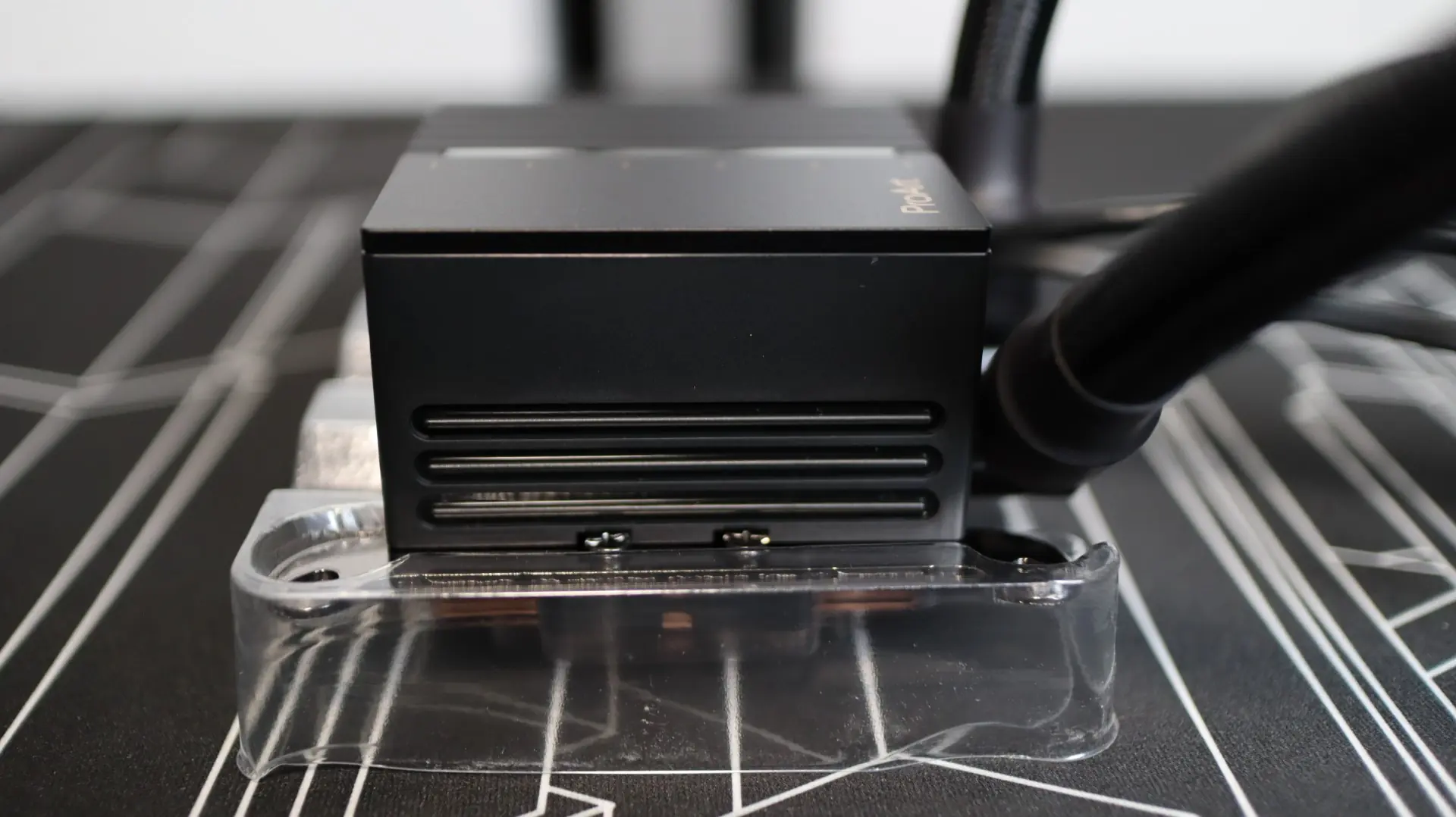
The left side has three accent lines that continue that same design language that is found on the radiator and top of the pump housing.
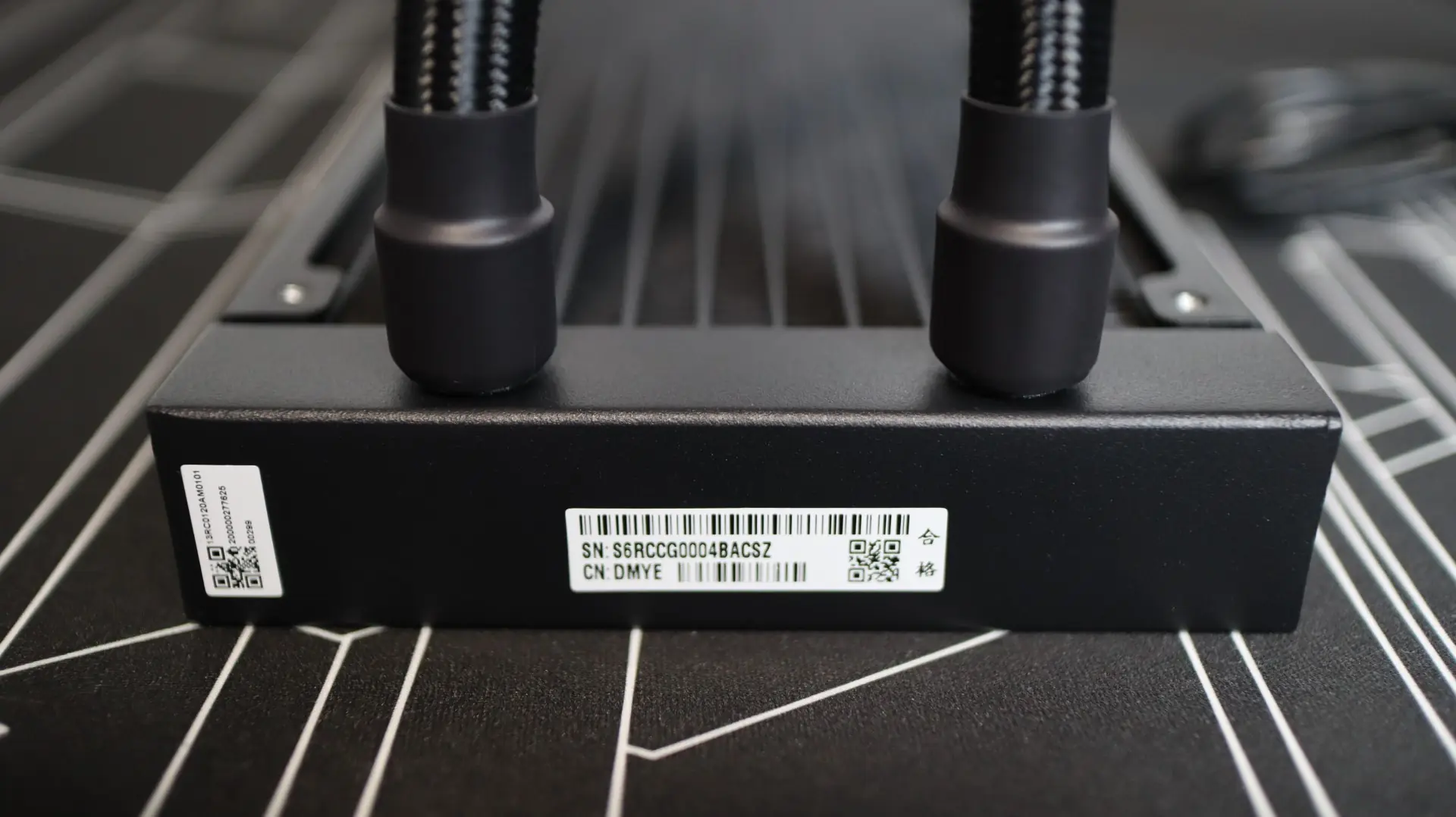
Flipping the pump housing over, we find that the cooling plate is a copper design, and comes with pre-applied thermal paste. Additionally, ASUS has utilized a sunk-fin design with the cold plate to promote improved performance that often can be achieved with this design compared to a standard flush fin setup.
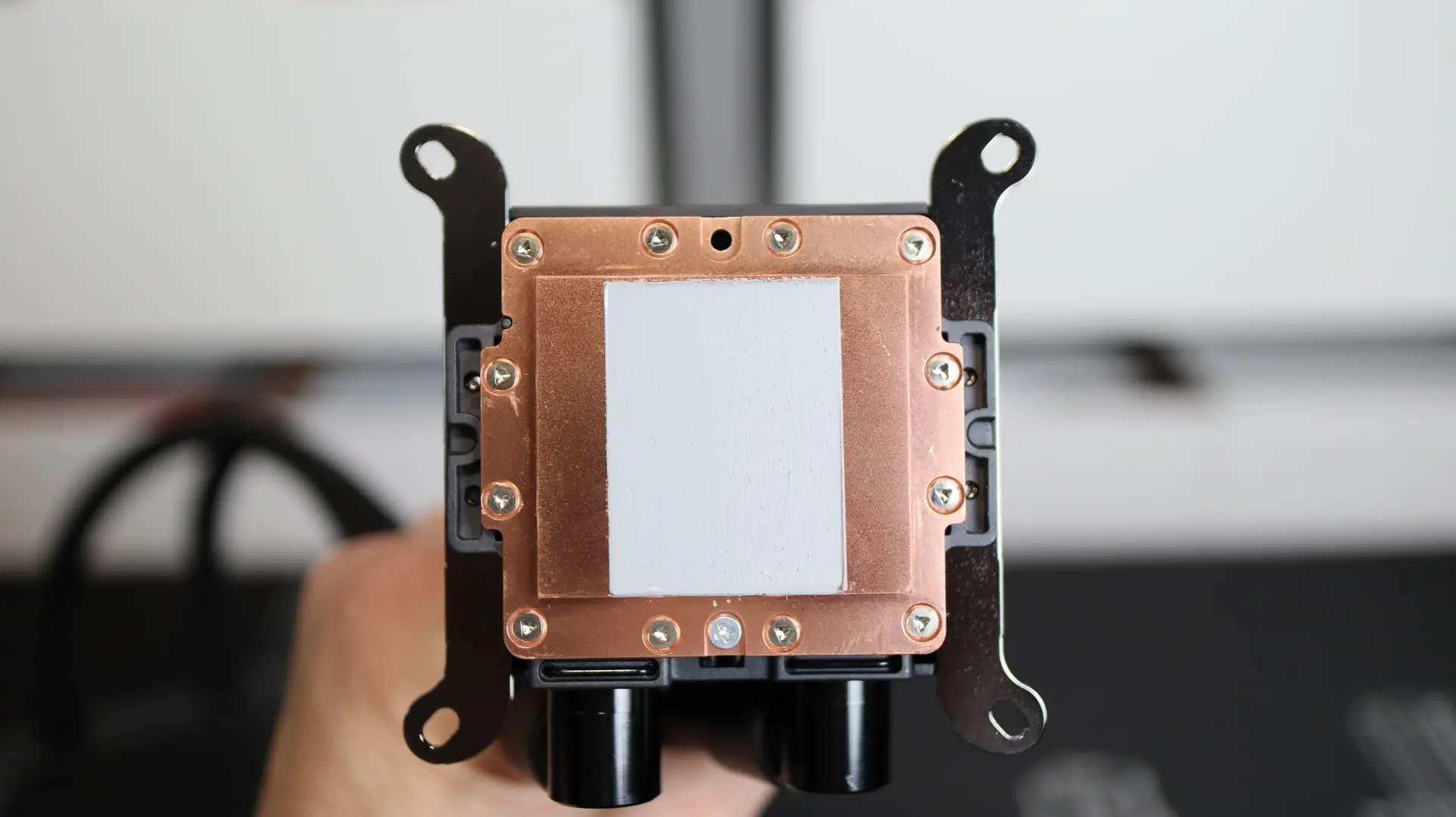
One feature of note is that you are not required to make any changes to the mounting brackets that come pre-attached to the ProArt LC 360’s pump housing, as they are compatible with both the AMD and Intel accessories included with this kit.
Alphacool Apex Stealth Metal Power Fans
Continuing in a similar vein as the ProArt LC 420, ASUS has recruited the help of an outside source for their fans on the LC 360. Instead of sticking with the LC 420’s source, Noctua, ASUS has paired up with Alphacool. We’ve looked at multiple products from Alphacool over the years, and their history in the cooling segment make them a great choice for fans, in my opinion. The fan of choice in this case is the Apex Stealth Metal Power Fan, a 120mm fan with a very sturdy metal frame, impressive airflow, and pressure stats to match. Not only did ASUS pair up with Alphacool, but the version of the fans included with this AIO were tweaked a bit to be optimized for use specifically with this cooler. Specifically, the static pressure has been increased from 4.23 mmH2O to 4.46 mmH2O, while the airflow has been slightly lowered from 70.98 CFM to 68.99 CFM.
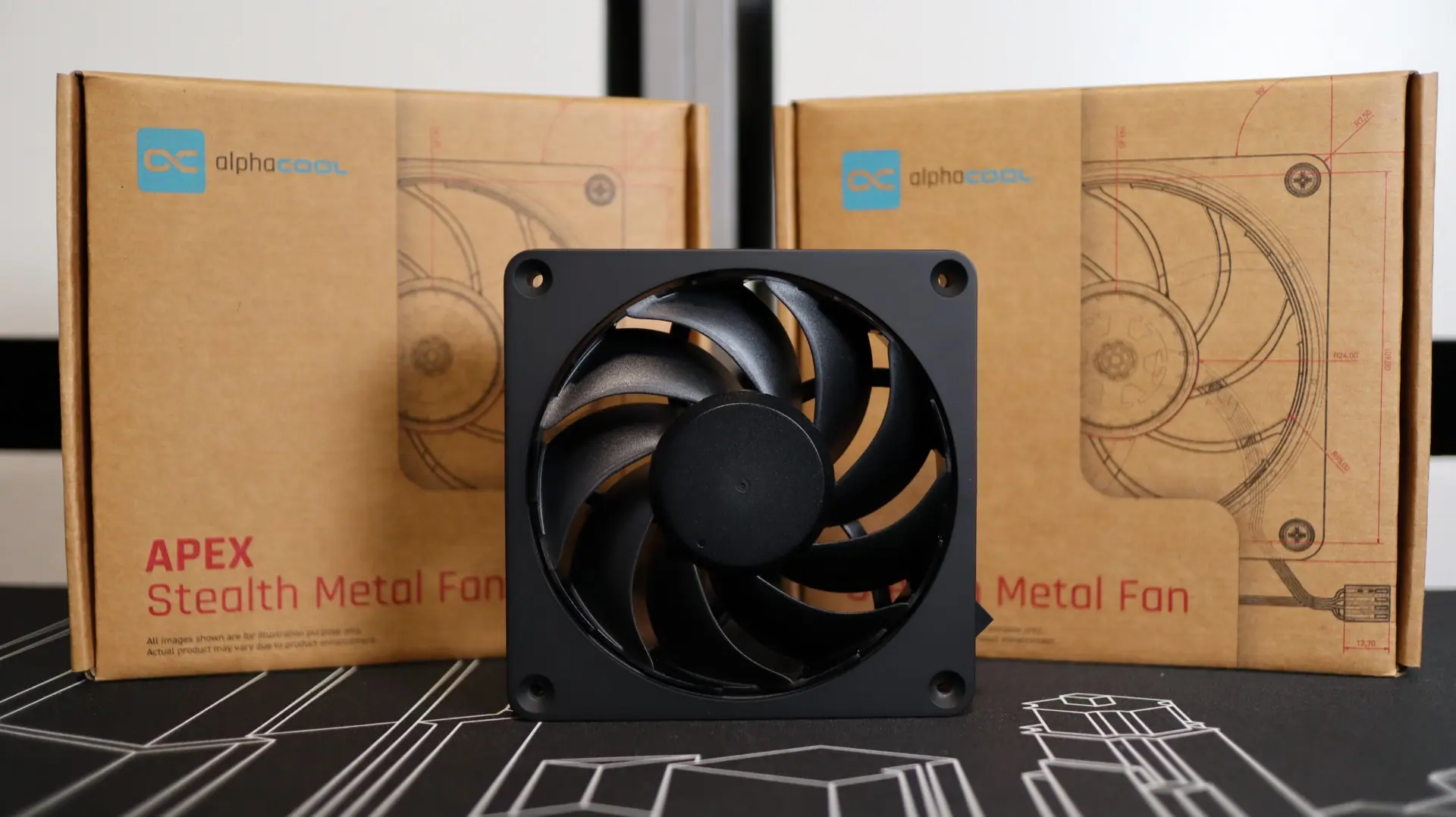
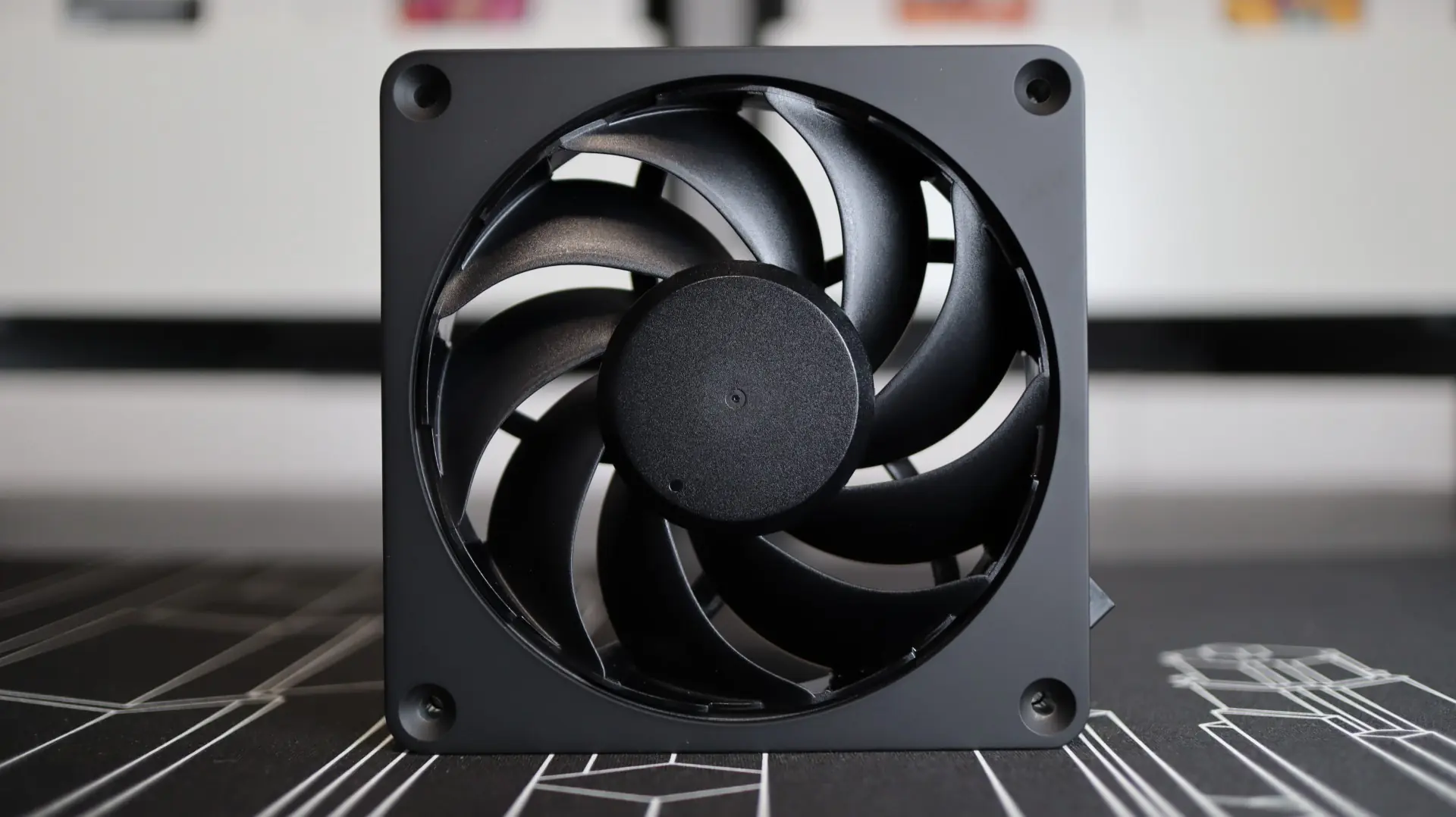
A far as specifications go, these nine-blade fans have an operating range of 0-3000 RPM, and are capable of pushing up to 68.99 CFM of airflow. With 4.46 mmH2O of static air pressure when running at 100%, these fans should pair nicely with the 27mm radiator.
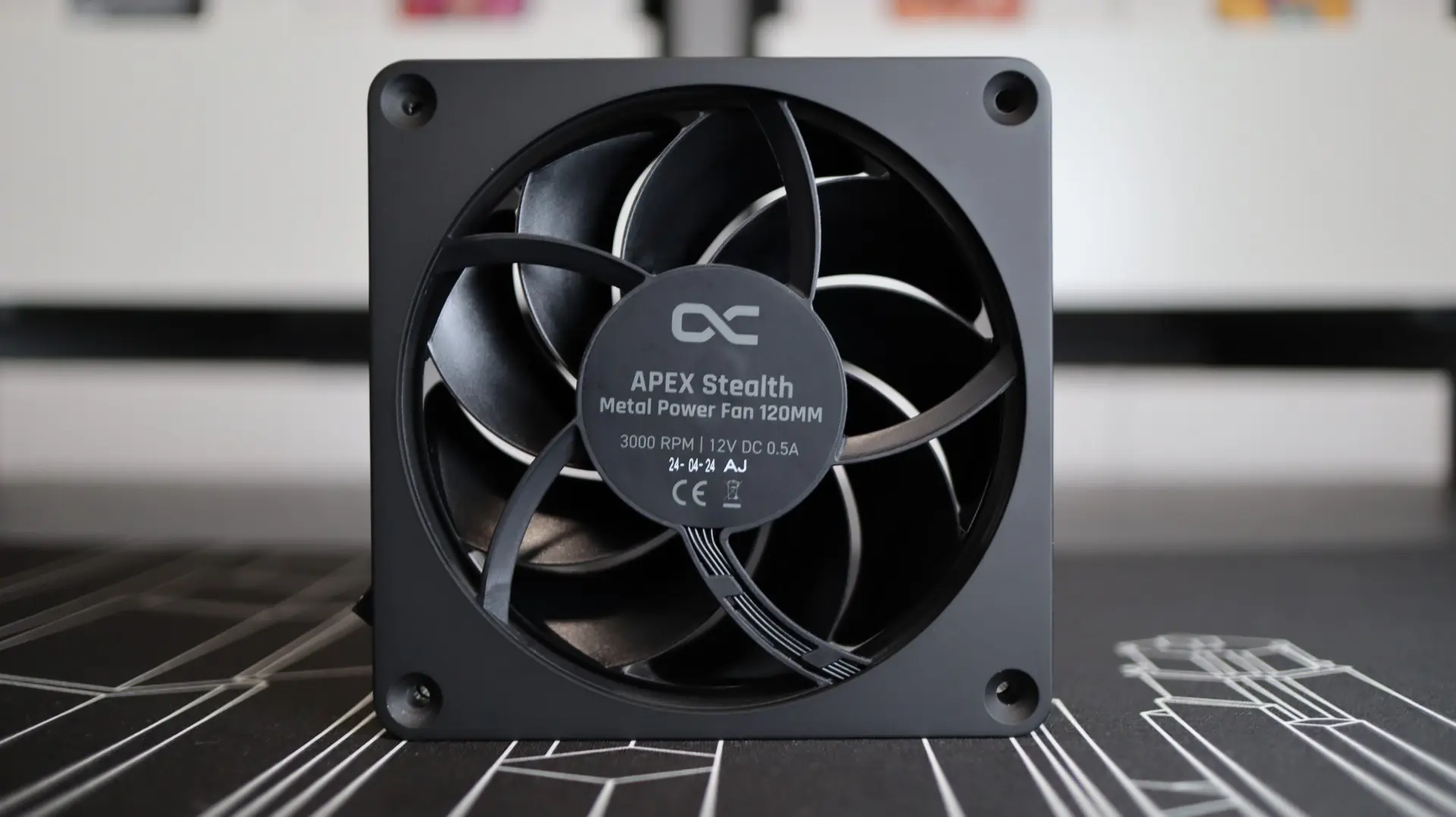
While ASUS and Alphacool tout the ability to daisy chain these fans, they still require you to connect male and female PWM cables between each other, and are not as simple as many of the newer fans we have encountered lately in our AIO reviews. That said, we still appreciate the ability to chain the fans together, as it greatly reduces the cable clutter that comes with more traditional fan cabling.
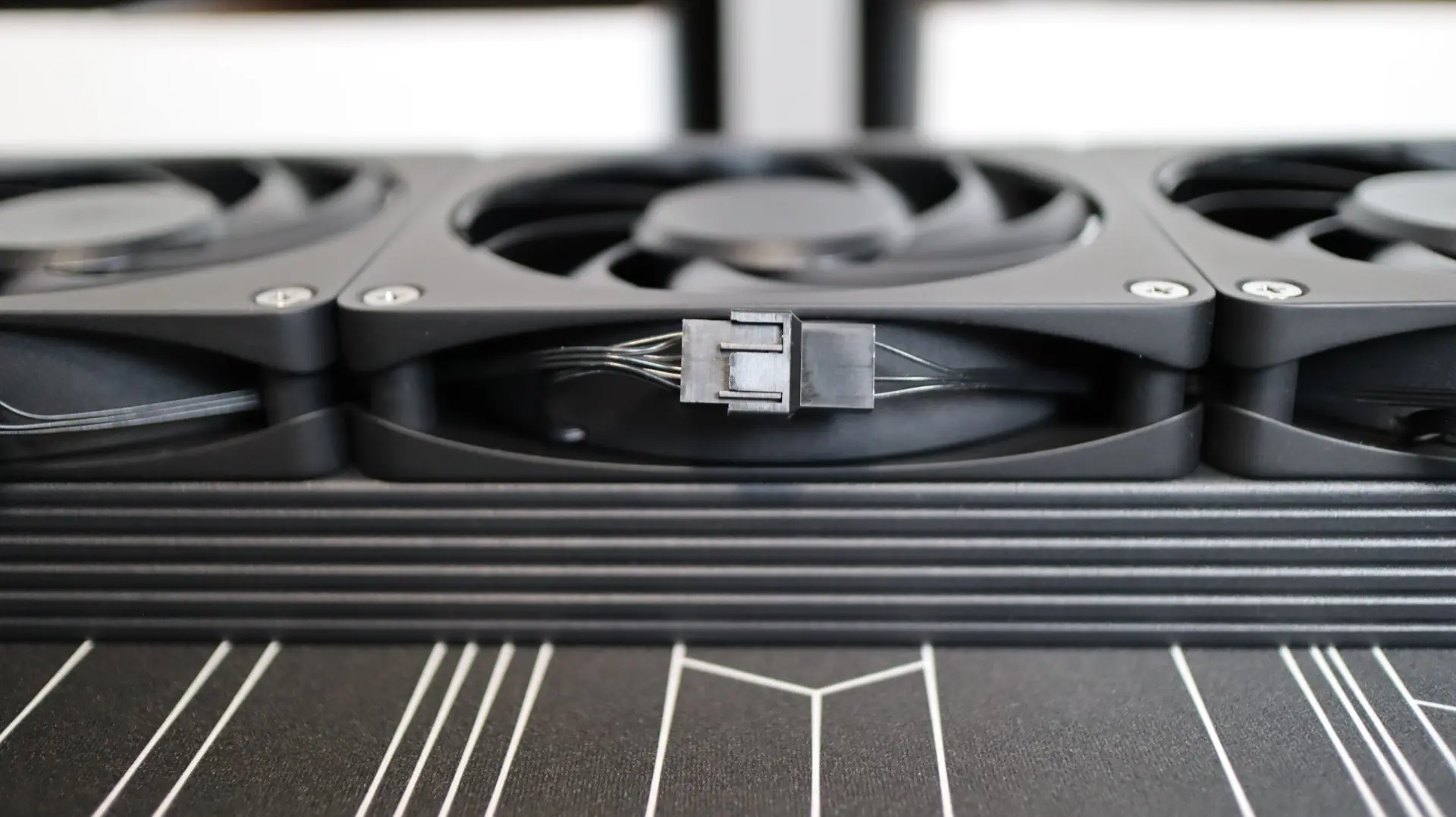
With no RGB lighting, there usually wouldn’t be much more to talk about, but these fans do have a couple of items that I think are worth mentioning. First off is the heavy duty metal frames. With a patent-pending decoupling that separates the solid metal frame from the rest of the fan components, you get great performance and minimal sound output.
Additionally, this decoupling design allows for the ability to connect and route the PWM cabling between fans, while using the frame of the fan to achieve this function. You still end up with the connections outside the frame of the fan, but this routing option does help keep things a bit cleaner.
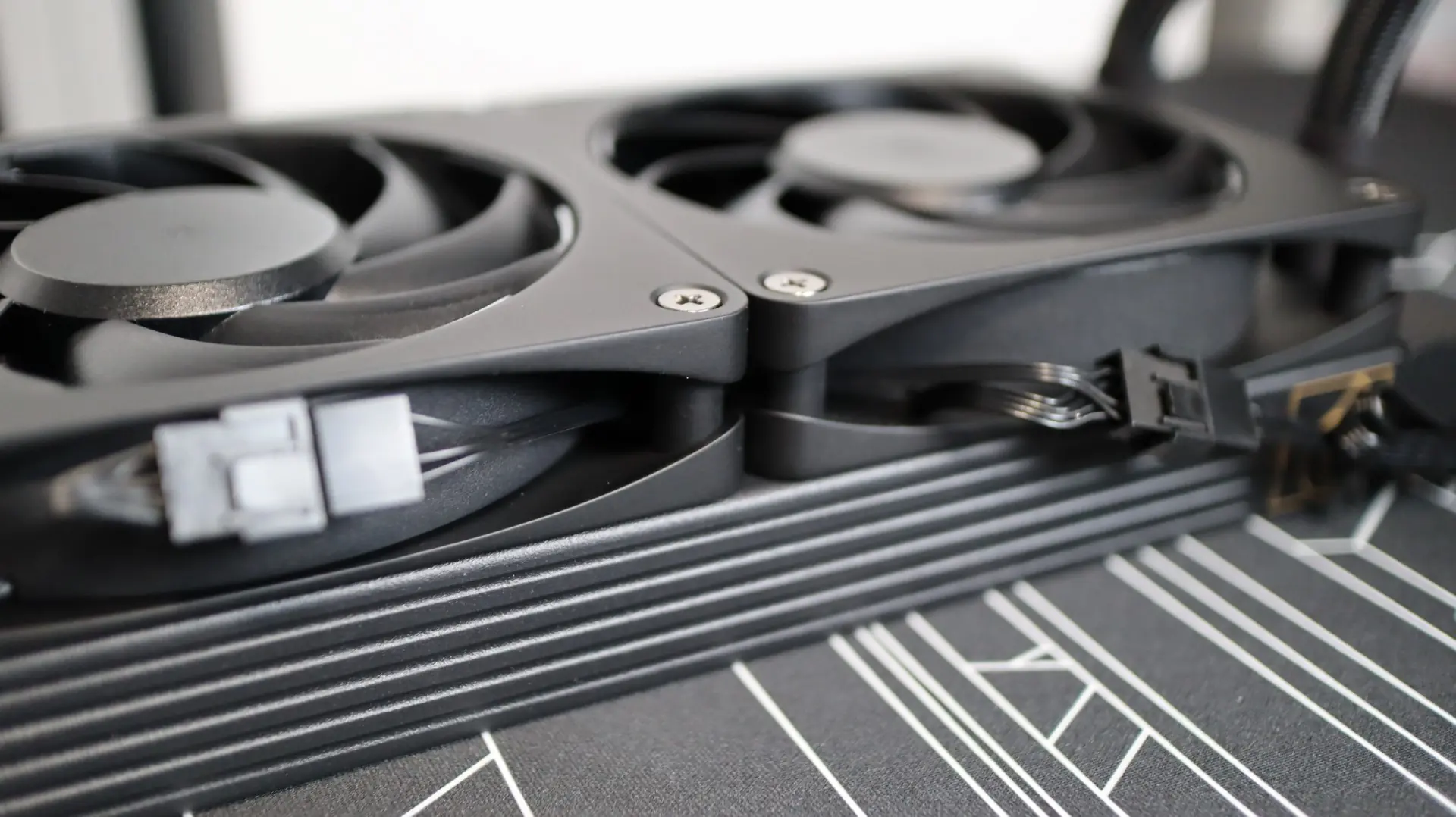
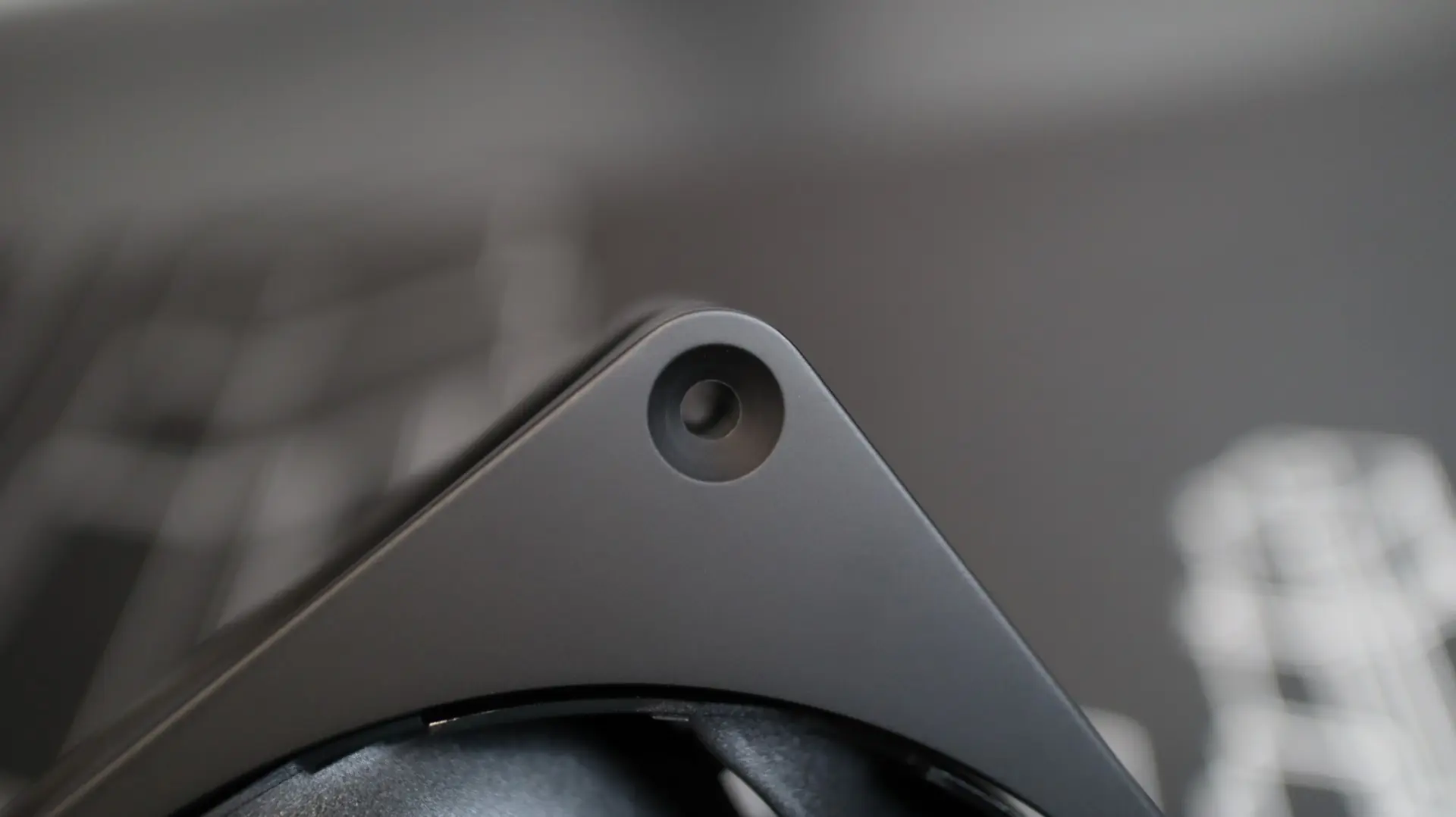
I also really like the use of counter-sunk screws, as it adds to the high-end look and design of the ProArt lineup. Unfortunately, there are no rubber pads on these fans, and this could result in vibration noise being introduced at certain RPMs, though the decoupled design of these fans may help to eliminate that risk altogether.