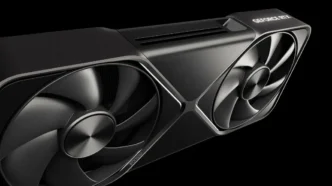
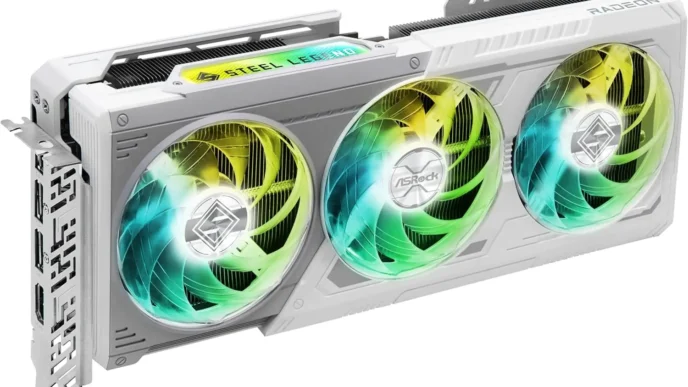
Gamers are overwhelmingly rejecting the 8GB NVIDIA GeForce RTX 5060 Ti, opting instead for its 16GB counterpart. Sales data from a major German retailer reveals the 16GB model outsells the 8GB version by a staggering 16:1 margin, highlighting significant performance concerns and a clear market preference for more VRAM.
The VRAM Divide: Why 8GB Falls Short
The stark sales disparity underscores a critical issue: 8GB of VRAM is increasingly insufficient for modern gaming. While NVIDIA marketed the 8GB RTX 5060 Ti as an affordable entry-level option, real-world performance benchmarks demonstrate severe limitations, particularly at higher resolutions and with demanding game settings.
- Performance Bottlenecks: When VRAM capacity is exceeded, the GPU offloads data to slower system RAM via the PCIe bus. This process, especially on PCIe 3.0 or 4.0 systems, creates significant performance bottlenecks, leading to stuttering, lower frame rates, and unplayable experiences.
- Modern Game Demands: Contemporary AAA titles, even at 1080p or 1440p with upscaling, frequently demand more than 8GB of VRAM for optimal performance and visual fidelity. Games like Dragon Age: The Veilguard, Indiana Jones and the Great Circle, and Marvel’s Spider-Man 2 show the 8GB model struggling immensely, often becoming unplayable where the 16GB version excels.
- Marketing Misalignment: Both NVIDIA and AMD have promoted their latest GPUs, including the RTX 5060 Ti, for capable 1440p performance. However, this expectation is largely met only by the 16GB variants, creating a disconnect for consumers who purchase the 8GB model based on marketing.
Sales Figures Speak Volumes
Mindfactory, a prominent German retailer, provides compelling evidence of this market trend:
- RTX 5060 Ti Sales: The 16GB RTX 5060 Ti has sold 1,675 units, compared to just 105 units for the 8GB model, representing a 16-fold difference.
- AMD RX 9060 XT: A similar pattern is observed with AMD’s RX 9060 XT, where 16GB models are outselling 8GB versions by up to 30 times.
This data suggests that gamers are willing to pay a premium for the 16GB version, recognizing its superior performance and future-proofing capabilities.
The Future of GPU Memory
Industry experts and reviewers are advocating for higher VRAM minimums:
- For GPUs priced around $300, at least 12GB of VRAM is recommended.
- For GPUs costing $400 or more, 16GB should be the standard.
The consensus is that 8GB VRAM is rapidly becoming obsolete for anything beyond entry-level esports titles. The significant performance delta between the 8GB and 16GB RTX 5060 Ti models, despite sharing the same product name, has led to confusion and frustration among consumers. This situation is seen by many as a form of planned obsolescence, pushing users to upgrade sooner than necessary.
Resale Value and Consumer Awareness
Another factor influencing consumer choice is resale value. Historical data from previous generations, such as the RTX 4060 Ti, indicates that 16GB models retain significantly higher value in the secondary market compared to their 8GB counterparts. This further incentivizes gamers to invest in higher VRAM configurations for long-term value.
Ultimately, the market has delivered a clear verdict: for a truly capable and future-proof gaming experience, 16GB of VRAM is becoming the new baseline, rendering 8GB models like the RTX 5060 Ti a less desirable, and often frustrating, option.
Via TechPowerUp!