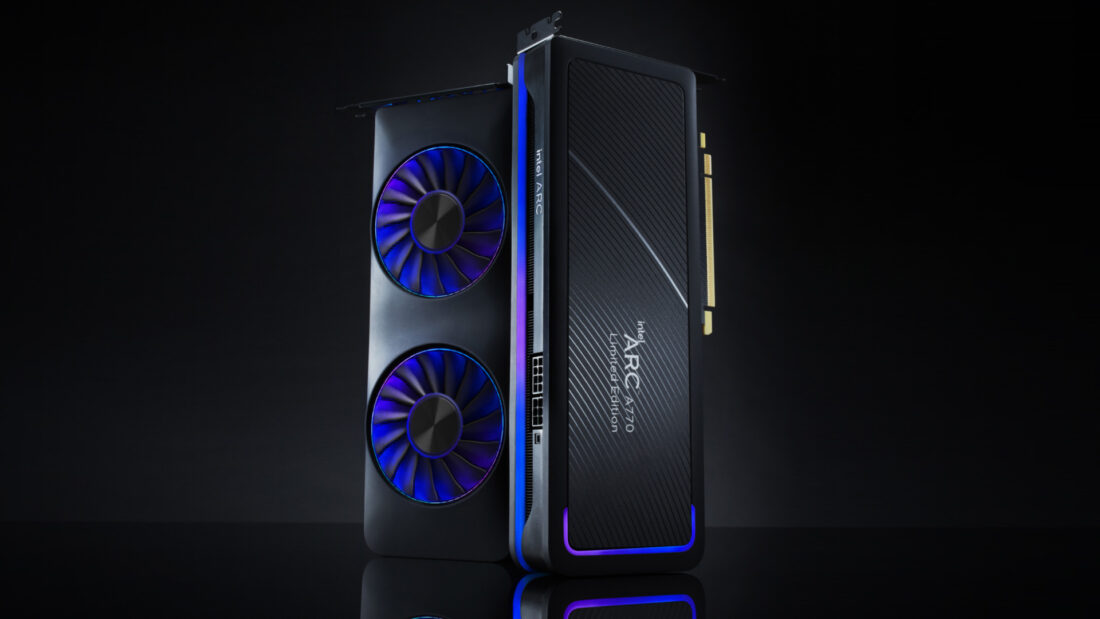
Intel has reportedly canceled its plans for high-end Battlemage GPUs, specifically the BMG-G31 model, due to increasing competition from AMD and Nvidia. This decision raises concerns about Intel’s future in the dedicated graphics card market, as it shifts focus to lower-end offerings.
Key Takeaways
- Intel has halted development on the high-end Battlemage BMG-G31 GPU.
- The cancellation is attributed to competitive pressures from AMD and Nvidia.
- Current offerings include only the mid-range Arc B570 and B580 models.
- Future high-end GPUs may be reconsidered based on market dynamics.
Background on Battlemage GPUs
Intel’s Battlemage architecture was initially seen as a promising entry into the high-end GPU market, aiming to compete with Nvidia’s RTX 5070 and AMD’s RX 9070. The BMG-G31 was expected to feature significant enhancements, including:
- 24 to 32 Xe2 cores
- 256-bit memory interface
- 16GB of VRAM
However, reports indicate that development on this model ceased in Q3 of last year, leaving Intel’s GPU lineup limited to the lower-end B570 and B580 models, which are designed to compete with mid-range offerings from its rivals.

Reasons for Cancellation
The decision to cancel the high-end Battlemage GPUs appears to stem from several factors:
- Market Competition: AMD and Nvidia have solidified their positions in the high-end market, making it challenging for Intel to gain traction.
- Financial Viability: Concerns over the profitability of launching a high-end GPU in a saturated market may have influenced Intel’s decision.
- Focus on CPUs: Intel’s new CEO, Lip-Bu Tan, has emphasized the company’s commitment to CPU development, potentially sidelining GPU initiatives.
Implications for the GPU Market
The cancellation of the Battlemage BMG-G31 raises questions about the future of Intel’s GPU strategy. Without a competitive high-end offering, the market may see:
- Increased Dominance by AMD and Nvidia: With Intel stepping back, AMD and Nvidia could further solidify their market share, particularly in the high-end segment.
- Potential Price Increases: A lack of competition in the high-end market could lead to higher prices for consumers, as AMD and Nvidia may not feel pressured to lower prices.
- Focus on Lower-End Products: Intel may redirect its resources to develop more budget-friendly GPUs, which could appeal to a different segment of gamers and consumers.
Future Prospects
While the cancellation of the Battlemage BMG-G31 is disappointing for many, it does not entirely close the door on Intel’s GPU ambitions. There are indications that:
- Intel may revisit high-end GPU development in the future, depending on market conditions.
- Upcoming architectures, such as Celestial, could potentially offer new opportunities for Intel to re-enter the high-performance GPU market.
In conclusion, Intel’s decision to cancel its high-end Battlemage GPUs reflects the intense competition in the graphics card market and the company’s strategic shift towards CPUs. As the landscape evolves, it remains to be seen how Intel will navigate its GPU offerings in the coming years.
Via PCGamesN