Intel is reportedly planning a major shift in its processor design strategy, moving away from its signature hybrid approach of Performance (P) and Efficiency (E) cores towards a new, unified core architecture for future CPUs. This move, suggested by new job listings and industry analysis, promises to streamline Intel’s products and potentially rebalance the competitive landscape of high-performance computing.
Key Takeaways
- Intel is developing a unified CPU core design to replace the current P-core/E-core hybrid model.
- Job postings indicate the early stages of this transition, with a launch possibly around 2028.
- The shift aims to improve efficiency, simplify product lines, and potentially address consumer confusion with hybrid core counts.
- AMD’s successful unified core approach may have influenced Intel’s change in direction.
The End of the Hybrid Era
Since 2021, Intel’s hybrid architecture, which pairs powerful P-cores with energy-efficient E-cores, has been a defining feature of its processors. The hybrid model delivered notable advantages such as optimized multitasking and improved power usage, particularly in laptops. However, it also brought complexities in software task scheduling and marketing: consumers were often confused by core counts, and compatibility issues arose in some applications and games.
Now, evidence points towards a significant change. Recent Intel job listings for a “Unified Core” CPU design team signal that the company is actively investing in processors where every core is identical in capability. This move could echo the architecture used in Intel chips up to the 11th-generation Rocket Lake, before the hybrid era began.
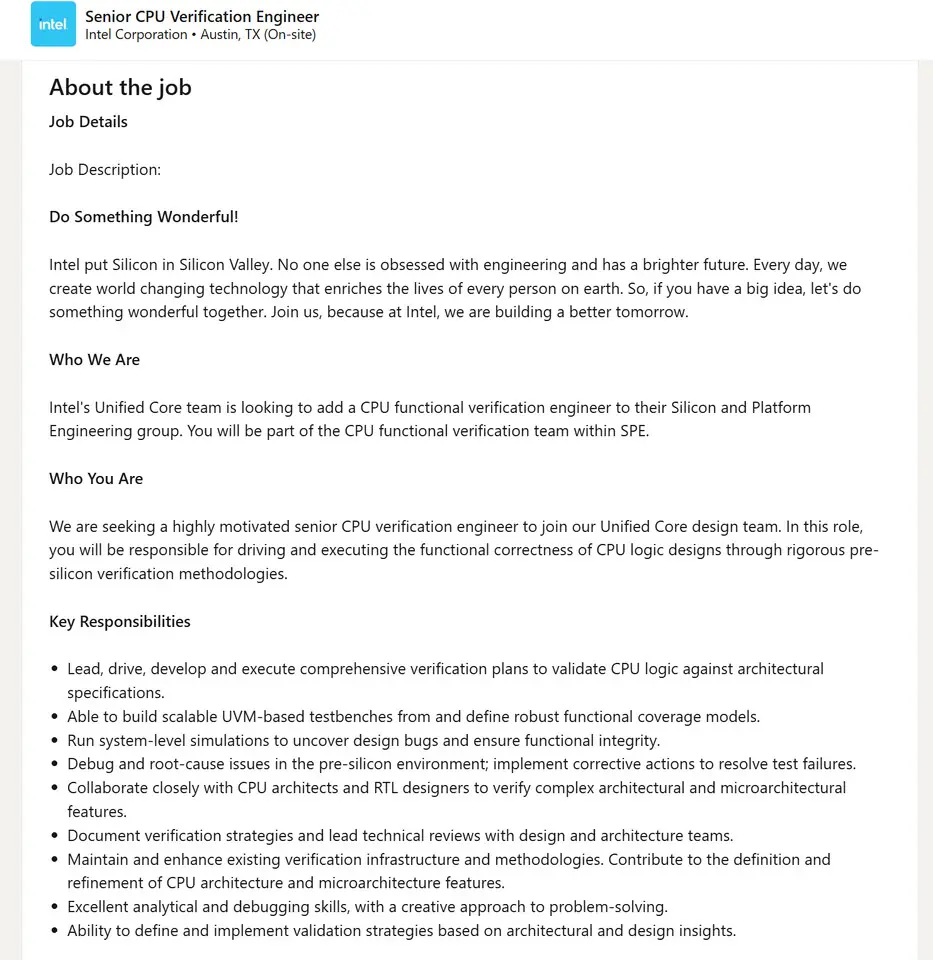
Why Intel Might Be Rethinking Its Strategy
There are several motivations behind Intel’s strategic pivot:
- Simplicity: A unified core design would reduce technical and marketing complexity. Consumers would no longer need to decipher what portion of a processor’s total core count consists of full-powered versus efficiency-focused cores.
- Task Scheduling: Operating system-level scheduling and prioritization are easier to manage when all cores are functionally identical, potentially boosting the user experience and application performance.
- Competitive Response: AMD and Apple have demonstrated success with architectures where all cores are powerful and/or share the same instruction set, giving them an edge in both productivity and consistency.
- Efficiency and Scalability: Unified core designs can be highly tuned for power efficiency and performance scaling, possibly allowing up to 100 cores per CPU in the coming years—ideal for data centers and demanding workloads.
What Could Unified Cores Bring?
The move to a unified core doesn’t necessarily mean efficiency will be sacrificed. Drawing on lessons from AMD’s Zen 5 and the advent of denser, lower-power variants like Zen 5c, Intel could deliver both high performance and energy savings by adjusting cache sizes and clock speeds within a single architecture. Such a design could allow Intel to streamline its manufacturing and more easily tailor chips for mobile, desktop, and server environments.
Timeline and Industry Impact
While specific product release dates are still unconfirmed, industry analysts expect the first unified-core CPUs from Intel to debut with the “Titan Lake” platform, likely between 2028 and 2030. In the meantime, hybrid P/E-core processors will remain Intel’s mainstream offering.
If successful, Intel’s unified core strategy could set the tone for the next decade of processor innovation, simplifying product choices for consumers and potentially pushing performance to new heights across computing sectors.