Final Thoughts on the ASRock Steel Legend 360 LCD
Sometimes it is tough to follow behind in the footsteps of those that have come before you. In this case, the ASRock Steel Legend 360 LCD did a great job following up the Phantom Gaming 360 LCD. Based on a nearly identical base platform, the Steel Legend 360 LCD performed nearly identically to its Phantom Gaming brother. As far as what makes up the very minor differences in performance between these two coolers is the slightly thinner radiator on the Steel Legend, and the use of three 120mm fans as opposed to a single 360mm fan array. And while the radiator may not have quite as much surface area to help with heat dissipation, the included 120mm fans have slightly higher airflow and air pressure specifications to help bridge the gap.
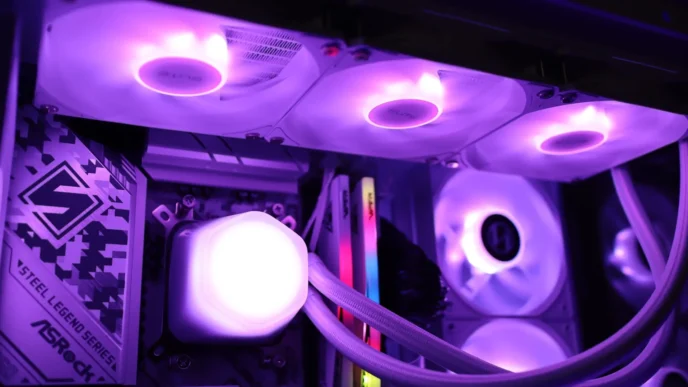
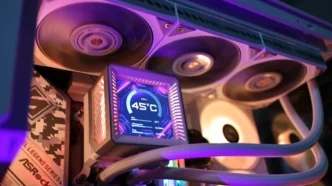
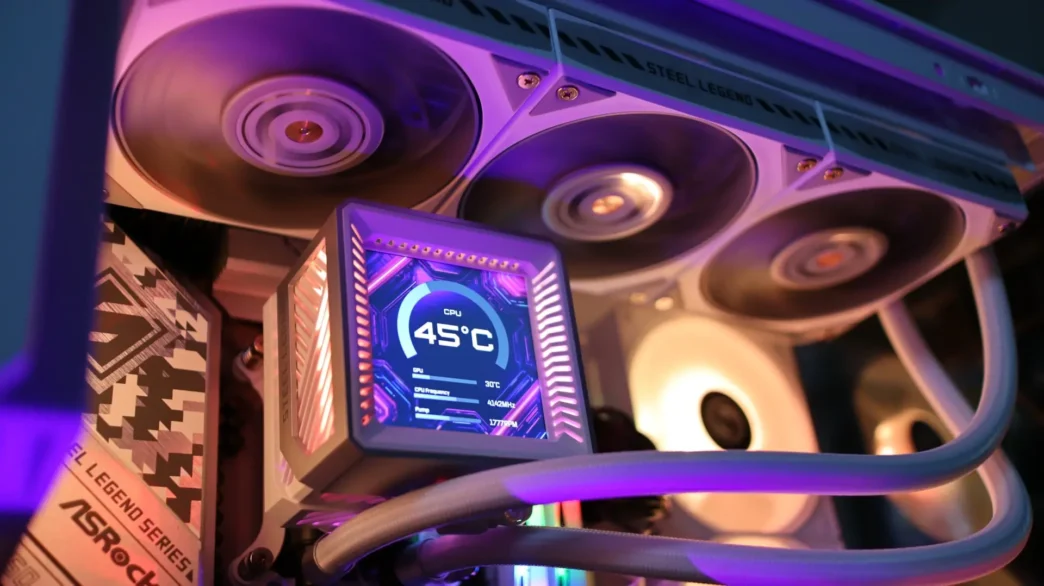
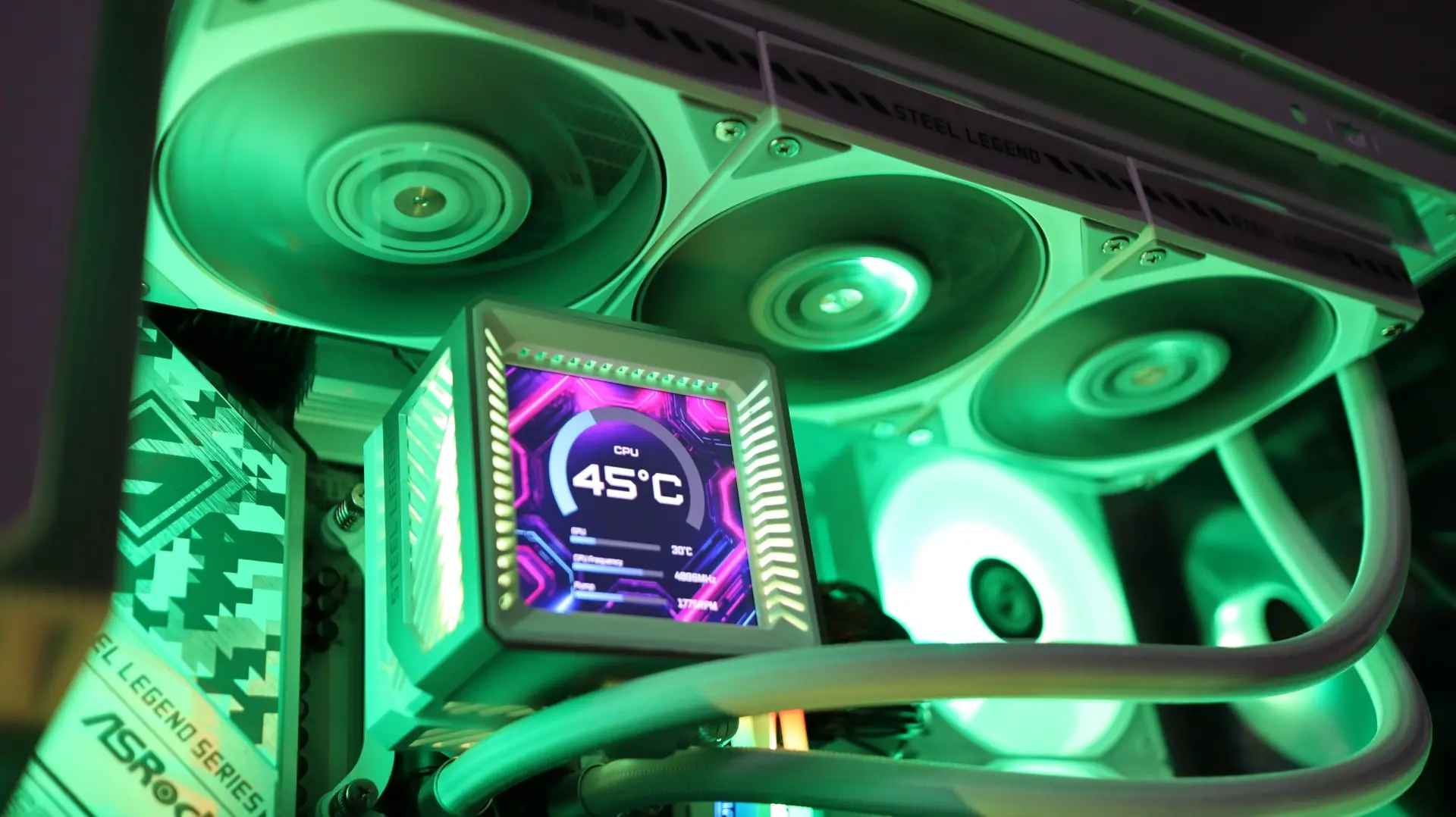
Regarding the Steel Legend 360 LCD aesthetics, you get the standout 3.4″ LCD with crisp visuals and smooth movement, thanks to that 60Hz refresh rate. Add in the 16 ARGB LED light array surrounding the LCD display, and you get a really nice looking visual display. And while there are no LEDs to be found on the fans, I think that goes well with the overall Steel Legend design language found on many other ASRock products.
As far as performance goes, the Steel Legend 360 LCD comes in towards the cooler side of the AIOs we have tested in our latest benchmark system. This is true for both idle and load cooling testing, though this cooler is a bit on the louder side of things when it comes to noise. That said, a mid-range speed of 1500 RPMs is a nice sweet spot when you want some extra cooling performance while gaming if you don’t mind some extra noise, but if you want to maintain a quiet environment, anything lower than 1200 or so RPM is going to be quiet and still keep your system cool. Plus, you have the integrated VRM fan if you want to boost things to the next level without having to worry about your power delivery getting too warm.
The only real downside I found with this cooler is that it takes three applications in order to fully control it. Polychrome Display is needed to control the LCD display, but that’s all it can do. Then you have to use Polychrome Sync, SignalRGB, or another LED controller or software to control the RGB lighting, and then you need to use your motherboard software, BIOS settings, or an application like Fan Control to control the fan and pump speeds. This is just ridiculous in my opinion, and should not be something we are working with in 2026. ASRock could really do a lot of good building out some software that could integrate all of these functions into a single pane, much like the loved or hated Corsair iCUE.
Overall, the ASRock Steel Legend 360 LCD brings together great performance and great looks, especially if you are going for an all-Steel Legend build. There is a bit of a price premium for this AIO as well, which is a bit surprising, considering the lack of ARGB fans on the radiator. The ASRock Steel Legend 360 LCD is currently available for $215.50 at our favorite online retailer. I think the ASRock Steel Legend 360 LCD is a great option for keeping not only your CPU cool, but also the components surrounding it thanks to the integrated VRM fan. Solid performance and looks earn this AIO a 8 out of 10.

Pros:
- Idle and Load Performance
- 3.4″ LCD Display
- Factory-Installed Fans
- VRM Fan
- End-Exit Fan Cabling
Cons:
- Three Applications to Control
- Premium Price Without ARGB Fans
- Loud At Full Speed