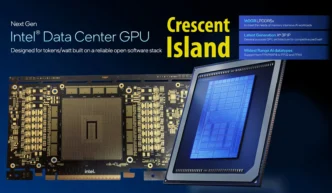
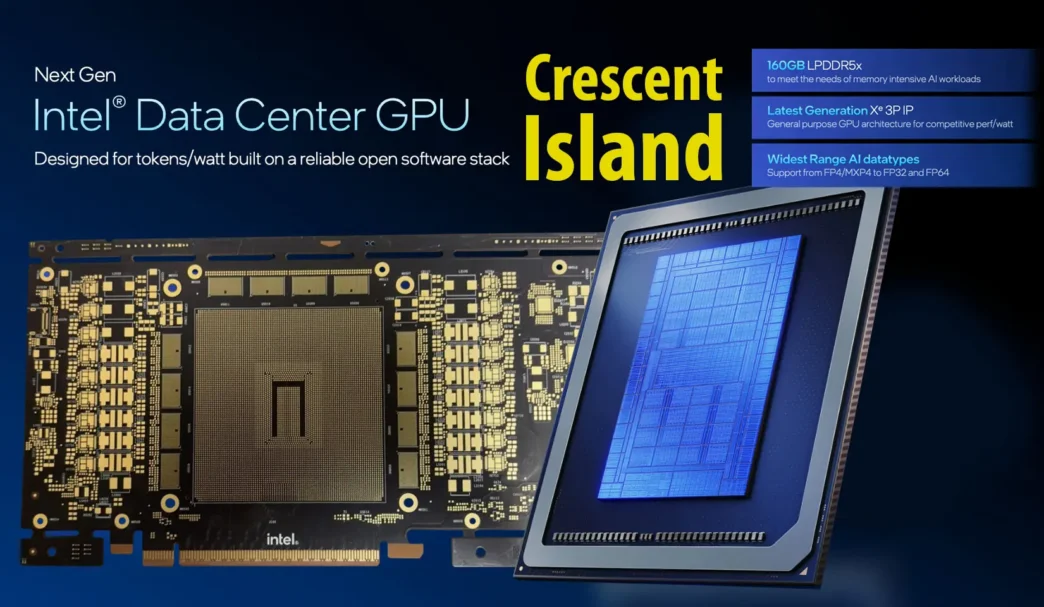
A recent leak has provided the first glimpse of Intel’s upcoming ‘Crescent Island’ PCIe accelerator, showcasing its powerful Xe3P GPU and a substantial 160GB of LPDDR5X memory. This next-generation AI inference solution appears poised to offer a cost-effective alternative to HBM-based accelerators, targeting enterprise and data center markets.
Key Takeaways
- Massive GPU Die: The Xe3P GPU is significantly larger than Intel’s current flagship, the Xe2-based BMG-G31.
- Ample Memory: The board supports up to 160GB of LPDDR5X memory, utilizing 20 memory sites (12 front, 8 back).
- Cost-Effective Approach: Intel opts for LPDDR5X over more expensive HBM memory to reduce costs and sidestep supply chain issues.
- Targeted Workloads: Designed for AI inference and enterprise workloads, not for consumer gaming.
- Power Delivery: Features a robust VRM design and a single 16-pin power connector.
Unveiling the Crescent Island PCB
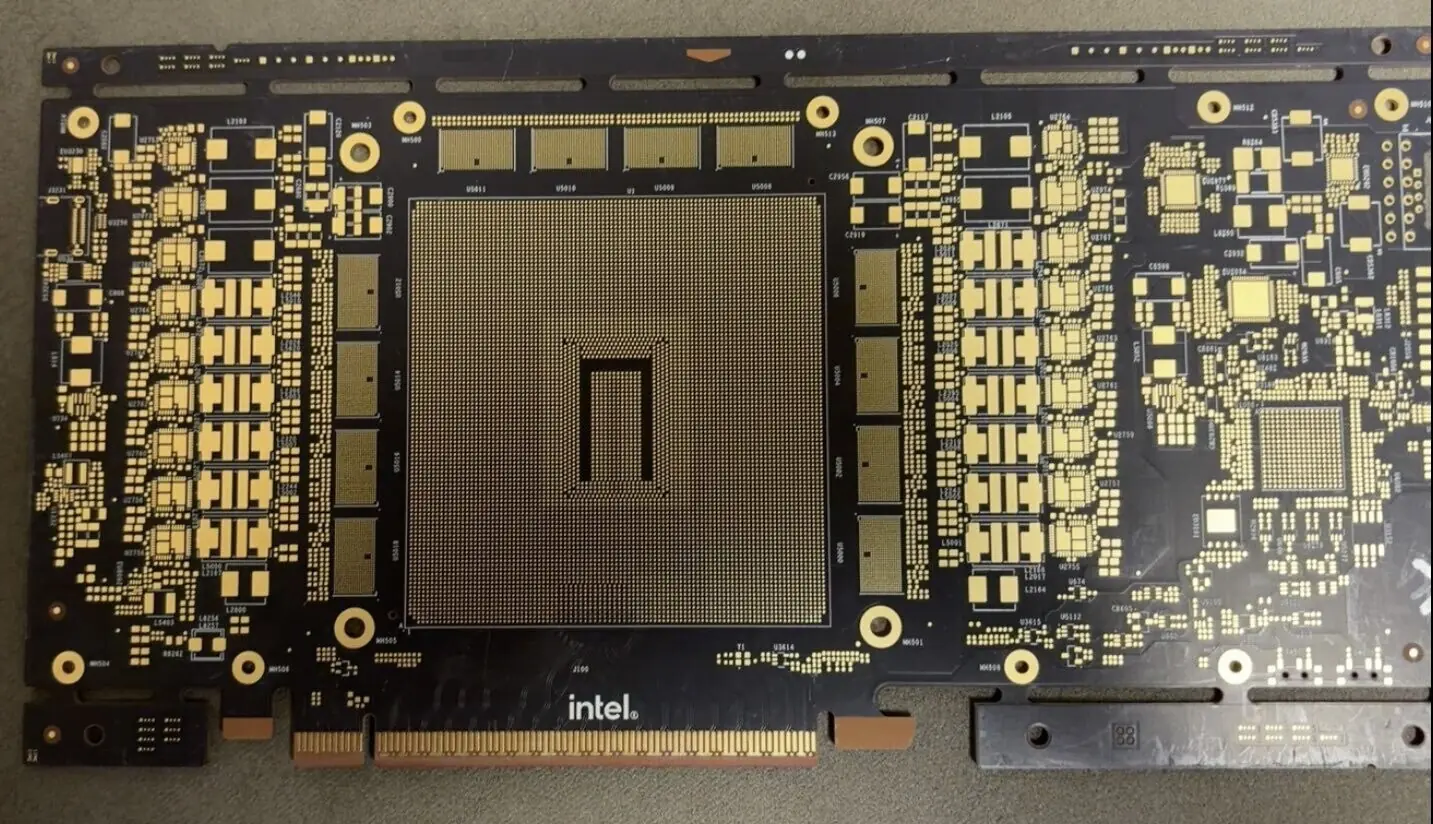
The leaked images reveal a high-end PCB design for Intel’s Crescent Island, an AI inference accelerator based on the new Xe3P architecture. This architecture is a successor to the current Xe3, designed for scalability from integrated graphics to data center GPUs. Unlike previous Arc products, Crescent Island is exclusively aimed at the enterprise and AI infrastructure sectors.
Xe3P GPU and LPDDR5X Memory Configuration
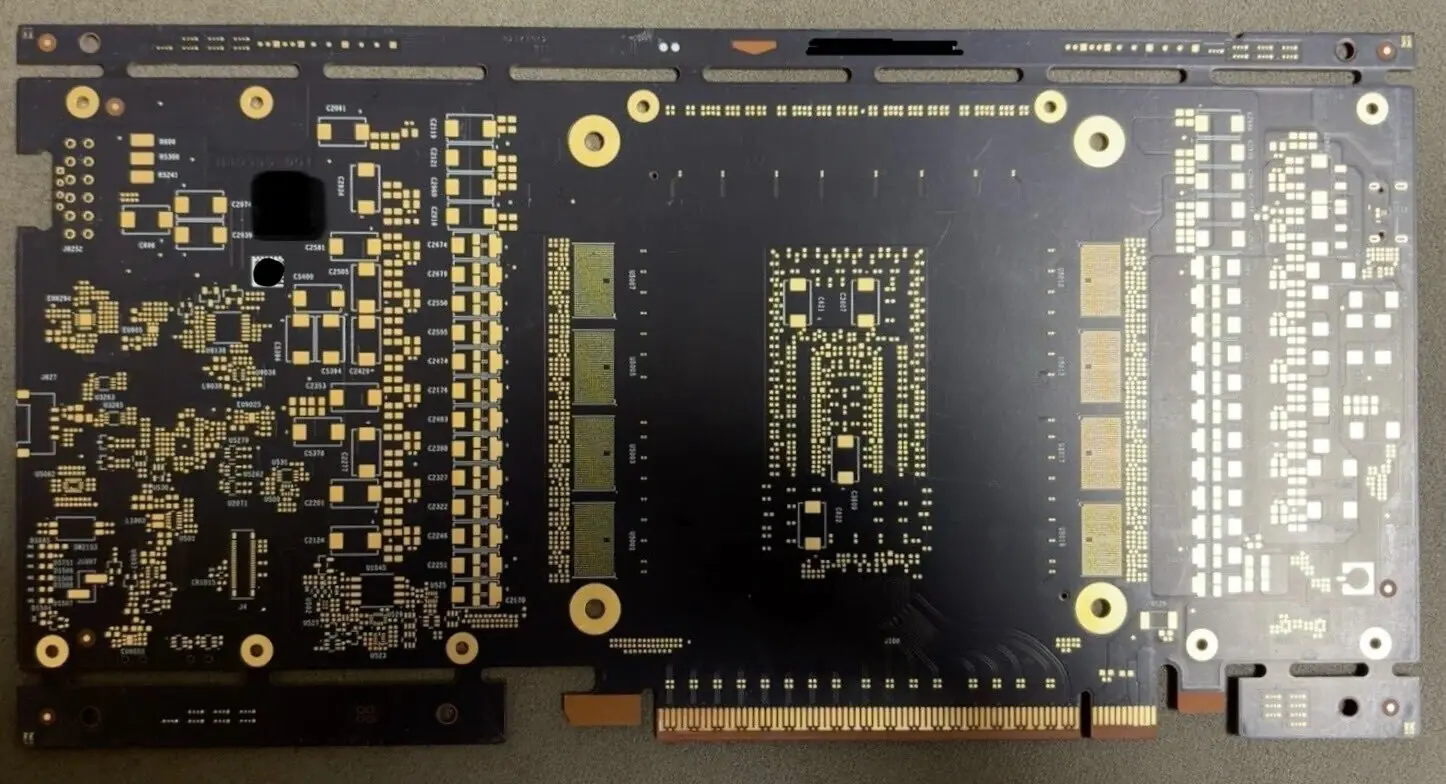
The Xe3P GPU itself is notably large, occupying a significant portion of the PCB. Surrounding the GPU are 20 sites for LPDDR5X memory modules. This configuration, with 12 sites on the front and 8 on the back, is designed to accommodate up to 160GB of memory, with each module likely providing 8GB. Intel’s decision to use LPDDR5X instead of HBM is a strategic move to offer a more budget-friendly solution and mitigate the challenges associated with HBM supply and pricing.
Power and Design Features
The PCB exhibits a robust power delivery system, featuring 18 VRM positions, with 13 appearing to be populated. Power is supplied through a single 16-pin connector located at the rear of the board. A USB Type-C port is also visible on the side, likely intended for testing and debugging purposes. The overall design suggests a focus on performance-per-watt optimization for air-cooled enterprise servers.
Market Positioning and Launch Timeline
Crescent Island is positioned as a cost-optimized solution for AI inference workloads, particularly beneficial for “tokens-as-a-service” providers and large-scale inference tasks. While competitors like NVIDIA and AMD are heavily invested in HBM technology, Intel’s LPDDR5X approach could provide a competitive edge in the cost-performance segment. Customer sampling is anticipated in the second half of 2026, with a broader launch expected before the end of the year. No gaming variant based on the Xe3P architecture is currently expected.
Via YuuKi_AnS on X, via Videocardz