


Final Thoughts
The In Win 805 was already a really great case, I mean who does not like an all aluminum case with tempered glass side panels? Just when you thought this case couldn’t get any better In Win went ahead and added the Infinity mirror and RGB LED strips. The Infinity mirror is one of the coolest things we’ve seen added to a case in a very long time. The effect it creates is really cool and something that everyone who sees it asks about. Even better is that you not only get one, but two RGB LED strips with this case. So the Infinity mirror plus the inside of your case is lit up, and you can control them with In Win’s HALO software or your motherboards RGB software.
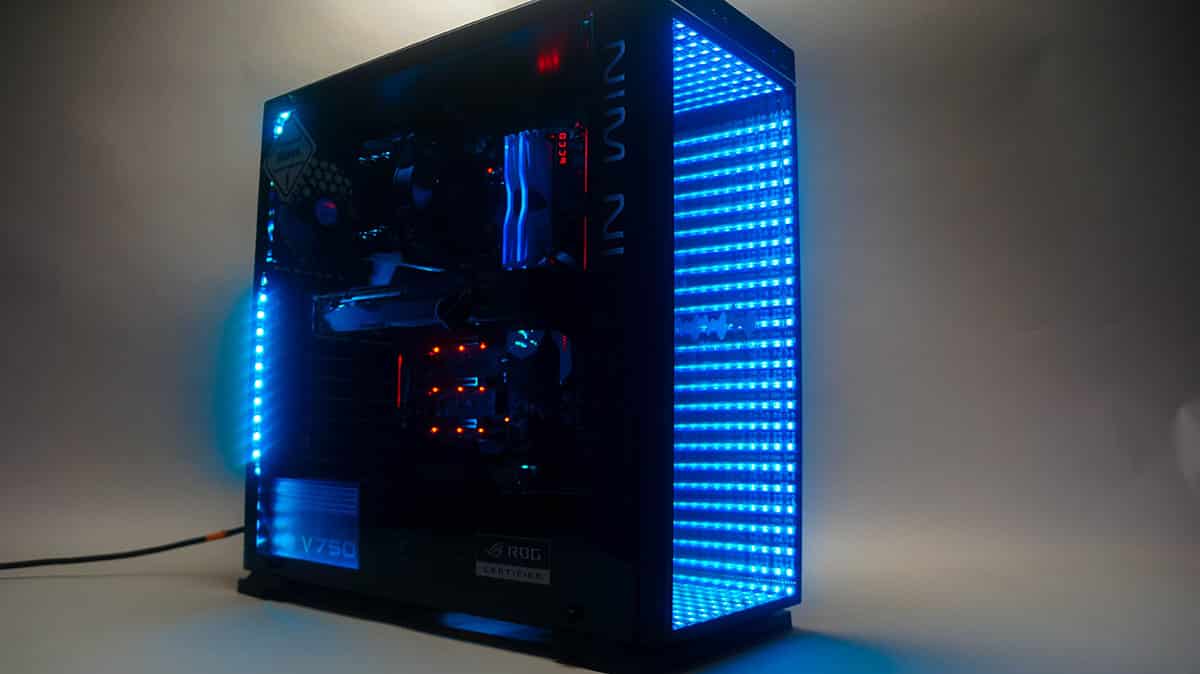
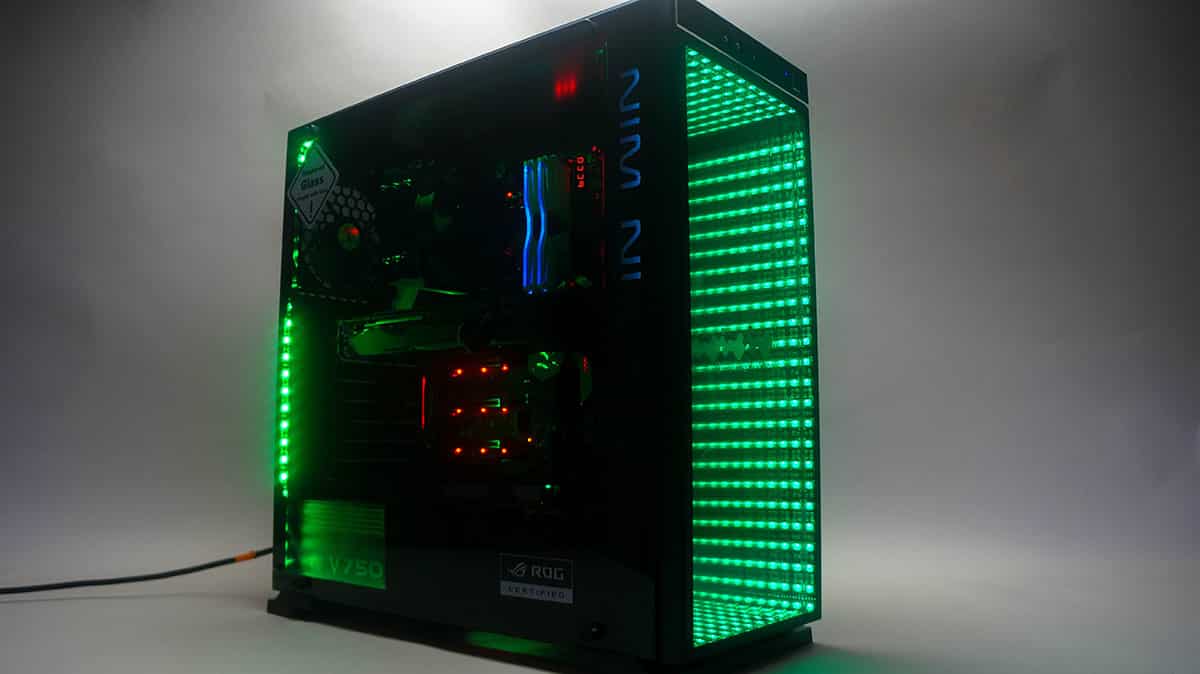
Because of its simple internal design this case is very easy to build in. I did not encounter a single issue when it came to installation. In Win also provides plenty of cable organizers and ties to keep your cables nice and neat.
You can fit all modern hardware inside this case from long graphics cards, tall CPU coolers, and full size power supplies. The only thing that this case is lacking is heavy cooling support. There is only a single 120 mm fan included with this case and there is actually no cooling available on the top of the case. You just have the front (2x 120/140mm) and bottom (2x 120mm), and for serious cooling that just is not enough.
This is one of the coolest cases I’ve had the chance to build inside and I was really proud of my build after I was done. The Infinity mirror is just awesome and we’ve already seen other companies use it on their products already! Right now you can pick up this case at our favorite online retailer for around $239.99. Overall ThinkComputers gives the In Win 805 Infinity Case a 9 out of 10 score.

Pros:
– The Infinity mirror
– Two included RGB LED strips
– Tempered glass side panels
– Aluminum construction
– Easy to build in
Cons:
– Limited cooling support

Sick case but in a good way.
Just finishing up a build with this case. It looks awesome, but you really need to think about thermal design, there’s no front intake and no top outlet, the only way you can run this with SLI for example is an intake fan at the bottom, a draw fan to push air across to the cards / cpu (means moving the drives cage) and an outlet fan on the back – don’t think I’d be game to use a 120mm closed loop on that back vent, it’d get nothing but hot air passing through the radiator. Also have to make sure you have end-of-cable SATA power connectors if you’re mounting SSD’s to the back plate, as there isn’t enough room for the ones where the cable enters the connector from the side.