Overclocking
Overclocking on Ryzen has not changed all that much since the last generation. It is actually quite easy to do.
The Ryzen 9 3900X has a base clock of 3.6 GHz and boosts up to 4.6 GHz. Now that boost is only on 1-2 cores. By overclocking we can set all cores to run at the same speed all of the time. This will give us better performance, especially in multi-core workloads.
We initially wanted to do our overclocking in the BIOS, but for some reason the BIOS would not apply our settings. For the CPU ratio we had it set to 43 and our voltage to 1.4V. When we loaded into Windows these settings for some reason were not applied. We made sure our power profile was “High Performance” and that nothing else would be causing our CPU to stay at its stock speed. We could not figure out why our BIOS settings were not being applied. We restarted and went back into the BIOS and our settings were still the same 43 for the CPU ratio and the CPU voltage at 1.4V.
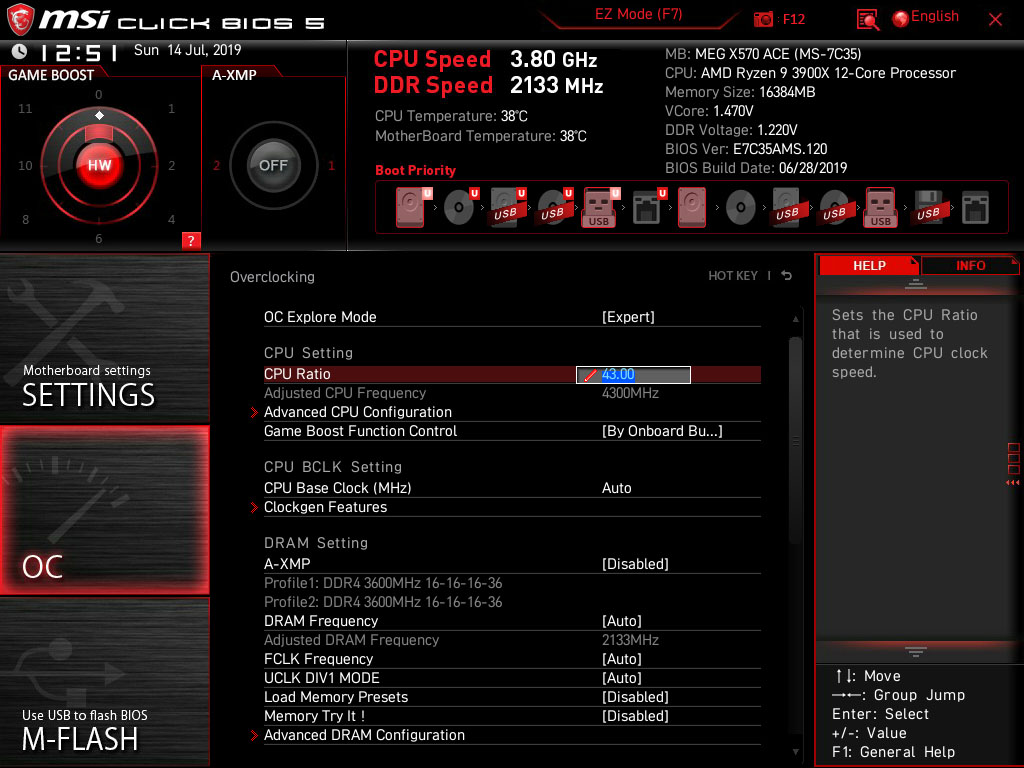
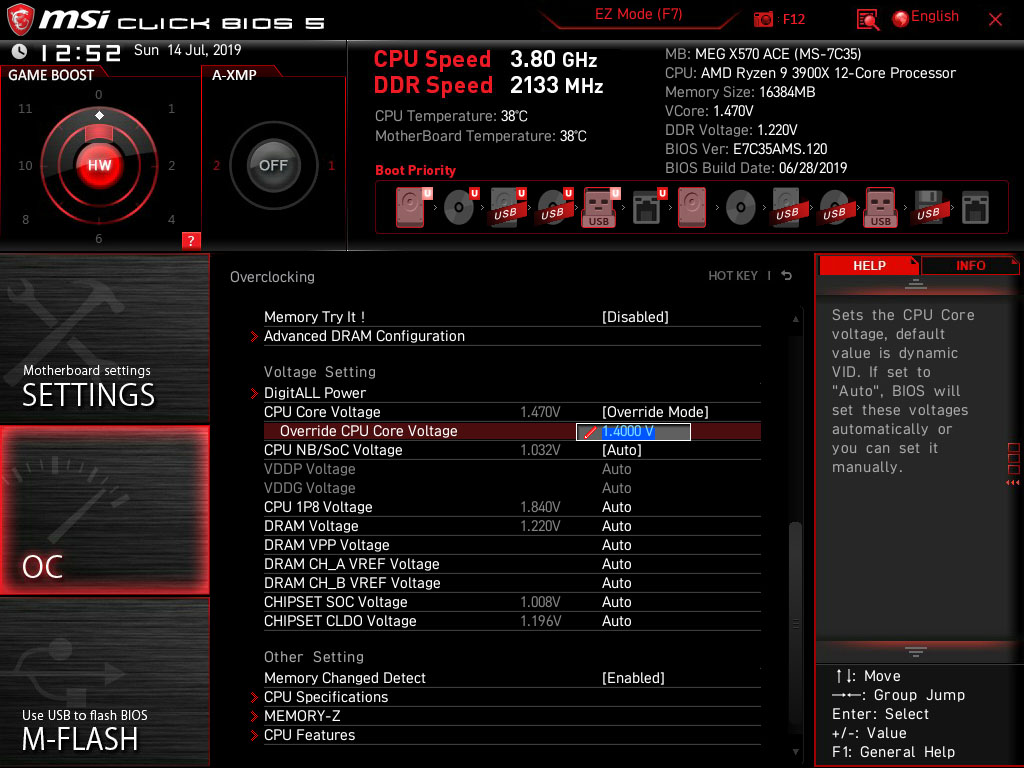
This was obviously getting frustrating so we decided to download the AMD Ryzen Master software. Here we set a custom profile with the settings that we wanted.
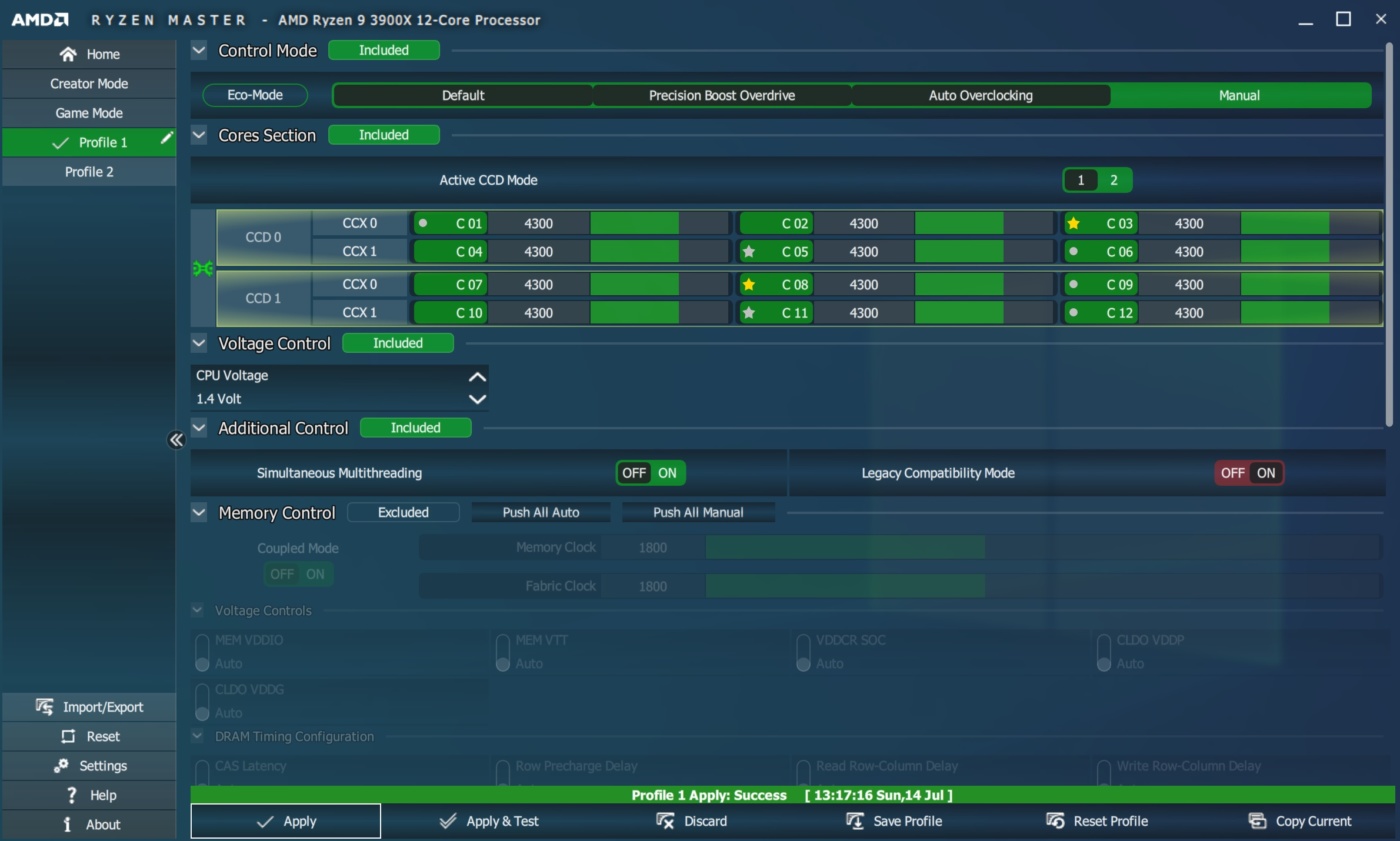
When it comes to overclocking I would suggest starting at the base clock of your processor and moving up in small steps. So for the Ryzen 9 3900X it would be 3700, 3800, 3900, etc. You are likely going to have to adjust your voltage as well. A good starting point is 1.35-1.40V Vcore. Each time you overclock load into Windows and run a stability test, we use AIDA64 and CINEBENCH, but any CPU-focused benchmarking program would work. When running the stability test / benchmark be sure to keep an eye on your temperatures as well. If your system does not boot up try upping your Vcore. If that does not help you could try settings your load line calibration higher.
After much testing we were able to get our Ryzen 9 3900X running at 4.3 GHz on all 12 cores!
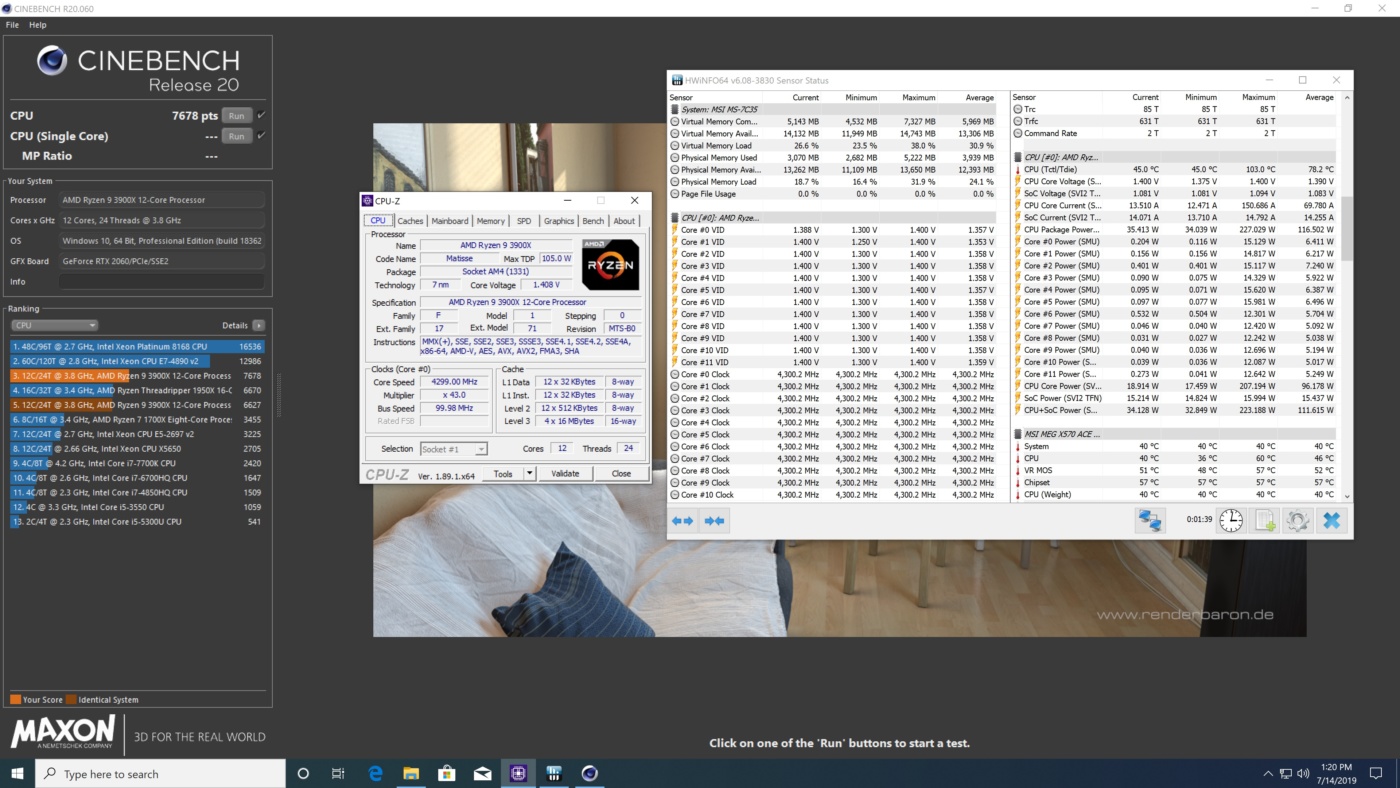
Our max temperature when running CINEBENCH R20 was 103C so this is not an overclock that I would suggest. You are likely going to want to bring it down to 4.1 GHz or even 4.0 GHz if you are using an air cooler like we were.